


Давутоглу использует визит в Армению для очертания видения мира, базирующегося на трех столпах.

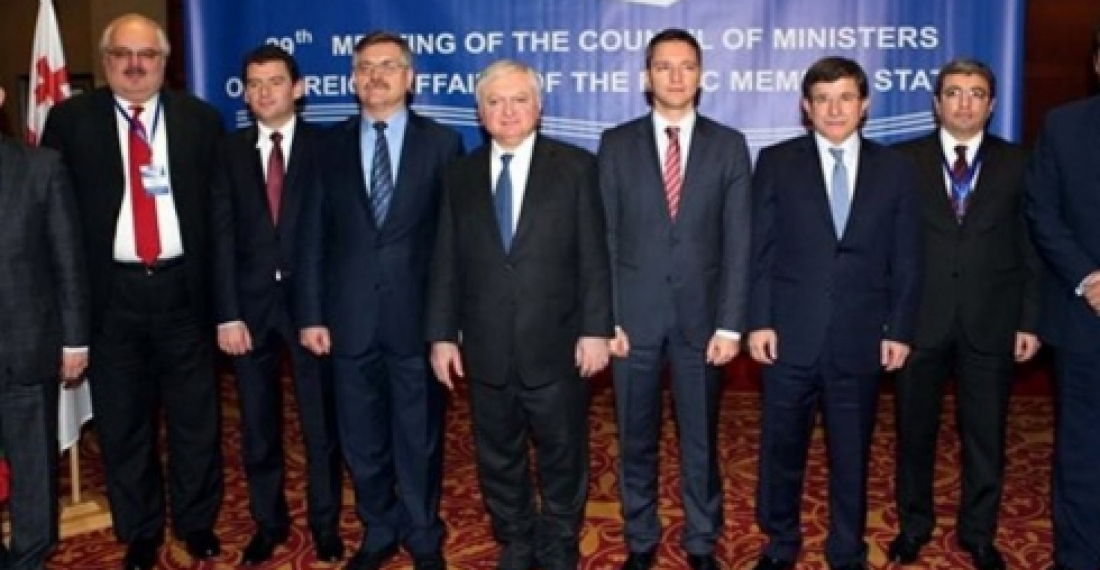
Министр иностранных дел Турции Ахмет Давутоглу в минувший четверг  в кулуарах заседания экономического сотрудничества Организации Черноморского экономического сотрудничества (ОЧЭС), проходящего в Ереване, встретился с министром иностранных дел Армении, Эдвардом Налбандяном. Визит Давутоглу вносит положительный элемент в отношениях между двумя странами. Между Арменией и Турцией не было никаких контактов на высшем уровне с 2009 года, когда обе стороны подписали протоколы, которые были направлены на нормализацию отношений между ними. Обе стороны, по разным причинам, до сих пор не ратифицировали соглашения.

Министр иностранных дел Турции воспользовался возможностью визита в Ереван, чтобы очертить современные представления Турции о ситуации на Южном Кавказе. Давутоглу говорил о "всеобъемлющем мире", основанном на «трех китах».
"Наша главная цель не только открытие турецко-армянской границы, но и формирование основы, которая проложит путь ко всеобъемлющему миру", заявил Давутоглу. "Такой сир основан на трех столпах. Первый - отношения между Турцией и Арменией. Второй - азербайджано-армянские отношения. Это также включает грузино-абхазские отношения. Третий - отношения между турками и армянами", сказал он.
В то время как Армения видит свои двусторонние отношения с Турцией в качестве отдельного вопроса, не связанного с Нагорно-Карабахским конфликтом, у Давутоглу имеются другие взгляды на это. 
"Если один из столпов изувечен, то это создает бедствие. Скажем, мы открыли границу с Арменией. Если начнется война между Арменией и Азербайджаном, то мы будем вынуждены закрыть ее снова. Самое трудное  разморозить айсберг статус-кво.

Пытаясь разморозить его, вы можете разжечь войну," сказал он.
По словам политического комментатора Commonspace.eu:
"Три столпа политики Давутоглу являются значительными. Они показывают, что Турция пытается вырваться из смирительной рубашки, в которой она оказалась, после приостановленная подписания протоколов 2009 из-за резкой оппозиции Азербайджана к любому соглашению с Арменией до момента урегулирования карабахского конфликта. Турция нуждается в такой политике на Кавказе, которая будет признавать как свои непосредственные интересы, так и тот факт, что у Турции имеется исторический багаж в регионе и, следовательно, нужно действовать предусмотрительно. Концепция политики трех столпов основана на том, что проблемы региона необходимо решать комплексно, а не по частям, даже если в различных ситуациях должны быть использованы различные тактики. Турция делает правильно, преследуя эту ​​политику, в случае, если она также понимает, что должна сперва согласовать ее с другими ключевыми международными игроками, такими как Россия, ЕС и США, если она хочет, чтобы такая политика имела шансы на успех. Тем не менее близость Турции к региону, и ее влияние, которое является незначительным позволит Турции взять на себя ведущую роль в этом процессе.

В Ереване Давутоглу также коснулся вопроса о событиях 1915 года. Годовщина зверств, которые часто характеризуются как геноцид армянского народа в последние годы Османской империи, может привезти к накалу страстей с обеих сторон, так как нет никаких договоренностей о том, как читать эту сомнительную страницу истории. Однако, это может предоставить возможность для диалога и примирения. Давутоглу заявил журналистам в Ереване, что у турецких дипломатов теперь есть инструкции по вовлечению в диалог с армянскими диаспорами, многие из которых являются потомками жертв событий 1915 года. Все это является положительным моментом. Турцию нужно поощрять в ее инициативах, если она преследует их с добрыми намерениями и при широкой поддержке со стороны международного сообщества".
Источник: commonspace.eu по материалам Турецких СМИ.

фото: Министры стран ОЧЭС на встрече в Ереване, 12 декабря (фото любезно предоставлено МИД Турции).


Related articles

Editor's choice
News
Aden under curfew, as problem in Yemen's south deepens

Aden under curfew, as problem in Yemen's south deepens

The port city of Aden, in Yemen's south, has been put under curfew, as the rift in the country between  the Saudi led coalition which  backs Yemen's presidential governing council, and the southern forces led by the Southern Transitional Council (STC), deepens. Abdul Rahman al-Mahrami, a member of the Yemeni Presidential Governing Council and commander of the al-Amalik brigades, has ordered a curfew in the temporary capital, Aden, "to maintain security". "A curfew has been imposed throughout Aden Governorate from 9:00 p.m. to 6:00 a.m., in accordance with the instructions of Commander Abdul Rahman al-Mahrami, a member of the Presidential Management Council," the statement said. It states that only security and military personnel, as well as medical and technical teams with approved permits, will be allowed to move in the area during these hours. Yemen's presidential council, which is backed by Saudi Arabia and which already is in a struggle with the Houthi Movement in the north of the country who also occupy the capital Sanaa, two days ago issued an order for the arrest of the head of the Southern Transitional Council (STC),, Aidarous al Zubaidi. The STC have wide support among people in the South, and advocate that South Yemen restores its independence. The coalition warned of further escalation in Aden, long regarded as an STC stronghold, as the Presidential Leadership Council (PLC) chief accused STC leader Aidarous Al Zubaidi of “high treason” and announced the revocation of his membership in the governing body. The moves mark a sharp escalation in tensions within the anti-Houthi camp, despite National Shield Forces, rivals of the STC and former allies, having recently retaken control of Hadhramaut and Mahra from southern fighters. The STC’s takeover of the two regions last month angered Saudi Arabia and contributed to igniting the current internal conflict. (click the picture to read more)

Popular

Editor's choice
News
Aden under curfew, as problem in Yemen's south deepens

Aden under curfew, as problem in Yemen's south deepens

The port city of Aden, in Yemen's south, has been put under curfew, as the rift in the country between  the Saudi led coalition which  backs Yemen's presidential governing council, and the southern forces led by the Southern Transitional Council (STC), deepens. Abdul Rahman al-Mahrami, a member of the Yemeni Presidential Governing Council and commander of the al-Amalik brigades, has ordered a curfew in the temporary capital, Aden, "to maintain security". "A curfew has been imposed throughout Aden Governorate from 9:00 p.m. to 6:00 a.m., in accordance with the instructions of Commander Abdul Rahman al-Mahrami, a member of the Presidential Management Council," the statement said. It states that only security and military personnel, as well as medical and technical teams with approved permits, will be allowed to move in the area during these hours. Yemen's presidential council, which is backed by Saudi Arabia and which already is in a struggle with the Houthi Movement in the north of the country who also occupy the capital Sanaa, two days ago issued an order for the arrest of the head of the Southern Transitional Council (STC),, Aidarous al Zubaidi. The STC have wide support among people in the South, and advocate that South Yemen restores its independence. The coalition warned of further escalation in Aden, long regarded as an STC stronghold, as the Presidential Leadership Council (PLC) chief accused STC leader Aidarous Al Zubaidi of “high treason” and announced the revocation of his membership in the governing body. The moves mark a sharp escalation in tensions within the anti-Houthi camp, despite National Shield Forces, rivals of the STC and former allies, having recently retaken control of Hadhramaut and Mahra from southern fighters. The STC’s takeover of the two regions last month angered Saudi Arabia and contributed to igniting the current internal conflict. (click the picture to read more)

