Комментарий: Путин о "внешних угрозах" и о том, что происходит рядом с нами на постсоветском пространстве.

Этот комментарий подготовлен политическим редактором commonspace.eu

То, что президент России Владимир Путин ностальгирует по СССР, хорошо известно. Все помнят его высказывание о том, что "распад СССР крупнейшая геополитическая катастрофа века". То, насколько Путин он не принимает распад Советского Союза вновь стало очевидно во время его разговора с журналистами в Гоа в минувшие выходные, на полях саммита БРИКС.

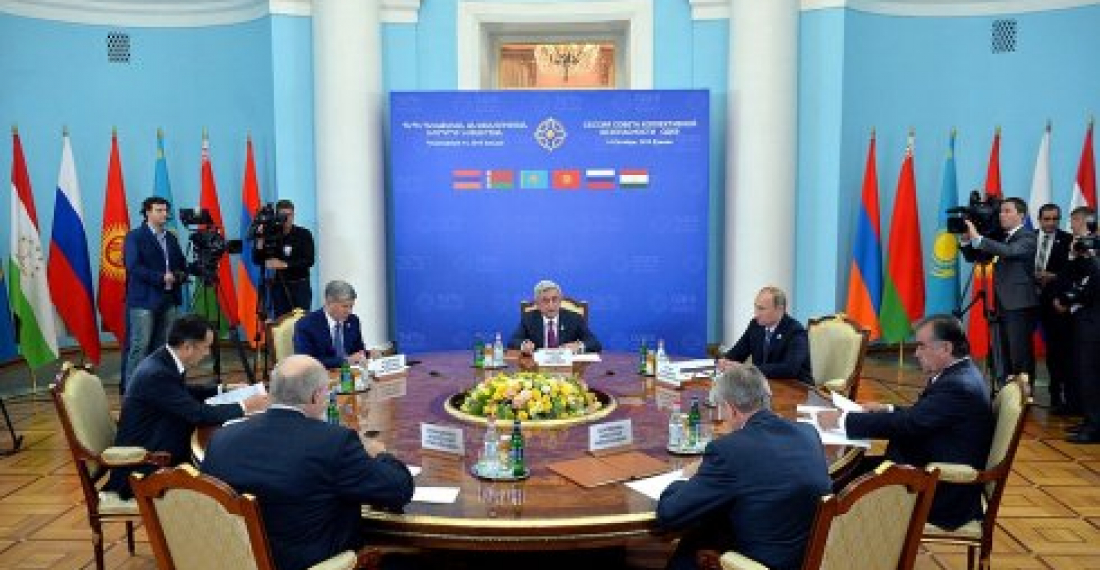
Путин направился на саммит в Гоа прямо из Еревана, где в минувшую пятницу он принимал участие в саммите Организации Договора о коллективной безопасности (ОДКБ) - военный блок во главе с Россией, в который также входят Армения, Беларусь, Казахстан, Киргизстан и Таджикистан. Остальные девять бывших советских республик отказались вступать в него. В ходе встречи в Ереване стала очевидна некая напряженность между участниками (читайте об этом здесь)

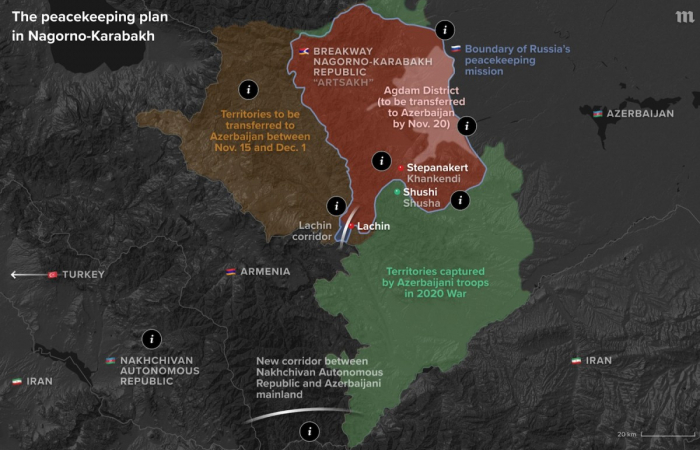
Путин заявил, что ОДКБ был создан для борьбы с "внешними угрозами", и, что он также должен каким-то образом реагировать на "происходящее рядом с нами", добавив, "должны стремиться к тому, чтобы все проблемы, которые достались нам из прошлого, решались мирным путём и на основе компромиссов, именно компромиссов, на которые готовы пойти и одна, и другая сторона." Путин сообщил, что "в этом контексте мы обсуждали и карабахскую проблему" в ходе встречи в Ереване.

Путин сообщил, что в Ереване также обсуждалась "определенная напряженность" между бывшими советскими республиками. Путин отметил, что "для нас даже не важно, входит та или иная страна, бывшая республика СССР, в ОДКБ или не входит. Для нас важно, что мы имеем со всеми этим странами особые, исторически сложившиеся отношения, и они гораздо ближе и глубже, чем просто отношения между странами НАТО. Мы не можем этого не учитывать."

Полное выступление президента Путина перед журналистами в Гоа доступно на веб-сайте Кремля здесь

Похвально, что президент Путин выступает за мирное решение на основе компромисса в контексте карабахского конфликта, а также других проблем на постсоветском пространстве. Однако, упоминание роли России в этом оставляет многие вопросы без ответа.

Начиная с 1991 года, будь то при президенте Ельцине или же при президенте Путине, российские власти последовательно отказывались рассматривать пространство бывшего СССР как нечто находящееся за пределами России, как часть чужой территории. Определение этому никогда не было точным, и всегда было много нюансов в используемой терминологии, но в одном наблюдается последовательность и ясность - внешний означало за пределами бывших границ СССР, в пределах же этих границ отношения были непрозрачными - "особые и исторические", как выразился президент Путин в Гоа, или же "ближнее зарубежье", как это определено в геостратегических терминах.

Между многими странами существуют "специальные и исторические" отношения, и до тех пор, пока все стороны счастливы использовать эти отношения в качестве основы для будущих отношений этим можно только восхищаться. Однако, использование Россией этих "особых и исторических" отношений каким-то образом ставит под сомнение суверенитет, независимость и территориальную целостность государств постсоветского пространства, а также обосновывает вмешательство в дела этих государств. Украина и Грузия тому примеры.

Россия отказывается признать то, что именно эти её тенденции к господству и являются самым большим источником нестабильности в регионах вокруг него.

Пост-советские республики недавно отпраздновали 25-ю годовщину независимости. Элиты, даже в самых про-российских странах, в настоящее время пользуются атрибутами государственности и не в настроении передавать все снова Москве. Пришло время признать России, что в ее же интересах, и в интересах её бывших владений, будет лучше всего принятие реальности и построение новых отношений, основанных на равенстве и взаимном уважении.

источник: Этот комментарий подготовлен редакцией commonspace.eu

фото: Встреча глав государств ОДКБ в Ереване, 14 октября 2016 года (фото любезно предоставлено пресс-служой президента Армении)
 

Related articles

Editor's choice
News
Germany accuses Russia of cyberattacks and disinformation campaign

Germany accuses Russia of cyberattacks and disinformation campaign

The German government holds Russia responsible for a cyberattack on German air traffic control, and for targeted disinformation campaigns before the last federal election. According to the German Foreign Office in Berlin, the incidents could be clearly attributed to the Russian military intelligence service, the GRU. In response, the Russian ambassador to Berlin was summoned to the Foreign Ministry. "We have been observing a massive increase in threatening hybrid activities by Russia for some time now," a spokesperson for the Foreign Ministry stated. These range from disinformation campaigns and espionage to cyberattacks and sabotage attempts. The aim is to divide society, sow distrust, and undermine confidence in democratic institutions. The spokesperson added that with these actions, Russia is "very concretely threatening our security, not only through its war of aggression against Ukraine, but also here in Germany."  The Foreign Ministry spokesperson explained that the cyberattack on air traffic control in August 2024 was clearly attributed to the hacker collective "APT28," known as "Fancy Bear," and to the responsibility of the Russian military intelligence service, the GRU. Furthermore, it could now be "conclusively stated" that Russia had attempted "to influence and destabilize both the last Federal election and the ongoing internal affairs of the Federal Republic of Germany." There was "absolutely irrefutable evidence" for this". The so-called "Storm 1516" campaign, which has been running since 2024, is allegedly backed by "reliable information" that the Moscow-based think tank "Center for Geopolitical Expertise" is behind it. The Center is also said to be supported by Russian military intelligence. Its primary aim is to influence democratic elections in the West. (Click the image to read more).
Editor's choice
News
NATO Chief says war is on Europe's doorstep, and warns against complacency

NATO Chief says war is on Europe's doorstep, and warns against complacency

Russia could attack a NATO country within the next five years, the Secretary General of NATO, Mark Rutte, said in a stark new warning. "NATO's own defences can hold for now," Rutte warned in Berlin, but conflict was "next door" to Europe, and he feared "too many are quietly complacent, and too many don't feel the urgency, too many believe that time is on our side. "Russia is already escalating its covert campaign against our societies," Rutte said in a speech in Germany. "We must be prepared for the scale of war our grandparents or great-grandparents endured." Earlier this month, Russia's President Vladimir Putin said his country was not planning to go to war with Europe, but it was ready "right now" if Europe wanted to - or started a war. But similar reassurances were given by Moscow in 2022, just before 200,000 Russian troops crossed the border and invaded Ukraine. Putin has accused European countries of hindering US efforts to bring peace in Ukraine - a reference to the role Ukraine's European allies have recently played in trying to change a US peace plan to end the war, whose initial draft was seen as favouring Russia. But Putin was not sincere, Nato's secretary-general said in the German capital, Berlin. Supporting Ukraine, he added, was a guarantee for European security. "Just imagine if Putin got his way; Ukraine under the boot of Russian occupation, his forces pressing against a longer border with Nato, and the significantly increased risk of an armed attack against us." Russia's economy has been on a war footing for more than three years now - its factories churn out ever more supplies of drones, missiles and artillery shells. According to a recent report by the Kiel Institute for the World Economy, Russia has been producing each month around 150 tanks, 550 infantry fighting vehicles, 120 Lancet drones and more than 50 artillery pieces. The UK, and most of its Western allies, are simply not anywhere near this point. Analysts say it would take years for Western Europe's factories to come close to matching Russia's mass-production of weapons. "Allied defence spending and production must rise rapidly, our armed forces must have what they need to keep us safe," the Nato chief said.

Popular

Editor's choice
News
Germany accuses Russia of cyberattacks and disinformation campaign

Germany accuses Russia of cyberattacks and disinformation campaign

The German government holds Russia responsible for a cyberattack on German air traffic control, and for targeted disinformation campaigns before the last federal election. According to the German Foreign Office in Berlin, the incidents could be clearly attributed to the Russian military intelligence service, the GRU. In response, the Russian ambassador to Berlin was summoned to the Foreign Ministry. "We have been observing a massive increase in threatening hybrid activities by Russia for some time now," a spokesperson for the Foreign Ministry stated. These range from disinformation campaigns and espionage to cyberattacks and sabotage attempts. The aim is to divide society, sow distrust, and undermine confidence in democratic institutions. The spokesperson added that with these actions, Russia is "very concretely threatening our security, not only through its war of aggression against Ukraine, but also here in Germany."  The Foreign Ministry spokesperson explained that the cyberattack on air traffic control in August 2024 was clearly attributed to the hacker collective "APT28," known as "Fancy Bear," and to the responsibility of the Russian military intelligence service, the GRU. Furthermore, it could now be "conclusively stated" that Russia had attempted "to influence and destabilize both the last Federal election and the ongoing internal affairs of the Federal Republic of Germany." There was "absolutely irrefutable evidence" for this". The so-called "Storm 1516" campaign, which has been running since 2024, is allegedly backed by "reliable information" that the Moscow-based think tank "Center for Geopolitical Expertise" is behind it. The Center is also said to be supported by Russian military intelligence. Its primary aim is to influence democratic elections in the West. (Click the image to read more).