


Вопрос касательно намерений!

Министр обороны Армении издал новое распоряжение, которое запрещает доступ родственникам погибших солдат и представителям гражданского общества к информации о небоевых инцидентах со смертельным исходом среди военнослужащих.

Что позволит правительство знать родителям солдат, погибших в небоевых инцидентах, а что нет, и почему? Каковы их намерения? Армянская НПО "Мирный диалог" последние четыре года работает с родителями и другими родственниками солдат, погибших в небоевых ситуациях, чтобы узнать точно, как и почему погибли их сыновья, находясь на службе своей страны. Многие родители обратились к "Мирному Диалогу" за помощью. В ответ на их мольбу о помощи организация создала интернет сайт "Safe Soldiers for a Safe Armenia" (www.safesoldiers.am). Сайт был создан для сбора информации от семей погибших солдат, и после получения разъяснения от военных должностных лиц, делиться этой информацией с общественностью. Первоначально Министерство обороны (МО) содействовало НПО в предоставлении этой информации. С 2014 года они перестали отвечать на запросы "Мирного Диалога", что стало поводом для организации обратиться в суд, чтобы попробовать, сможет ли судебная система заставить Минобороны предоставить эту важную информацию. В январе 2015 года был возбужден иск с просьбой предоставления этой информации. Потом же все изменилось.

По законодательству Армении, у министерство обороны есть 30 дней в течение которых оно должно ответить на иск, но ответ пришел только 15 августа 2015 года, спустя восемь месяцев. "Мирный Диалог" получил официальную копию возражения, поданное Министерством обороны в Административный суд РА касательно вышеупомянутого иска. В возражении утверждается, что с 13 августа 2015 вся информация о погибших в небоевых условиях солдат засекречена в соответствии с новым распоряжением. В чем намерение такого распоряжения? Это ради того, чтобы не позволить скорбящим родителям узнать, что именно произошло с их детьми на службе у своей страны? Неужели все эти случаи носят такой характер, что рассказав о них родителям и обществу, это поставит под угрозу безопасность Армении? Возможно, некоторые, но конечно не все.

Согласно тому же распоряжению, пункт 17: "Информация о функциях военной полиции, а также о беззаконности и инцидентах отныне", инциденты в Вооруженных Силах, а также информация, выявляющая их причины, являются засекреченной, в зависимости от уровня их секретности и с учетом изменений в политической и оперативной ситуации в стране; Информация выявляющая материалы следствия, касающиеся нарушений в Вооруженных Силах считается секретной информации..

Согласно "Мирному Диалогу" этот порядок строго ограничивает то, какие субъекты гражданского общества в состоянии поддерживать гражданский контроль над деятельностью Вооруженных Сил. Даже финансовые отчеты Министерства засекречены в соответствии с распоряжением министра. Похоже, что цель этого нового порядка является отойти от объявленной политики "прозрачности" в Вооруженных Силах Армении. Организация намерена инициировать еще один иск, направленный против этого нового распоряжения министра обороны Республики Армения.

источник: Мирный Диалог, Армения.

(Проект "Safe Soldiers for a Safe Armenia" поддерживает голландское НПО «ПАКС»).

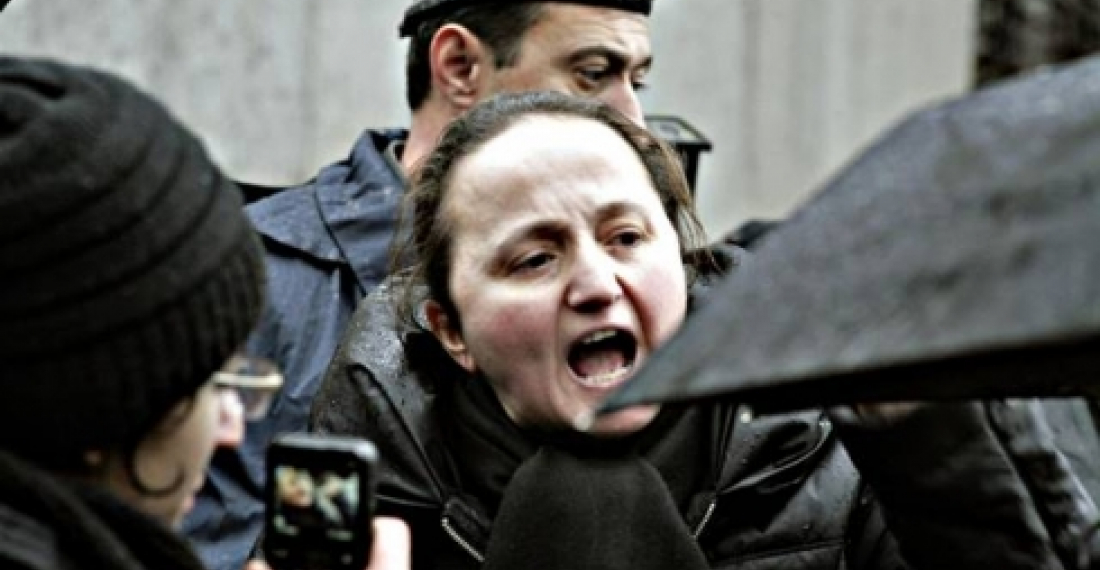
Фото: Нана Мурадян, чей сын, рядовой Валерик Мурадян был найден повешенным в своей воинской части 15 марта 2010 года. Несмотря на то, орган предварительного следствия считал доказанным тот факт, что Валерика Мурадяна подтолкнули к самоубийству до сих пор в его деле нет подозреваемых или задержанных. (Фотографию предоставила Армине Закарян, "Мирный Диалог".)
 

Related articles

Editor's choice
News
Uzbekistan strengthens its relations with China and US

Uzbekistan strengthens its relations with China and US

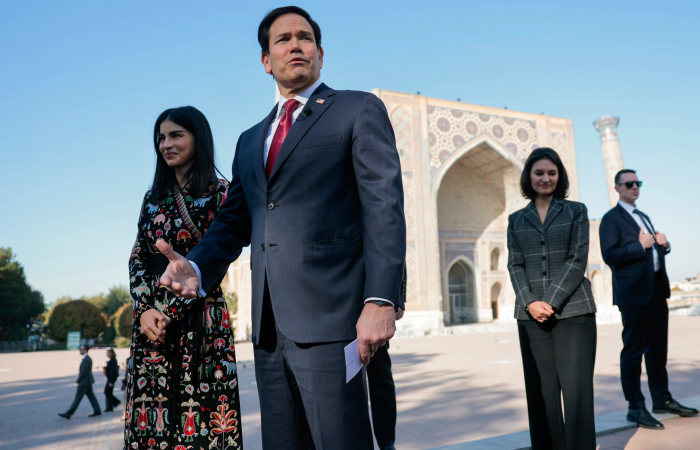
In recent days, Uzbekistan welcomed the Chinese and American governments in quick succession. During Chinese Premier Li Qiang’s visit on 17-18 October, the Uzbek presidential administration said that joint projects backed by firm agreements had reached nearly $60 billion. US Secretary of State Marco Rubio then arrived in Samarkand for C5+1 talks, accompanied at the time by American business leaders seeking contracts, particularly in critical minerals. During the visit, Uzbekistan announced 54 agreements covering trade, investment, and technology. The agreements are said to be worth a total of $12 billion, according to Uzbekistan’s Ministry of Investment, Industry and Trade. However, China still accounts for 23% of Uzbekistan’s foreign trade in January-August 2026, while US goods trade with Uzbekistan totalled at $1.05 billion in 2025, which is less than a fifteenth of the value of its trade with China. Rubio said Washington was not asking Central Asian countries to stop cooperating with other partners, but would instead compete for investment. Tashkent is likely to welcome investment from both sides, but the trade gap shows how challenging it will be if it were to decrease its dependence on Beijing. “Chinese Premier Li Qiang visited Uzbekistan on October 17–18, just ahead of United States Secretary of State Marco Rubio, who arrived in Samarkand on October 18 with a delegation of American business leaders seeking new contracts. While China already has a substantial presence in Uzbek manufacturing and energy, Washington is seeking to expand American involvement in critical minerals and technology. The visits highlight the growing competition between the world’s two largest economies for influence in Central Asia. On October 17, President Shavkat Mirziyoyev received Li Qiang. According to the Uzbek presidential administration, the portfolio of joint projects backed by firm agreements has reached nearly $60 billion. More than 6,000 joint ventures with Chinese participation have been established in Uzbekistan. (...) Construction of the China–Kyrgyzstan–Uzbekistan railway was another topic of discussion. Work officially began in December 2024. The route will cross mountainous areas of Kyrgyzstan and connect the railway networks of China and Uzbekistan. The 304-kilometer section through Kyrgyzstan alone is estimated to cost $4.7 billion and will require 50 bridges and 29 tunnels. (...) On October 19, Rubio attended talks in Samarkand under the C5+1 format, bringing together the U.S. and Kazakhstan, Kyrgyzstan, Tajikistan, Turkmenistan, and Uzbekistan. Rubio said nearly 300 American businesses were represented in Samarkand. Companies were discussing agreements potentially worth billions of dollars, with concrete announcements expected following the meetings. Among Washington’s priorities are critical minerals used in advanced technologies, including electronics and batteries.”

Popular

Editor's choice
Interview
Thursday Interview: Murad Muradov

Thursday Interview: Murad Muradov

Today, commonspace.eu starts a new regular weekly series. THURSDAY INTERVIEW, conducted by Lauri Nikulainen, will host  persons who are thinkers, opinion shapers, and implementors in their countries and spheres. We start the series with an interview with Murad Muradov, a leading person in Azerbaijan's think tank community. He is also the first co-chair of the Action Committee for a new Armenian-Azerbaijani Dialogue. Last September he made history by being the first Azerbaijani civil society activist to visit Armenia after the 44 day war, and the start of the peace process. Speaking about this visit Murad Muradov said: "My experience was largely positive. My negative expectations luckily didn’t play out. The discussions were respectful, the panel format bringing together experts from Armenia, Azerbaijan, and Turkey was particularly valuable during the NATO Rose-Roth Seminar in Yerevan, and media coverage, while varied in tone, remained largely constructive. Some media outlets though attempted to represent me as more of a government mouthpiece than an independent expert, which was totally misleading.  Overall, I see these initiatives as important steps in rebuilding trust and normalising professional engagement. The fact that soon a larger Azerbaijani civil society visits to Armenia followed, reinforces the sense that this process is moving in the right direction." (click the image to read the interview in full)

