Воинская обязанность - проблема, присущая и Армении, и Азербайджану.
Главный военный комиссар Армении был отправлен в отставку. Армянские СМИ предполагают, что увольнение связано с проблемами в призывной системе, которая каждый год призывает молодых армянских мужчин на службу в армию.

По сообщению информационного агентства Медиамакс, пресс-секретарь Министерства обороны Армении Арцрун Ованнисян заявил, что "в ближайшее время система военного призыва подвергнется фундаментальным изменениям"."В нынешней системе действуют унаследованные от советского времени механизмы, которые не оправдывают себя. С другой стороны, родители солдат каждый год идут на тысячи новых уловок, что нарушает принципы справедливого военного призыва",- сказал он.

Агентство цитирует слова Ованнисяна, заявившего, что "в этом году призыв не прошел гладко, и начало реформам было поставлено уходом с должности главного военкома Армении."

Проблема это не новая и не ограничивается только Арменией. И Армения, и Азербайджан унаследовали ее от Советского Союза, который строил свою оборону на постоянной, большой армии скомплектованной в основном из призывников. Советские военные планы предусматривали в бою развертывание первой волны сотни тысяч призывников, зная, что многие из них умрут, и держали более закаленных и опытных для дальнейших событий. Неудивительно, что воинская повинность была очень непопулярной в те дни. Она ничем не отличается и сейчас, и многие родители делают все возможное, чтобы уберечь своих детей от призыва. Это делается разными путями, кто-то утверждает, что человек болен, кто-то по протекции, а кто-то просто даёт взятку.

И армянские, и азербайджанские войска были пронизаны обвинениями в жестоком обращении с призывниками. Хотя и произошли  некоторые улучшения в условиях в последние годы. И президент Алиев и Серж Саргсян, как известно, проявляют личную заинтересованность в создании условий для призывников, и оба побывали в казармах призывников за последнее время, чтобы самим увидеть условия их прибывания. Проблемы, однако, остаются. Отставка главного военного Комиссара Армении рассматривается как позитивный шаг в процессе столь необходимых реформ военной практики в регионе.

Источник: commonspace.eu

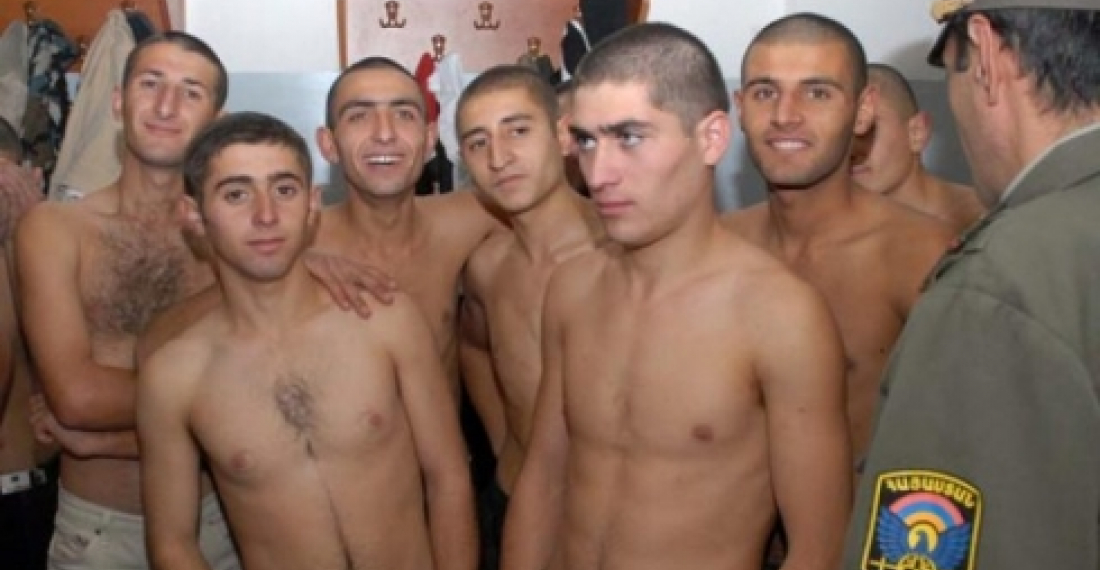
Фото: Призыв новобранцев в армянскую армию (фото из архива)

Related articles

Editor's choice
News
Indian Foreign Minister meets Aliyev in Baku

Indian Foreign Minister meets Aliyev in Baku

On October 23, President of the Republic of Azerbaijan Ilham Aliyev received Subrahmanyam Jaishankar, Minister of External Affairs of the Republic of India. The Minister first conveyed the greetings of Indian President Droupadi Murmu and Prime Minister Narendra Modi to the head of state. Recalling the meeting between the President of Azerbaijan and the Prime Minister of India in Bishkek, Subrahmanyam Jaishankar said that he was visiting Azerbaijan on the instructions of Prime Minister Narendra Modi. President Ilham Aliyev expressed his gratitude for the greetings and asked the Minister to convey his regards to the President and Prime Minister of India. The head of state fondly recalled his meeting with Indian Prime Minister Narendra Modi in Bishkek and the exchange of views during that meeting. President Ilham Aliyev highly appreciated the visit of India’s Minister of External Affairs to Azerbaijan on the instructions of Prime Minister Narendra Modi, stressing its importance for discussing the current state and prospects of bilateral relations. During the meeting, the sides held an extensive exchange of views on the current state of relations between Azerbaijan and India, highlighting ample opportunities to develop cooperation in areas of mutual interest. The sides noted that Azerbaijan and India, as members of the Global South, share similar positions on a number of issues on the international agenda, including matters of concern to countries of the Global South. In this regard, they discussed prospects for bilateral cooperation in political, trade and economic, high-tech, cultural, humanitarian and other fields. The conversation also touched upon the importance of cooperation within international organizations. The sides emphasized the need to intensify political contacts and organize reciprocal visits at various levels, including exchanges involving economic and business delegations, to further advance bilateral relations.

Popular

Editor's choice
Interview
Thursday Interview: Murad Muradov

Thursday Interview: Murad Muradov

Today, commonspace.eu starts a new regular weekly series. THURSDAY INTERVIEW, conducted by Lauri Nikulainen, will host  persons who are thinkers, opinion shapers, and implementors in their countries and spheres. We start the series with an interview with Murad Muradov, a leading person in Azerbaijan's think tank community. He is also the first co-chair of the Action Committee for a new Armenian-Azerbaijani Dialogue. Last September he made history by being the first Azerbaijani civil society activist to visit Armenia after the 44 day war, and the start of the peace process. Speaking about this visit Murad Muradov said: "My experience was largely positive. My negative expectations luckily didn’t play out. The discussions were respectful, the panel format bringing together experts from Armenia, Azerbaijan, and Turkey was particularly valuable during the NATO Rose-Roth Seminar in Yerevan, and media coverage, while varied in tone, remained largely constructive. Some media outlets though attempted to represent me as more of a government mouthpiece than an independent expert, which was totally misleading.  Overall, I see these initiatives as important steps in rebuilding trust and normalising professional engagement. The fact that soon a larger Azerbaijani civil society visits to Armenia followed, reinforces the sense that this process is moving in the right direction." (click the image to read the interview in full)