


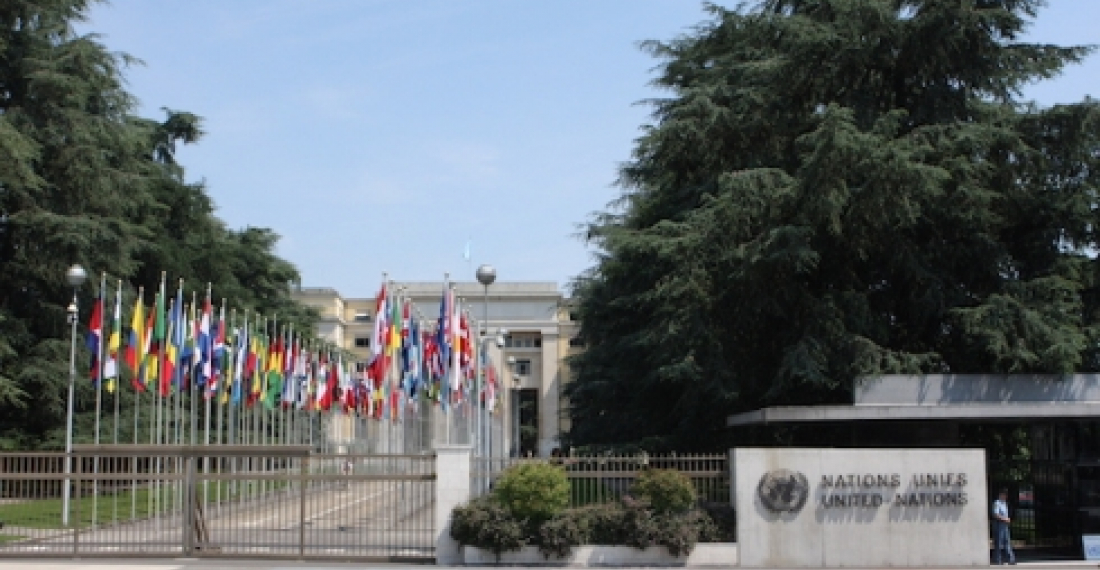
В Женеве состоялся 36-й раунд международных переговоров по Южному Кавказу

В четверг, 16 июня, в Женеве состоялся очередной раунд международных переговоров между представителями Грузии и де-факто властями Абхазии и Цхинвальского региона.

Переговоры прошли в напряженной обстановке, ввиду убийства 19 мая на т.н. административной границе гражданина Грузии, Гиги Отхозория. Грузия обвиняет абхазские власти в том, что они не реагируют должным образом на данной инцидент, требуя уголовного преследования обвиняемого лица." "К сожалению, представители оккупационного режима [абхазские власти] не предоставили никакой ценной информации по этому делу," говорится в заявлении МИД Грузии.

Заместитель министра иностранных дел Грузии Давид Дондуа сообщил, что абхазская сторона проявила "безответственный подход" к этому делу". Он сказал, что все участники переговоров даже с российской стороны, призвали абхазскую сторону к аресту предполагаемого преступника.

По словам заместителя министра иностранных дел РФ Григория Карасина, "встреча прошла напряженно и остро, но в допустимых пределах... В результате взыскательного разговора по некоторым практическим вопросам было достигнуто продвижение вперед".

В ходе 36-ого раунда переговоров сопредседателями которых являются представители ЕС, ООН и ОБСЕ, стороны также обсудили вопрос перемещенных лиц.

"Делегации Абхазии и Южной Осетии заявили в этой связи резкий протест, потребовали исключения пункта о беженцах из повестки дня Женевских дискуссий...", - говорится в заявлении МИД РФ.

Грузинская же сторона заявила о том, что это "указывает на их неконструктивный подход в отношении прав человека и гуманитарных вопросов, а также к общим принципам Женевских переговоров."

Следующий раунд переговоров запланирован на 4-5 октября.

источник: commonspace.eu по материалам агентств

фото: Штаб-квартира Организации Объединенных Наций в Женеве

 

Related articles

Editor's choice
News
The British prime minister says Europe must "stand on its own two feet" when it comes to defence

The British prime minister says Europe must "stand on its own two feet" when it comes to defence

The UK will deploy a carrier strike group, led by the aircraft carrier HMS Prince of Wales to the Arctic and the High North as part of efforts to bolster security against Russian threats. British prime minister, Sir Keir Starmer announced the deployment in a speech on Saturday (14 February) at the Munich Security Conference. Europe must be ready to fight to protect its people, values, and way of life,  Sir Keir told the Conference. Starmer also called for deeper links and cooperation, including economic ties, between the UK and EU. The PM stressed the continent must "stand on its own two feet" when it comes to defence commitments. "We must build our hard power, because that is the currency of the age," he told the conference. (Click image to read the full story).

Popular

Editor's choice
Interview
Thursday Interview: Murad Muradov

Thursday Interview: Murad Muradov

Today, commonspace.eu starts a new regular weekly series. THURSDAY INTERVIEW, conducted by Lauri Nikulainen, will host  persons who are thinkers, opinion shapers, and implementors in their countries and spheres. We start the series with an interview with Murad Muradov, a leading person in Azerbaijan's think tank community. He is also the first co-chair of the Action Committee for a new Armenian-Azerbaijani Dialogue. Last September he made history by being the first Azerbaijani civil society activist to visit Armenia after the 44 day war, and the start of the peace process. Speaking about this visit Murad Muradov said: "My experience was largely positive. My negative expectations luckily didn’t play out. The discussions were respectful, the panel format bringing together experts from Armenia, Azerbaijan, and Turkey was particularly valuable during the NATO Rose-Roth Seminar in Yerevan, and media coverage, while varied in tone, remained largely constructive. Some media outlets though attempted to represent me as more of a government mouthpiece than an independent expert, which was totally misleading.  Overall, I see these initiatives as important steps in rebuilding trust and normalising professional engagement. The fact that soon a larger Azerbaijani civil society visits to Armenia followed, reinforces the sense that this process is moving in the right direction." (click the image to read the interview in full)


