Широкое осуждение насилия со стороны полиции в отношении журналистов в Армении.

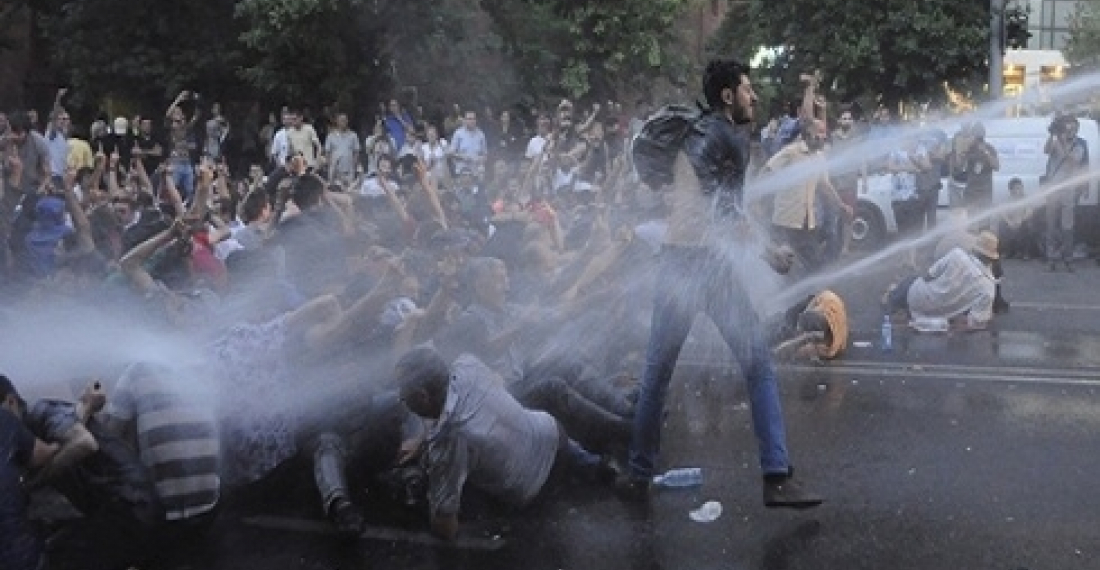
Ситуация в столице Армении, в Ереване, остается напряженной. Демонстранты продолжают протестовать против повышения тарифов на электроэнергию. В ночь на понедельник полиция применила силу для разгона протестующих. Сотни граждан были арестованы. Демонстранты перегруппировались и к ним присоединились оппозиционные депутаты и другие общественные лица.

В то же время, в мире широко осудили чрезмерное применение силы со стороны полиции, и нападения на журналистов, освещавших события.

Иоганн Бир, глава бюро по Восточной Европе и Центральной Азии в Репортеры без границ, также осудил "насилие полиции в отношении журналистов, которые просто делали свою работу в законопослушной манере." Он сказал, что "действия полиции не должны остаться безнаказанными, иначе их агрессивное поведение повторится снова и может стать нормой. Полицейские, напавшие на журналистов должны быть привлечены к ответственности."

Высокопоставленный чиновник из Организации по безопасности и сотрудничеству в Европе выразил серьезную озабоченность в связи с тем, что стало, по его словам, худшим примером санкционированного государством насилия в отношении армянских журналистов за последние годы.

"Я призываю власть незамедлительно расследовать эти инциденты и принять меры для обеспечению сдержанности со стороны представителей правоохранительных органов по отношению к членам средств массовой информации", сказал Дуня Миятович, представитель ОБСЕ по вопросам свободы прессы, в заявлении, которое прозвучало через несколько часов после разгона полицией акции протеста против роста цен на электроэнергию.

Однако, власти Армении пока никак не отриагировали на призыв расследовать действия сил безопасности по отношению к журналистам, освещавших разгон демонстрантов.

Несколько журналистов, работающих в СМИ, не контролируемых правительством были среди более чем 230 человек, которые были арестованы в ходе полицейской операции. Все они были освобождены из-под стражи в последующие часы.

"Они задержали меня на проспекте Баграмяна, после того, как закончили избивать протестующих," сказал Мкртыч Карапетян, корреспондент газеты "Айкакан Жаманак".

По крайней мере, четверо других журналистов, корреспондент независимого телеканала ГАЛА и три оператора службы новостей 1in.am, были избиты и тяжело ранены правоохранительными органами в штатском. Последним также разбили их цифровые видеокамеры и конфисковали карты памяти, содержащие драматические кадры операции.

Насилие в отношении журналистов, как показалось, приказали высокопоставленные чиновники, контролирующие ход разгона демонстрантов. Генерал Левон Ераносян, командующий войсками полиции Армении, обругал на сленге журналистов RFE/RL Артура Папяна и Сисака Габриеляна и оператора Гарика Азизбекияна, когда они были атакованы его подчиненными на площади Свободы.

Офицеры разбили мобильные телефоны журналистов и разбили камеру, которая использовалась для освещения ночных протестов в прямом эфире. Азизбекиян был вынужден отдать карты памяти с камеры.

Полиция, как показалось, очень сильно хотела заполучить профессиональные кадры разгона толпы. "Они не отпускали меня, пока я не достал чип", сказал Айк Бадалян из фото агентства Фотолур.

Акоп Карапетян, корреспондент Ilur.am, сообщил, что он был задержан полицейскими после того, как он сфотографировал Ераносяна лично выхватывающего камеру из рук другого репортера и бьющего камеру о землю. "Они взяли меня к заместителю начальника национальной полиции, Хунаню Погосяну и Ераносяну," написал он на своей страничке в Facebook. "Погосян приказал достать чип памяти из камеры и отдать ему. Ераносян в то же время прорычал на него бранными словами."

Полиция отрицает какую-либо вину в заявлении, опубликованном в тот же день. В заявлении говорится, что журналисты "последовательно игнорируют законные призывы полиции сохранять разумную дистанцию от места митинга" и, таким образом, "фактически стали участниками митинга."

Со своей стороны, Следственный комитет Армении, еще один правоохранительный орган страны, ясно дал понять, что не будет возбуждать уголовное дело в связи с насилием полиции против журналистов.

источник: Commonspace.eu по материалам Радио Свободы

фото: любезно предоставлено RT

Related articles

Editor's choice
News
COP 17 in Armenia

COP 17 in Armenia

Armenia is currently hosting the COP17 conference of the Convention on Biological Diversity, which began earlier this week (19 October) and will run until 30 October, bringing around 15,000 participants from 196 different countries to Yerevan. At a leaders' summit held as part of COP17, Prime Minister Nikol Pashinyan expressed realistic ambitions: “We are halfway towards achieving these goals (Kunming-Montreal Global Biodiversity Framework), and we must honestly acknowledge that we are not yet moving in the right direction. Our task now is not to make new promises, but to fulfil the commitments we have already made.” Pashinyan pointed towards Armenia's own records, noting that the whitefish stock in Lake Sevan has increased substantially in the last ten years. Iranian President Masoud Pezeshkian and Georgian Prime Minister Irakli Kobakhidze also addressed the summit, with Turkiye sending its agriculture minister. However, there were no reports of Azerbaijani representatives attending. The conference has given Yerevan a valuable international platform, yet the absence of Azerbaijan is likely to be read as a sign that the peace process in the South Caucasus has not yet been translated into wider regional cooperation. The leaders' summit was opened by Armenian Prime Minister Nikol Pashinyan, who stressed that hosting the conference was a great honour for Armenia. He expressed hope that it would 'be productive and contribute to protecting our planet's biodiversity'. 'We – the citizens of Armenia, the government, state authorities and local governments – owe a debt to our nature,' the prime minister said. He noted that the international community had already developed the concept of 'living in harmony with nature’ and adopted the Kunming-Montreal Global Biodiversity Framework in 2022, setting out goals and specific targets to be achieved by 2030. 'We are halfway towards achieving these goals, and we must honestly acknowledge that we are not yet moving in the right direction. Our task now is not to make new promises, but to fulfil the commitments we have already made,' Nikol Pashinyan said. The COP17 conference is expected to adopt a declaration at leaders' level. More than 30 documents are scheduled for discussion. If approved, the commitments set out in them will become legally binding on countries that are parties to the Convention on Biological Diversity.”
Editor's choice
News
Landmines present to the European Union both a contradiction and a dilemma

Landmines present to the European Union both a contradiction and a dilemma

Finland’s decision to buy one million landmines creates a serious contradiction in the policy of the European Union, and is symbolic of a bigger dilemma facing European countries as they get used to the need to acquire “hard” power to face an increasing threat from Russia. Finland is seeking to acquire one million anti-personnel mines at a cost of 100 million euros. Finland, together with Poland, Latvia, Lithuania and Estonia last year abandoned the Ottawa agreement, the international framework that bans the use of anti-personnel mines, which the EU had been instrumental in establishing and supporting. All five countries cite the threat from Moscow as the reason. Colonel Riku Mikkonen of the Army Command told Finland’s national news agency STT that officials are now gathering information from suppliers regarding the deal, the AFP news agency reports. Helsinki would like domestic manufacturers to supply the mines, with contracts signed by the end of 2027 and production up and running by 2028. “It would be useful in many ways if Finnish companies produced the anti-personnel mines in Finland,” Mikkonen said. About half a dozen Finnish firms qualify, he told STT. “However, at this stage, buying the mines from abroad is not totally ruled out,” he added. LANDMINES PROVIDE THE EU WITH BOTH A CONTRADICTION, AND A DILEMMA Eliminating landmine contamination worldwide is one of the EU’s main soft power postures, and it basks in its record as the biggest funder of anti-landmine action in the world. But the fact that 5 of its 27 member states  have now left the Ottawa Treaty dents the EU moral high ground. It is a contradiction that is too big and important to be ignored. It also presents the European Union with a deeper dilemma. The threat from Russia is changing what the EU has stood for decades, namely a force for good able to mobilise its considerable soft power for the greater good of humanity. How the Union will implement this change will define its future. In the meantime landmines have not become any less lethal, benign, or unimportant. They remain in many parts of the world a major threat to life, an impediment to prosperity, and a potential trigger to further conflict. The 22 EU members states that still adhere to the Ottawa treaty must regroup, and be more assertive in their quest against anti-personnel land mines. All the reasons why they supported the Ottawa treaty in the first place still exist. The message must be clear: NO TO LANDMINES!

Popular

Editor's choice
Interview
Thursday Interview: Murad Muradov

Thursday Interview: Murad Muradov

Today, commonspace.eu starts a new regular weekly series. THURSDAY INTERVIEW, conducted by Lauri Nikulainen, will host  persons who are thinkers, opinion shapers, and implementors in their countries and spheres. We start the series with an interview with Murad Muradov, a leading person in Azerbaijan's think tank community. He is also the first co-chair of the Action Committee for a new Armenian-Azerbaijani Dialogue. Last September he made history by being the first Azerbaijani civil society activist to visit Armenia after the 44 day war, and the start of the peace process. Speaking about this visit Murad Muradov said: "My experience was largely positive. My negative expectations luckily didn’t play out. The discussions were respectful, the panel format bringing together experts from Armenia, Azerbaijan, and Turkey was particularly valuable during the NATO Rose-Roth Seminar in Yerevan, and media coverage, while varied in tone, remained largely constructive. Some media outlets though attempted to represent me as more of a government mouthpiece than an independent expert, which was totally misleading.  Overall, I see these initiatives as important steps in rebuilding trust and normalising professional engagement. The fact that soon a larger Azerbaijani civil society visits to Armenia followed, reinforces the sense that this process is moving in the right direction." (click the image to read the interview in full)