Официальный визит Алиева в Иран. Визит может открыть новую главу в отношениях двух стран.
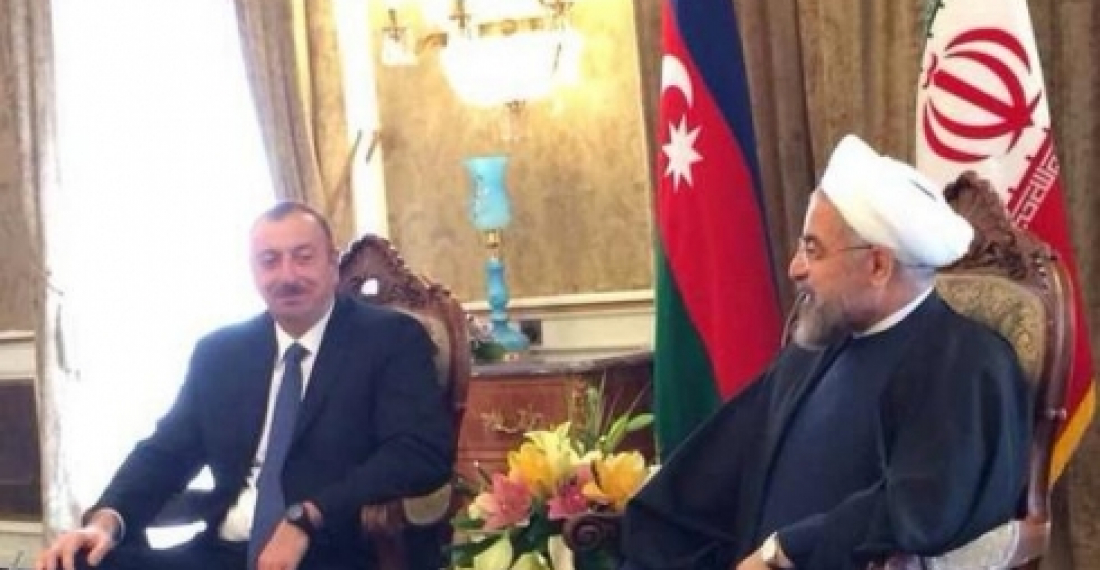
Президент Азербайджана Ильхам Алиев находится с официальным визитом в Иране. Сегодня утром он встретился с иранским президентом Хасаном Роухани, а позже встретиться с духовным лидером Ирана, Аятолла Хаменеи.

Политический редактор Commonspace.eu сообщает, что за последние два десятилетия отношения между Ираном и Азербайджаном испытали множество взлетов и падении, но руководство обеих стран пыталось всегда поддерживать хорошие отношения даже в самые трудные моменты. В последнее время отношения стали более стабильными и визит президента Алиева может открыть новую главу в их отношениях. Азербайджан хотел бы видеть в отношениях с Ираном развитие в области торговли. Он также хотел бы видеть больше поддержки со стороны Ирана в его  конфликте с Арменией из-за Нагорного Карабаха. Президент Алиев надеется, что реформы, взявшие начало с избранием нового президента Ирана, принесут пользу отношениям между двумя странами, и что более важно сдержат радикальные исламские элементы, которые в прошлом видели в Азербайджане, населенном в основном шиитами, как возможную цель для их деятельности. Со своей стороны Иран тревожило на протяжении многих лет западная и особенно израильская военная и разведывательная деятельность в Азербайджане, которая по его утверждением была направлена против ее интересов.

Независимо от этих и других озабоченностей двух сторон, оба правительства заинтересованы в хороших двусторонних отношениях, а также в постоянном диалоге по таким вопросам, как будущее Каспийского моря. С событиями в Украине, которые превращают Россию в непредсказуемого соседа, Азербайджан особенно будет стремится обеспечить стабильные и доброжелательные отношения с его большим южным соседом.

источник: commonspace.eu

фото: Президент Алиев на встрече с президентом Ирана Роухани в Тегеране, 9 Апреля 2014 (фото любезно предоставлено с Твиттер'а  президента Ирана).

Related articles

Editor's choice
News
The British prime minister says Europe must "stand on its own two feet" when it comes to defence

The British prime minister says Europe must "stand on its own two feet" when it comes to defence

The UK will deploy a carrier strike group, led by the aircraft carrier HMS Prince of Wales to the Arctic and the High North as part of efforts to bolster security against Russian threats. British prime minister, Sir Keir Starmer announced the deployment in a speech on Saturday (14 February) at the Munich Security Conference. Europe must be ready to fight to protect its people, values, and way of life,  Sir Keir told the Conference. Starmer also called for deeper links and cooperation, including economic ties, between the UK and EU. The PM stressed the continent must "stand on its own two feet" when it comes to defence commitments. "We must build our hard power, because that is the currency of the age," he told the conference. (Click image to read the full story).

Popular

Editor's choice
Interview
Thursday Interview: Murad Muradov

Thursday Interview: Murad Muradov

Today, commonspace.eu starts a new regular weekly series. THURSDAY INTERVIEW, conducted by Lauri Nikulainen, will host  persons who are thinkers, opinion shapers, and implementors in their countries and spheres. We start the series with an interview with Murad Muradov, a leading person in Azerbaijan's think tank community. He is also the first co-chair of the Action Committee for a new Armenian-Azerbaijani Dialogue. Last September he made history by being the first Azerbaijani civil society activist to visit Armenia after the 44 day war, and the start of the peace process. Speaking about this visit Murad Muradov said: "My experience was largely positive. My negative expectations luckily didn’t play out. The discussions were respectful, the panel format bringing together experts from Armenia, Azerbaijan, and Turkey was particularly valuable during the NATO Rose-Roth Seminar in Yerevan, and media coverage, while varied in tone, remained largely constructive. Some media outlets though attempted to represent me as more of a government mouthpiece than an independent expert, which was totally misleading.  Overall, I see these initiatives as important steps in rebuilding trust and normalising professional engagement. The fact that soon a larger Azerbaijani civil society visits to Armenia followed, reinforces the sense that this process is moving in the right direction." (click the image to read the interview in full)