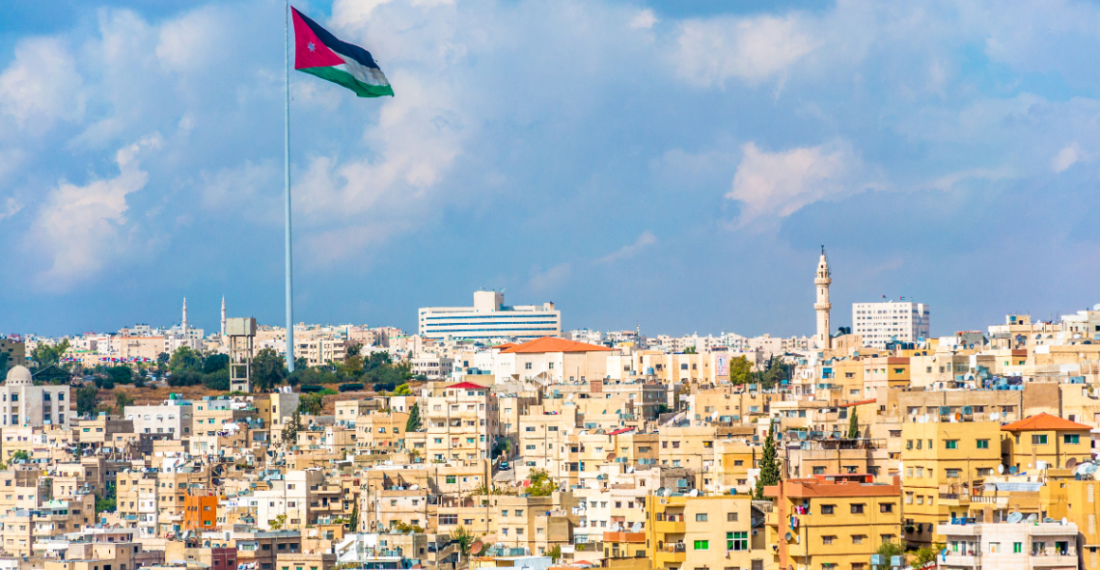
Jordan becomes central to Iranian focus

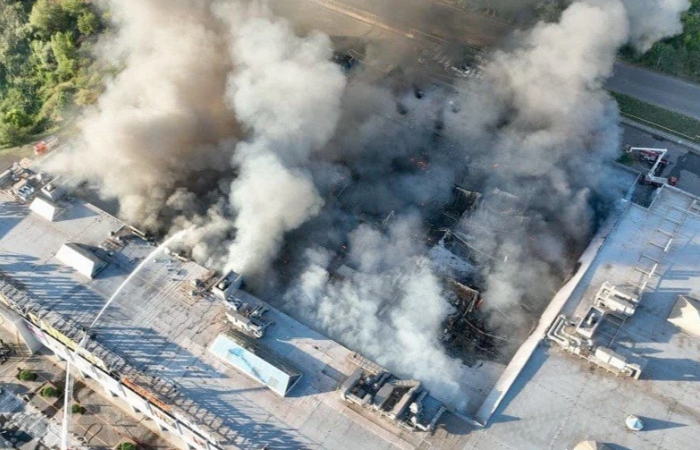
Four Iranian attacks targeted American troops in Jordan in five days, US officials said, including one on Friday that killed two soldiers and left another missing.

In total, dozens of American servicemen were injured in these attacks, as well as several helicopters were damaged.

The barrage of attacks and the casualties they inflicted indicate that Iranian forces not only still have a sufficient stockpile of missiles, but have also become more adept at evading American air defense systems, American officials said.

The New York Times writes that Jordan, home to major US air bases, has become more important in the run-up to and early days of the war as the Pentagon has moved some troops from Bahrain, the United Arab Emirates and Qatar to safer locations in Jordan and Israel. The country's role in the US operation has only grown as other US allies in the region have limited Washington's ability to deploy troops and conduct airstrikes on their territory, US officials have said.

US officials have provided a brief overview of the last five days of Iranian attacks on Jordan, which the Pentagon has not yet publicly discussed in detail.

The first attack on US troops in Jordan hit a residential compound at King Faisal Air Base, injuring up to five US service members, they said. A second missile hit a base in eastern Jordan where US Black Hawk helicopters were stationed, significantly damaging some of them.

In addition, Iranian missiles hit Jordan's Muwaffak Salt Air Base in Azraq, the same base where US soldiers were killed on Friday.

The previous strike had injured about 20 American soldiers trying to take shelter in bunkers. No one was killed during that attack.

source: commonspace.eu, with The New York Times (New York) and agencies
Related articles

Editor's choice
News
Andy Burnham pledges support for Ukraine on the day he became prime minister

Andy Burnham pledges support for Ukraine on the day he became prime minister

Andy Burnham is the new British prime minister. He was appointed at an audience with King Charles III at Buckingham Palace at lunchtime on Monday (20 July). On Friday, Burnham was unanimously declared leader of the Labour Party. Just before taking office, Burnham declared his full support for Ukraine. He said he will speak on the phone with president Zelenkiy later in the day to assure him of continued UK support for Ukraine.. Greeted by cheers and applause as he arrived at Number 10 Downing Street to make his maiden speech, Mr Burnham said he was “acutely conscious that I am the sixth person in the last ten years to walk up this street, the seventh prime minister since 2016.” Describing the moment as an opportunity for reflection, he said his generation of politicians needed to raise their game. “Britain needs to show the world that we can regain our stability again,” he said. “I know people at home are fed up with politics. I hear you, and I want to be honest with you,” he continued, “We have not been good enough and we need to be better.” Earlier, the Palace issued a formal notice saying Mr Burnham, 56, had met with the king and was requested to form a new administration. “Andrew Burnham MP accepted The King’s offer and kissed hands upon his appointment as Prime Minister and First Lord of the Treasury,” the notice said. Mr Burnham is the UK’s seventh prime minister in ten years - and the fifth in the last four years - after Borris Johnson left office in September 2022.

Popular

Editor's choice
Interview
Thursday Interview: Murad Muradov

Thursday Interview: Murad Muradov

Today, commonspace.eu starts a new regular weekly series. THURSDAY INTERVIEW, conducted by Lauri Nikulainen, will host  persons who are thinkers, opinion shapers, and implementors in their countries and spheres. We start the series with an interview with Murad Muradov, a leading person in Azerbaijan's think tank community. He is also the first co-chair of the Action Committee for a new Armenian-Azerbaijani Dialogue. Last September he made history by being the first Azerbaijani civil society activist to visit Armenia after the 44 day war, and the start of the peace process. Speaking about this visit Murad Muradov said: "My experience was largely positive. My negative expectations luckily didn’t play out. The discussions were respectful, the panel format bringing together experts from Armenia, Azerbaijan, and Turkey was particularly valuable during the NATO Rose-Roth Seminar in Yerevan, and media coverage, while varied in tone, remained largely constructive. Some media outlets though attempted to represent me as more of a government mouthpiece than an independent expert, which was totally misleading.  Overall, I see these initiatives as important steps in rebuilding trust and normalising professional engagement. The fact that soon a larger Azerbaijani civil society visits to Armenia followed, reinforces the sense that this process is moving in the right direction." (click the image to read the interview in full)