EU ministers to discuss direct talks with Russia

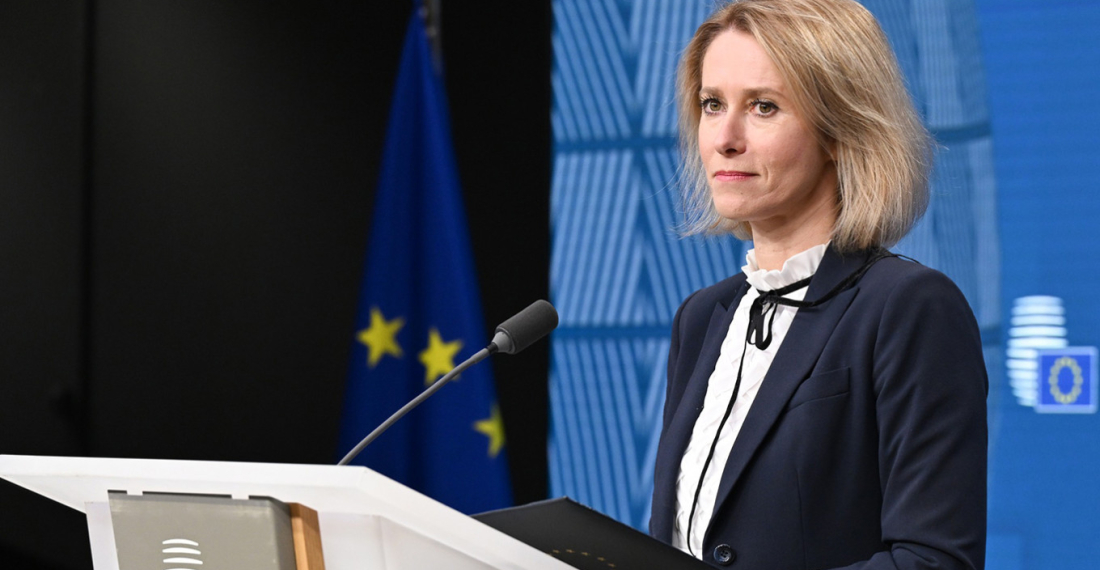
The European Union’s foreign policy chief, Kaja Kallas, said on Monday (11 May) that EU foreign ministers are planning to discuss the possibility of engaging in direct talks with Russia when they meet later this month.

“First, before we discuss with Russia, we should discuss among ourselves what we want to talk to them about,” Kallas told reporters. “There are, of course, a lot of questions related to our requests to Russia in order to have a stable and peaceful Europe.”

She said that EU foreign ministers will raise the issue of direct talks with Russia during an informal meeting in Cyprus between 27 and 28 May, as well as how to prevent Russia’s “constant” attacks on its neighbours.

“We need concessions, also from the Russian side,” Kallas said.

A senior Ukrainian official told the Financial Times that Kyiv welcomes the idea of “more coordination on the European level,” proposing a leader who could represent the EU and apply “more pressure” on Russia. In response to a question about “an ideal candidate to represent Europe” in restoring contacts with Russia, Vladimir Putin said: 

“Personally, I would prefer former German Chancellor Gerhard Schroeder. Otherwise, Europeans should choose a leader they trust, someone who has not badmouthed Russia. We have never closed the door to negotiations. It was not Russia that refused dialogue; it was our counterparts.”

Kallas has dismissed that idea, arguing that Schröder would be “sitting on both sides of the table” as a lobbyist for Russian state firms. Germany also called Putin’s suggestion “not credible.”

Source: commonspace.eu with The Moscow Times and the Kremlin
Related articles

Editor's choice
News
The United States and Iran agree on a deal. The Strait of Hormuz is expected to open on Friday.

The United States and Iran agree on a deal. The Strait of Hormuz is expected to open on Friday.

The United States and Iran agreed on a deal to halt the war between them.. The Strait of Hormuz  is expected to open on Friday. Last night, Pakistan's Prime Minister Shehbaz Sharif said the US and Iran "declared the immediate and permanent termination of military operations on all fronts, including in Lebanon". He added an official signing ceremony would take place in Switzerland on 19 June . US President Donald Trump said "The Deal with the Islamic Republic of Iran is now complete". He also said in a post on Truth Social that he authorised "the toll free opening of the Strait of Hormuz", and the removal of the US blockade of Iran’s ports. In a second post, he said the deal would "bring Peace and Security to the whole Region”, and that the opening of the strait would mean “oil will flow on both ends again for the Region, and the World". Iran’s Deputy Foreign Minister Kazem Gharibabadi confirmed on state telelvision, that a deal with the US had been finalised and that the official signing would happen in Switzerland on Friday. "An immediate and permanent end to the war and military operations on different fronts including Lebanon will be announced tonight," he said.  But questions will linger until the full final text is made public. (Click image to read the full article)

Popular

Editor's choice
Interview
Thursday Interview: Murad Muradov

Thursday Interview: Murad Muradov

Today, commonspace.eu starts a new regular weekly series. THURSDAY INTERVIEW, conducted by Lauri Nikulainen, will host  persons who are thinkers, opinion shapers, and implementors in their countries and spheres. We start the series with an interview with Murad Muradov, a leading person in Azerbaijan's think tank community. He is also the first co-chair of the Action Committee for a new Armenian-Azerbaijani Dialogue. Last September he made history by being the first Azerbaijani civil society activist to visit Armenia after the 44 day war, and the start of the peace process. Speaking about this visit Murad Muradov said: "My experience was largely positive. My negative expectations luckily didn’t play out. The discussions were respectful, the panel format bringing together experts from Armenia, Azerbaijan, and Turkey was particularly valuable during the NATO Rose-Roth Seminar in Yerevan, and media coverage, while varied in tone, remained largely constructive. Some media outlets though attempted to represent me as more of a government mouthpiece than an independent expert, which was totally misleading.  Overall, I see these initiatives as important steps in rebuilding trust and normalising professional engagement. The fact that soon a larger Azerbaijani civil society visits to Armenia followed, reinforces the sense that this process is moving in the right direction." (click the image to read the interview in full)