King Charles urges unity on US state visit

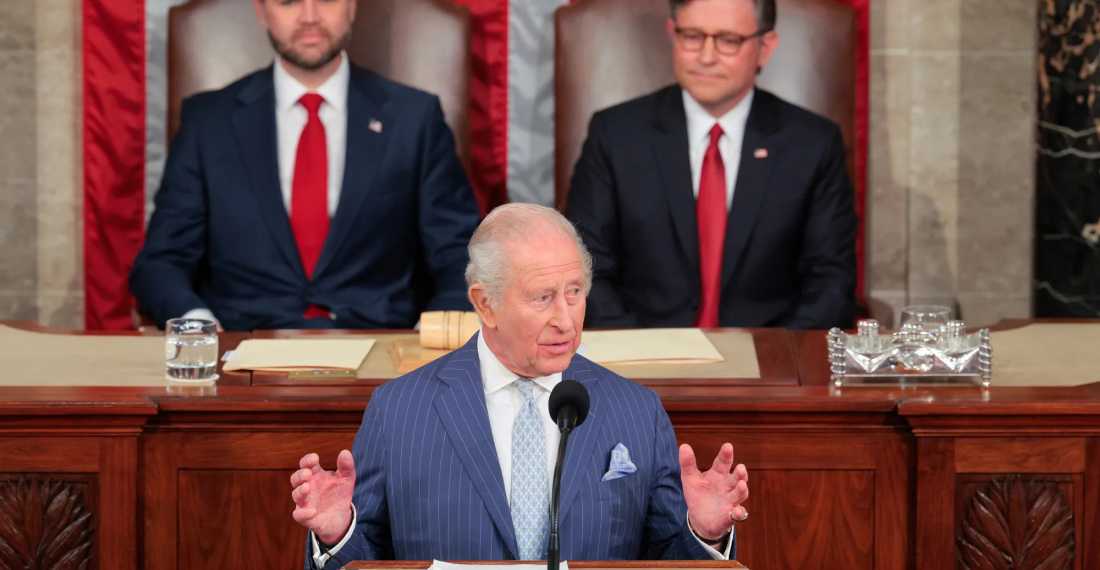
King Charles III is on a four-day state visit to the United States, becoming the first British monarch to address Congress since Elizabeth II in 1991, in a speech delivered on Tuesday (28 April).

In his address, the King reflected on a world marked by strain and uncertainty, from Europe to the Middle East. He stressed that protecting Ukraine and its “most courageous people” requires “unyielding resolve”, calling it essential to achieving a “truly just and lasting peace”.

He also underlined the importance of transatlantic security, describing it as part of a broader Atlantic alliance vision once articulated by Henry Kissinger and rooted in the leadership of John F. Kennedy, centred on cooperation between Europe and the United States.

In remarks interpreted as a subtle critique of Donald Trump’s presidency, the King emphasised the enduring importance of shared democratic values. “Our common ideals were not only crucial for liberty and equality, they are also the foundation of our shared prosperity,” he said, pointing to the rule of law, an independent judiciary, and stable legal systems as pillars of the transatlantic relationship.

At one point, he struck a lighter tone, recalling that the American rebellion against the Crown over “taxation without representation” stemmed from a shared democratic principle. He praised the “bold and imaginative rebels” who rejected what they saw as tyranny, noting that they carried forward ideas rooted in English common law and the Magna Carta. He added that the US Supreme Court has cited the Magna Carta more than 160 times as a foundation for checks and balances, prompting applause in the chamber.

Later, at a White House state dinner hosted by Trump, the King described the moment as an opportunity “to renew an indispensable alliance”. The US president, speaking at the same event, said Iran had been “militarily defeated” and added: “Charles agrees with me even more than I do – we’re never going to let that opponent have a nuclear weapon.”

Source: commonspace.eu with Ukrainska Pravda, BBC, and The Guardian
Related articles

Editor's choice
News
Deputy Prime Minister of Azerbaijan Mustafayev visits Armenia

Deputy Prime Minister of Azerbaijan Mustafayev visits Armenia

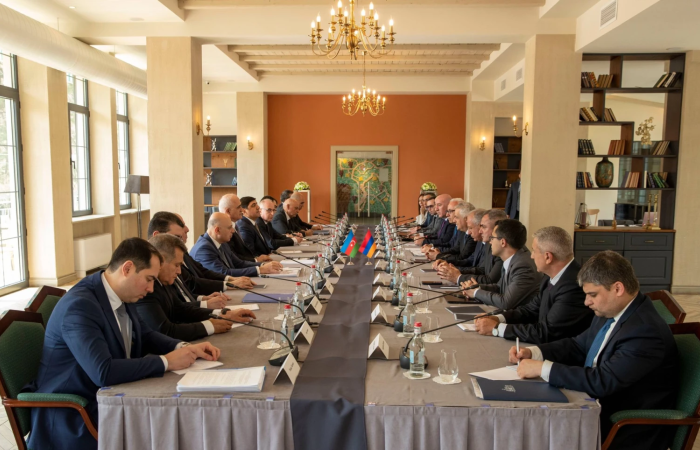
The Deputy Prime Minister of Azerbaijan has visited Armenia on Wednesday 29 April to participate in the the 13th meeting of the Commission on Demarcation and Border Security between the Republic of Armenia and the Republic of Azerbaijan and the State Commission on Demarcation of the State Border between the Republic of Azerbaijan and the Republic of Armenia, which was held in Aghveren. The Commission meeting was held under the chairmanship of Deputy Prime Minister of the Republic of Armenia Mher Grigoryan and Deputy Prime Minister of the Republic of Azerbaijan Shahin Mustafayev. A statement issued by the Ministry of Foreign Affairs of Armenia, noted with satisfaction that the 13th meeting of the commissions is once again taking place in the territory of one of the parties, in Aghveran, in the Republic of Armenia. "During the meeting, the parties exchanged detailed thoughts on organizational and technical issues related to border demarcation measures. The parties agreed and exchanged the texts of the following draft guidelines on the procedure for carrying out demarcation work:". Click the image to read the full report.

Popular

Editor's choice
Interview
Thursday Interview: Murad Muradov

Thursday Interview: Murad Muradov

Today, commonspace.eu starts a new regular weekly series. THURSDAY INTERVIEW, conducted by Lauri Nikulainen, will host  persons who are thinkers, opinion shapers, and implementors in their countries and spheres. We start the series with an interview with Murad Muradov, a leading person in Azerbaijan's think tank community. He is also the first co-chair of the Action Committee for a new Armenian-Azerbaijani Dialogue. Last September he made history by being the first Azerbaijani civil society activist to visit Armenia after the 44 day war, and the start of the peace process. Speaking about this visit Murad Muradov said: "My experience was largely positive. My negative expectations luckily didn’t play out. The discussions were respectful, the panel format bringing together experts from Armenia, Azerbaijan, and Turkey was particularly valuable during the NATO Rose-Roth Seminar in Yerevan, and media coverage, while varied in tone, remained largely constructive. Some media outlets though attempted to represent me as more of a government mouthpiece than an independent expert, which was totally misleading.  Overall, I see these initiatives as important steps in rebuilding trust and normalising professional engagement. The fact that soon a larger Azerbaijani civil society visits to Armenia followed, reinforces the sense that this process is moving in the right direction." (click the image to read the interview in full)