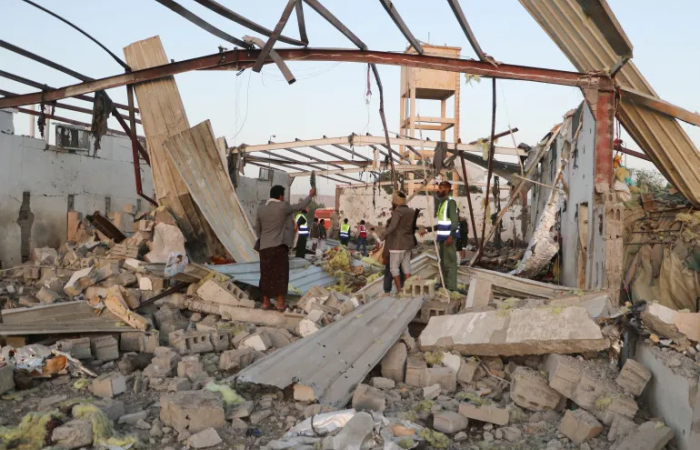
Pakistan has bombed a university in Afghanistan, amid an outbreak of new violence between the two neighbours. Pakistan and Afghanistan have accused one another of launching cross-border attacks.
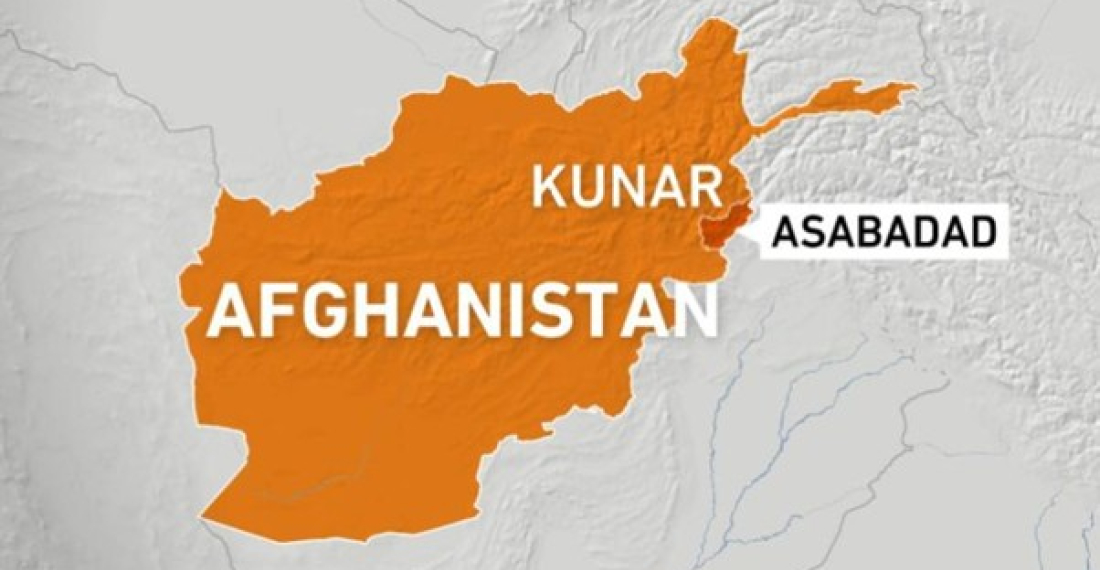
Afghanistan’s Taliban authorities said on Monday (27 April) that four people were killed in attacks in the eastern Kunar province. Pakistani officials reported that at least three civilians were injured by gunfire in South Waziristan.
The resumption of violence threatens fragile peace talks between the neighbours. The two countries agreed on a fragile ceasefire in March that halted weeks of violence.
The Taliban’s Deputy Spokesperson, Hamdullah Fitrat, said that the Pakistani military had launched mortar and rocket attacks that wounded 45 people.
He said that students, women, and children were among those injured as homes and the Sayed Jamaluddin Afghani University in Kunar province’s capital, Asadabad, came under fire.
A spokesman for Pakistan’s border forces described the incident in South Waziristan as the most serious clash since the ceasefire was declared.
The strikes marked the first major attack since the pair had agreed to halt the violence at peace talks last month, mediated by China.
Turkey, Qatar, the United Arab Emirates, and Saudi Arabia have also made efforts to halt the conflict, with relations between Pakistan and Afghanistan fraught since the Taliban took power for a second time in 2021.
Security issues have proved a sticking point, especially Pakistan’s demand that Afghanistan curb the Tehreek-e-Taliban Pakistan (TTP) armed group, which has conducted regular deadly attacks from its bases in Afghanistan.
Pakistan has witnessed a sharp rise in violence within the country in recent years, including suicide bombings and coordinated assaults targeting security forces.
Islamabad accuses the Taliban government of sheltering the TTP. However, Kabul rejects the charge, countering that it is Pakistan that harbours hostile groups and does not respect Afghanistan’s sovereignty.
The heaviest fighting in years was sparked in February after Afghanistan launched an operation against the Pakistani military along the 2,640km (1,640-mile) Durand Line, which separates the two nations.
Pakistan launched air strikes on Afghanistan’s capital, Kabul, and other cities, declaring that the two countries were at “open war”.
A truce was agreed in March during the Muslim holiday of Eid al-Fitr after weeks of fighting.
Mediator China later said the warring sides had agreed to avoid escalation, but the Afghans have since reported sporadic violence.
The new spurt of violence is reportedly linked to the shooting of a child by Pakistani military forces on Sunday near the Afghan border city of Spin Boldak, according to sources quoted by Afghanistan’s TOLOnews. Taliban forces subsequently engaged Pakistani troops.
Source: commonspace.eu with Al Jazeera (Doha) and agencies