MEPs call on Metsola to take measures against information leaks to Russia

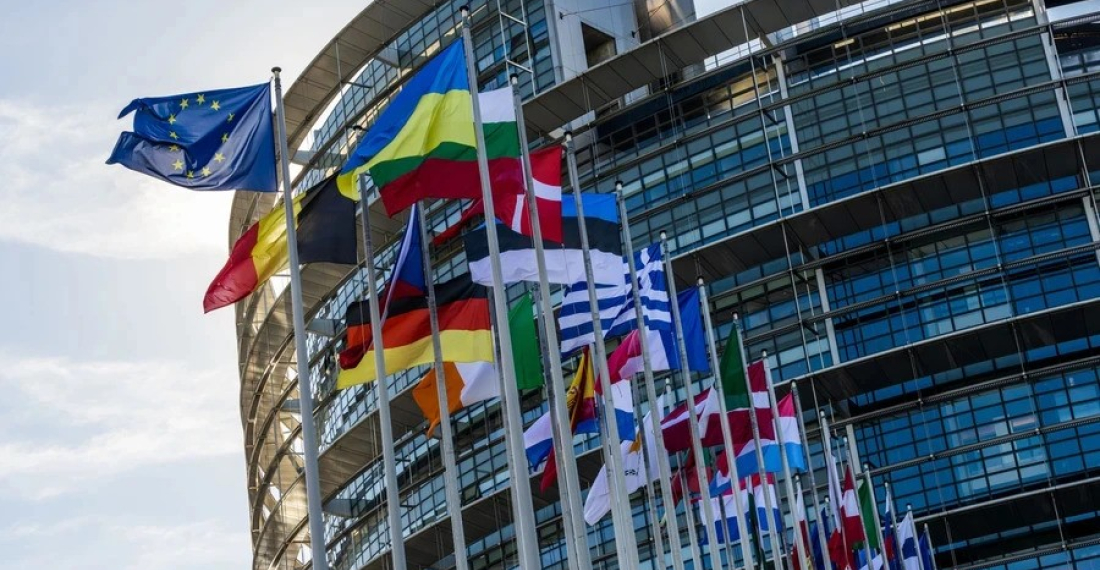
A group of ten Members of the European Parliament has called on European Parliament President Roberta Metsola to take urgent measures to prevent potential leaks of confidential information to Russia. In a letter sent on Wednesday (8 April), the lawmakers expressed concern over risks of sensitive information being accessed and shared by pro-Russian actors within EU institutions.

The letter, published by Lithuanian MEP Petras Auštrevičius, refers to “deep concern regarding recent allegations” that the Hungarian government may have deliberately shared confidential information obtained during EU Council meetings with the Russian authorities. The signatories warned that similar vulnerabilities may exist within the European Parliament.

The MEPs noted that these concerns have been raised repeatedly in recent years, but that no substantial changes have been implemented. As a result, members have been forced to rely on their own security precautions when handling sensitive information.

“Pro-Russian MEPs with links to Putin’s regime are still able to attend in camera committee meetings and hire staff without undergoing proper security or open-source screening,” the lawmakers said. “This enables them to collect sensitive information, including details of our military and financial support for Ukraine, and pass it on to the Russian side.”

The group urged Metsola to take immediate and concrete steps to implement recommendations put forward by the European Parliament’s special committee on foreign interference (INGE). These include reforms to rules on transparency, integrity, accountability, and anti-corruption.

They also called for measures to limit access to confidential information and official activities for certain openly pro-Russian MEPs and their offices.

The letter was signed by Petras Auštrevičius, Pekka Toveri, Thijs Reuten, Nathalie Loiseau, Villy Søvndal, Elio Di Rupo, Bart Groothuis, Markéta Gregorová, Merja Kyllönen, and Engin Eroglu.

Source: commonspace.eu with Ukrainska Pravda
Related articles

Editor's choice
News
Deputy Prime Minister of Azerbaijan Mustafayev visits Armenia

Deputy Prime Minister of Azerbaijan Mustafayev visits Armenia

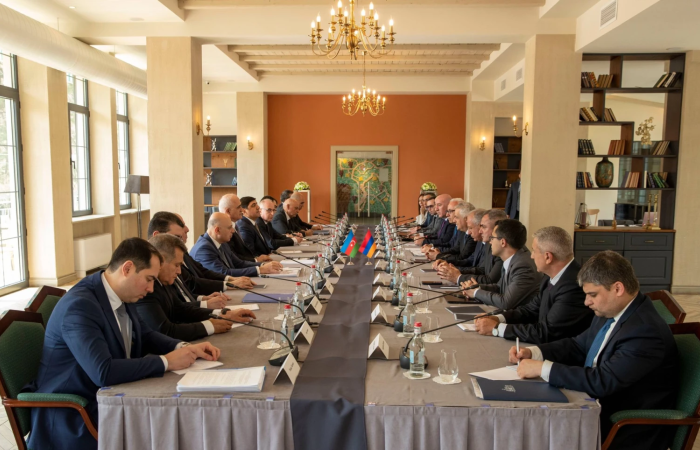
The Deputy Prime Minister of Azerbaijan has visited Armenia on Wednesday 29 April to participate in the the 13th meeting of the Commission on Demarcation and Border Security between Armenia and Azerbaijan and the State Commission on Demarcation of the State Border between Azerbaijan and Armenia, which was held in Aghveren. The Commission meeting was held under the chairmanship of Deputy Prime Minister of Armenia Mher Grigoryan and Deputy Prime Minister of Azerbaijan Shahin Mustafayev. A statement issued by the Ministry of Foreign Affairs of Armenia, noted with satisfaction that the 13th meeting of the commissions is once again taking place in the territory of one of the parties, in Aghveran, in the Republic of Armenia. "During the meeting, the parties exchanged detailed thoughts on organizational and technical issues related to border demarcation measures. The parties agreed and exchanged the texts of the following draft guidelines on the procedure for carrying out demarcation work:". Click the image to read the full report.

Popular

Editor's choice
Interview
Thursday Interview: Murad Muradov

Thursday Interview: Murad Muradov

Today, commonspace.eu starts a new regular weekly series. THURSDAY INTERVIEW, conducted by Lauri Nikulainen, will host  persons who are thinkers, opinion shapers, and implementors in their countries and spheres. We start the series with an interview with Murad Muradov, a leading person in Azerbaijan's think tank community. He is also the first co-chair of the Action Committee for a new Armenian-Azerbaijani Dialogue. Last September he made history by being the first Azerbaijani civil society activist to visit Armenia after the 44 day war, and the start of the peace process. Speaking about this visit Murad Muradov said: "My experience was largely positive. My negative expectations luckily didn’t play out. The discussions were respectful, the panel format bringing together experts from Armenia, Azerbaijan, and Turkey was particularly valuable during the NATO Rose-Roth Seminar in Yerevan, and media coverage, while varied in tone, remained largely constructive. Some media outlets though attempted to represent me as more of a government mouthpiece than an independent expert, which was totally misleading.  Overall, I see these initiatives as important steps in rebuilding trust and normalising professional engagement. The fact that soon a larger Azerbaijani civil society visits to Armenia followed, reinforces the sense that this process is moving in the right direction." (click the image to read the interview in full)