Сопредседатели Минской группы выступили с заявлением по поводу мирного процесса

Министры иностранных дел трех стран, которые являются сопредседателями Минского процесса ОБСЕ по Карабаху, выступили с заявлением в кулуарах встречи на уровне министров ОБСЕ, которая проходит в настоящее время в Вене.

В заявлении говорится:

По случаю заседания Совета министров ОБСЕ в Вене мы, главы делегаций стран-сопредседателей Минской группы ОБСЕ - министр иностранных дел Российской Федерации Сергей Лавров, государственный секретарь США Рекс Тиллерсон и постоянный представитель Франции Вероник Роджер-Лакан - остаются едиными в нашей приверженности делу мирного урегулирования нагорно-карабахского конфликта на основе основных принципов Хельсинкского Заключительного акта, в том числе неприменения силы или угрозы силой, территориальной целостности и равных прав и самоопределения народов. Мы вновь заявляем о нашей совместной приверженности переговорам о мирном урегулировании этого конфликта как единственного способа добиться реального примирения между народами региона.

Мы приветствуем возобновление диалога на высшем уровне между президентами Армении и Азербайджана в Женеве, 16 октября, а также встречу между министрами иностранных дел, которая состоялась 6 декабря, в Вене, под эгидой сопредседателей Минской группы. Мы выражаем удовлетворение в связи с активизацией переговоров и призываем стороны сосредоточить свои усилия на поиске компромиссных решений основных вопросов политического урегулирования. Дальнейшие задержки только усложнят ситуацию и могут поставить под сомнение приверженность Сторон по достижению прочного соглашения.

Что касается заявленным обязательствам двух президентов принять дополнительные меры для снижения напряженности на линии соприкосновения, мы настоятельно призываем Баку и Ереван согласиться на расширение существующего Офиса Личного представителя Действующего председателя ОБСЕ. Другие решения, принятые на саммитах в Вене и Санкт-Петербурге в 2016 году, также должны быть реализованы. Мы приветствуем рассмотрение Сторонами предложений сопредседателей, направленных на восстановление контактов между армянами и азербайджанцами, между народами, и поддерживаем Международный комитет Красного Креста в его усилиях по обмену данными о пропавших без вести лицахю. Мы призываем Стороны избегать ненужной политизации этих важных гуманитарных шагов.

Наши страны по-прежнему готовы тесно сотрудничать со Сторонами в достижении прочного и мирного урегулирования. Мы поручили нашим сопредседателям продолжать посреднические мероприятия по содействию компромиссам в отношении рабочих предложений, представленных Сторонам, но подчеркивая, что основная ответственность за разрешение нагорно-карабахского конфликта лежит на лидерах Армении и Азербайджана.

источник: commonspace.eu
Related articles

Editor's choice
News
Indian Foreign Minister meets Aliyev in Baku

Indian Foreign Minister meets Aliyev in Baku

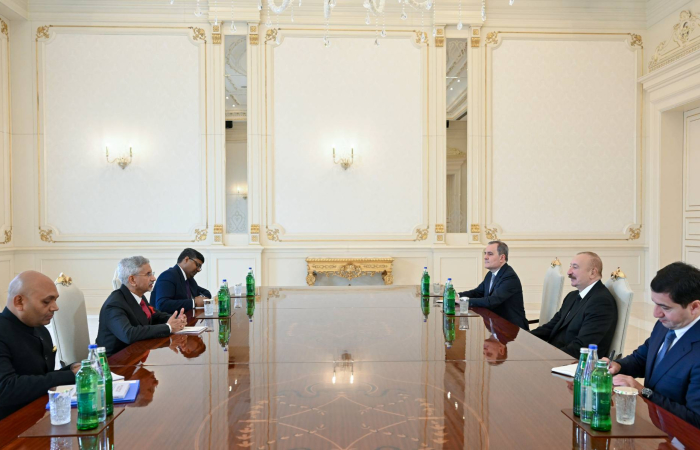
On October 23, President of the Republic of Azerbaijan Ilham Aliyev received Subrahmanyam Jaishankar, Minister of External Affairs of the Republic of India. The Minister first conveyed the greetings of Indian President Droupadi Murmu and Prime Minister Narendra Modi to the head of state. Recalling the meeting between the President of Azerbaijan and the Prime Minister of India in Bishkek, Subrahmanyam Jaishankar said that he was visiting Azerbaijan on the instructions of Prime Minister Narendra Modi. President Ilham Aliyev expressed his gratitude for the greetings and asked the Minister to convey his regards to the President and Prime Minister of India. The head of state fondly recalled his meeting with Indian Prime Minister Narendra Modi in Bishkek and the exchange of views during that meeting. President Ilham Aliyev highly appreciated the visit of India’s Minister of External Affairs to Azerbaijan on the instructions of Prime Minister Narendra Modi, stressing its importance for discussing the current state and prospects of bilateral relations. During the meeting, the sides held an extensive exchange of views on the current state of relations between Azerbaijan and India, highlighting ample opportunities to develop cooperation in areas of mutual interest. The sides noted that Azerbaijan and India, as members of the Global South, share similar positions on a number of issues on the international agenda, including matters of concern to countries of the Global South. In this regard, they discussed prospects for bilateral cooperation in political, trade and economic, high-tech, cultural, humanitarian and other fields. The conversation also touched upon the importance of cooperation within international organizations. The sides emphasized the need to intensify political contacts and organize reciprocal visits at various levels, including exchanges involving economic and business delegations, to further advance bilateral relations.

Popular

Editor's choice
Interview
Thursday Interview: Murad Muradov

Thursday Interview: Murad Muradov

Today, commonspace.eu starts a new regular weekly series. THURSDAY INTERVIEW, conducted by Lauri Nikulainen, will host  persons who are thinkers, opinion shapers, and implementors in their countries and spheres. We start the series with an interview with Murad Muradov, a leading person in Azerbaijan's think tank community. He is also the first co-chair of the Action Committee for a new Armenian-Azerbaijani Dialogue. Last September he made history by being the first Azerbaijani civil society activist to visit Armenia after the 44 day war, and the start of the peace process. Speaking about this visit Murad Muradov said: "My experience was largely positive. My negative expectations luckily didn’t play out. The discussions were respectful, the panel format bringing together experts from Armenia, Azerbaijan, and Turkey was particularly valuable during the NATO Rose-Roth Seminar in Yerevan, and media coverage, while varied in tone, remained largely constructive. Some media outlets though attempted to represent me as more of a government mouthpiece than an independent expert, which was totally misleading.  Overall, I see these initiatives as important steps in rebuilding trust and normalising professional engagement. The fact that soon a larger Azerbaijani civil society visits to Armenia followed, reinforces the sense that this process is moving in the right direction." (click the image to read the interview in full)