


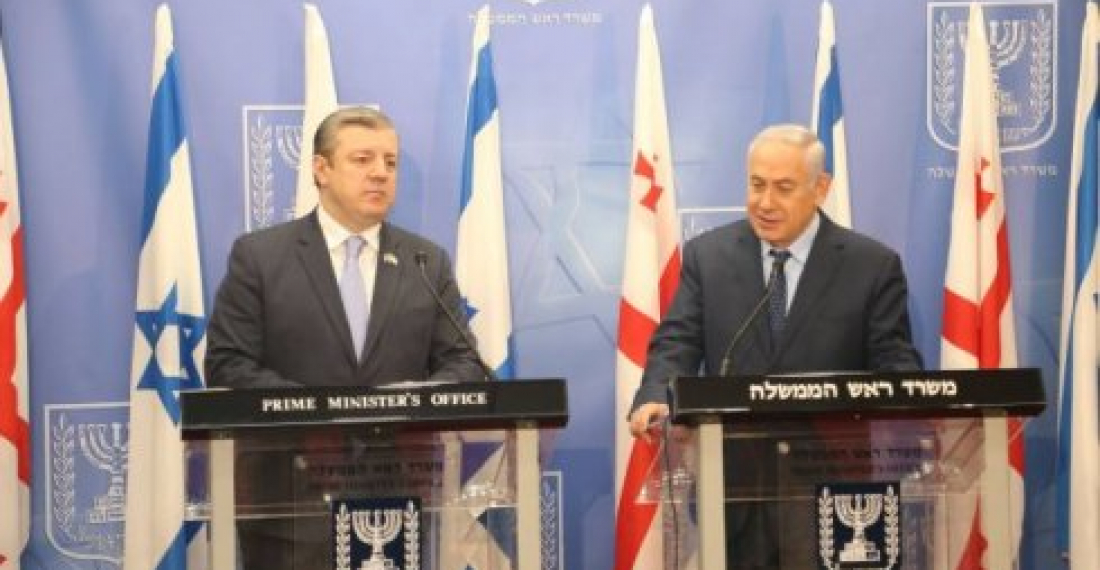
Премьер-министр Грузии находится с официальным визитом в Иерусалиме

Премьер-министр Грузии Георгий Квирикашвили, который в настоящее время находится с визитом в Израиле, в понедельник (24 июля), встретился в Иерусалиме с премьер-министром Израиля, Биньямином Нетаньяху. Оба лидера приветствовали сложившиеся хорошие отношения между Грузией и Израилем.

"Мы гордимся этой особой дружбой между нашими странами. Я хотел бы подчеркнуть, что двусторонние отношения между Израилем и Грузией быстро развиваются, и визиты на высшем уровне еще больше укрепят их. Грузинская сторона продолжает идти по пути дальнейшего укрепления партнерства с Израилем", - сказал Квирикашвили.

Со своей стороны премьер-министр Нетаньяху сказал, что две страны связаны 2600 годами грузино-еврейской истории, и сотни тысяч грузинских евреев проживают в Израиле. "У обеих стран есть будущее, ориентированное на безопасность и прогресс. У наших стран есть человеческое сочувствие друг к другу, это вызвано вкладом грузин, проживающих в Израиле, а также с глубоким уважением к культуре друг друга", - добавил премьер-министр Израиля.

Нетаниягу также принял приглашение премьер-министра Грузии посетить Грузию в ближайшем будущем.

источник: commonspace.eu по материалам агентств

фото: Премьер-министр Израиля Нетаньяху и премьер-министр Грузии Квирикашвили во время общения со СМИ перед встречей в Иерусалиме, в понедельник (24 июля)
Related articles

Editor's choice
News
Indian Foreign Minister meets Aliyev in Baku

Indian Foreign Minister meets Aliyev in Baku

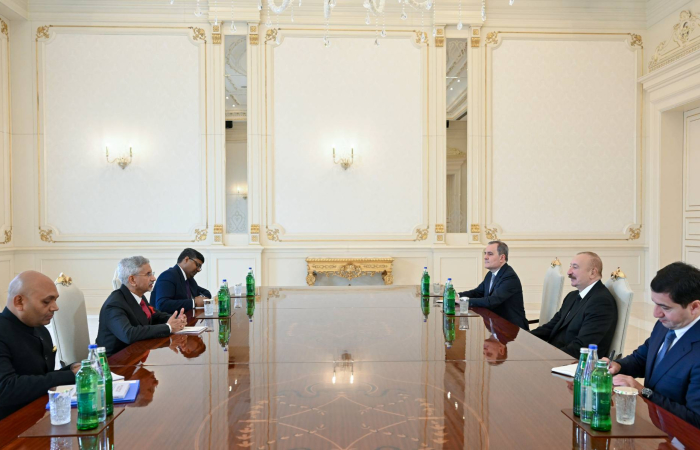
On October 23, the president of Azerbaijan Ilham Aliyev met in Baku with Subrahmanyam Jaishankar, Minister of External Affairs of India. This was the highest level visit by an Indian official to Azerbaijan in a long time. According to the website of the Azerbaijani president, Aliyev fondly recalled his meeting with Indian Prime Minister Narendra Modi in Bishkek and the exchange of views during that meeting. President Ilham Aliyev highly appreciated the visit of India’s Minister of External Affairs to Azerbaijan on the instructions of Prime Minister Narendra Modi, stressing its importance for discussing the current state and prospects of bilateral relations. During the meeting, the sides held an extensive exchange of views on the current state of relations between Azerbaijan and India, highlighting ample opportunities to develop cooperation in areas of mutual interest. The sides noted that Azerbaijan and India, as members of the Global South, share similar positions on a number of issues on the international agenda, including matters of concern to countries of the Global South. In this regard, they discussed prospects for bilateral cooperation in political, trade and economic, high-tech, cultural, humanitarian and other fields. The conversation also touched upon the importance of cooperation within international organizations. The sides emphasized the need to intensify political contacts and organize reciprocal visits at various levels, including exchanges involving economic and business delegations, to further advance bilateral relations.

Popular

Editor's choice
Interview
Thursday Interview: Murad Muradov

Thursday Interview: Murad Muradov

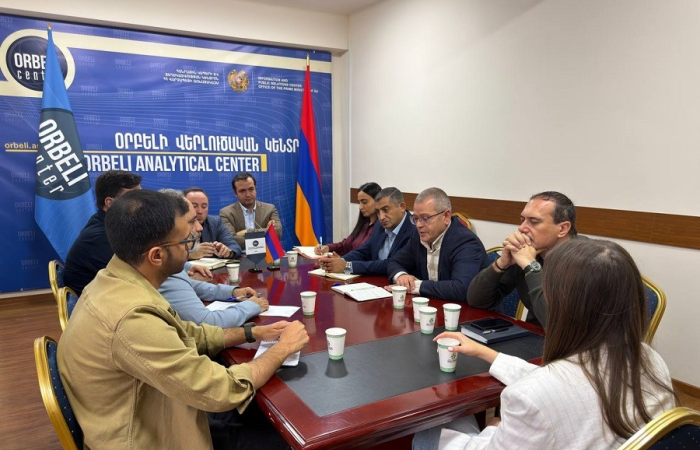
Today, commonspace.eu starts a new regular weekly series. THURSDAY INTERVIEW, conducted by Lauri Nikulainen, will host  persons who are thinkers, opinion shapers, and implementors in their countries and spheres. We start the series with an interview with Murad Muradov, a leading person in Azerbaijan's think tank community. He is also the first co-chair of the Action Committee for a new Armenian-Azerbaijani Dialogue. Last September he made history by being the first Azerbaijani civil society activist to visit Armenia after the 44 day war, and the start of the peace process. Speaking about this visit Murad Muradov said: "My experience was largely positive. My negative expectations luckily didn’t play out. The discussions were respectful, the panel format bringing together experts from Armenia, Azerbaijan, and Turkey was particularly valuable during the NATO Rose-Roth Seminar in Yerevan, and media coverage, while varied in tone, remained largely constructive. Some media outlets though attempted to represent me as more of a government mouthpiece than an independent expert, which was totally misleading.  Overall, I see these initiatives as important steps in rebuilding trust and normalising professional engagement. The fact that soon a larger Azerbaijani civil society visits to Armenia followed, reinforces the sense that this process is moving in the right direction." (click the image to read the interview in full)

