Кадровые перестановки в Администрации президента Азербайджана

В последние два десятилетия Администрация президента была источником стабильности и застоя. По словам одного из новых назначенных лиц, изменения "преследуют цель обеспечить динамичность, скорость и оптимальность в деятельности высшего исполнительного органа страны в соответствии с новой ситуацией и вызовами".

Администрация президента, возможно, является самым важным институтом Азербайджана. В президентской республике, жестко контролируемой центром, после прихода к власти Гейдара Алиева в 1994 году Администрация президента была источником идеологии, политики и руководства, заслоняя как Кабинет министров, так и Парламент. Глава Администрации, 79-летний Рамиз Мехтиев, выходец из "старой гвардии", с тех пор являлся ее главой, якорем стабильности и стагнации.

Однако перемены витают в воздухе, и на этой неделе, вероятно, произошли самые большие изменения в этой уважаемой структуре за последние два десятилетия. Сначала было объявлено о различных структурных изменениях. Были упразднены одни отделы, созданы новые. Некоторые советники и руководители отделов бесцеремонно ушли на пенсию, вместо них появились новые лица. Пройдет некоторое время, прежде чем осядет пыль и будет понятна истинная степень этих перемен. Однако, помимо структурных и кадровых перемен, появился еще один фактор. Администрация президента охватывает как команду президента, Ильхама Алиева, так и команду первого вице-президента, Мехрибан Алиевой. Это оказало влияние на порядок старшинства в Администрации президента.

Согласно официальному уведомлению о новом составе Администрации президента, теперь он выглядит так:

Руководитель Администрации Президента Азербайджанской Республики Рамиз Мехтиев.

Помощник Президента Азербайджанской Республики Джамиля Аббасова.

Начальник Секретариата Первого вице-президента Азербайджанской Республики Алтай Гасанов.

Помощник Президента по вопросам аграрной политики - заведующий отделом Азер Амирасланов.

Помощник Президента по территориально-организационным вопросам - заведующий отделом Зейнал Нагдалиев.

Помощник Президента по работе с правоохранительными органами и военным вопросам - заведующий отделом Фуад Алескеров.

Помощник Президента по вопросам внешней политики - заведующий отделом Новруз Мамедов.

Помощник Президента по общественно-политическим вопросам - заведующий отделом Али Гасанов.

Помощник Президента по экономическим вопросам - заведующий отделом Али Асадов.

Помощник Президента по вопросам экономической политики и промышленности - заведующий отделом Натиг Амиров.

Assistant to the President for Multinational Relations, Multiculturalism and Religious Issues, Department Head

Помощник Президента по межнациональным вопросам, вопросам мультикультурализма и религии - заведующий отделом

Начальник Секретариата Президента - помощник Президента Диляра Сеидзаде.

Пресс-секретарь Президента Азер Гасымов.

Начальник протокольной службы Президента Эльчин Багиров.

Заведующий отделом государственной службы и кадровых вопросов Талят Меджидов.

Заведующий отделом государственного контроля Эльдар Нуриев.

Заведующий отделом по вопросам молодежи и спорта Юсуф Мамедалиев.

Заведующий отделом по вопросам гуманитарной политики

Заведующий отделом по вопросам законодательства и правовой экспертизы Шахин Алиев.

Заведующий отделом по работе с документами и обращениями граждан Сулейман Исмаилов.

Заведующая отделом стратегического исследования и планирования Саадат Юсифова.

До сих пор со стороны государственных чиновников было немного комментариев касательно этих перемен. Однако, один из новых назначенных лиц  прокомментировать эти события. Его положение уникально, потому что он занимает две должности - глава недавно созданного отдела по вопросам молодежной политики и спорта, а также помощник первого вице-президента Мехрибан Алиевой.

Юсуф Мамедалиев родился 23 января 1979 года в Баку. Образование получил в Азербайджане. В 1997 году начал карьеру в МИД, где занимал несколько дипломатических должностей.

С января 2014 года он продолжил свою деятельность в качестве эксперта Фонда Гейдара Алиева и исполнительного директора Общественного объединения «ИДЕА».

Азербайджанское информационное агентство АПА попросило Мамедалиева прокомментировать его назначение. Он сказал:

"В первую очередь отмечу, что структурные изменения на основе распоряжения президента преследуют цель обеспечить динамичность, скорость и оптимальность в деятельности высшего исполнительного органа страны в соответствии с новой ситуацией и вызовами. Сильный институт президентства, несомненно, является важным условием стабильного и устойчивого управления. Как вы знаете, лица, назначенные на должность помощников президента, обладают многолетним опытом управленческой работы. Создание внутри структуры АП отдела молодежной политики и спорта преследует цель успешной реализации определенного господином президентом курса реформ с тем, чтобы более эффективно исполнять поставленные задачи. И я в свою очередь выражая еще раз благодарность господину президенту, осознавая возложенную на меня ответственность, постараюсь оправдать оказанное мне доверие."

Отвечая на вопрос о своем двойном назначении, Юсуф Мамедалиев сказал АПА:

"В целом, сегодня Азербайджан переживает важный период, характеризующийся реформами. Каждому ясно, что после референдума 26 сентября 2016 года в Азербайджане начался период формирования эффективного механизма государственного управления, укрепления вертикали исполнительной власти и исполнительской дисциплины и совершенствования механизма управления экономикой. Создание в Азербайджане института вице-президентства и назначение на должность I вице-президента Мехрибан ханум Алиевой является составной частью важных реформ. Заслуги перед народом Мехрибан ханум как общественно-политического деятеля и президента Фонда Гейдара Алиева на виду. Ее работы и неоценимые заслуги встречаются с одобрением каждым гражданином Азербайджана, а также со стороны зарубежных государств и структур. Именно по этой причине я хорошо понимаю очень важные обязательства и ответственность, которые возложила на меня должность помощника I вице-президента."

Источник: commonspace.eu по материалам АПА и других агентств

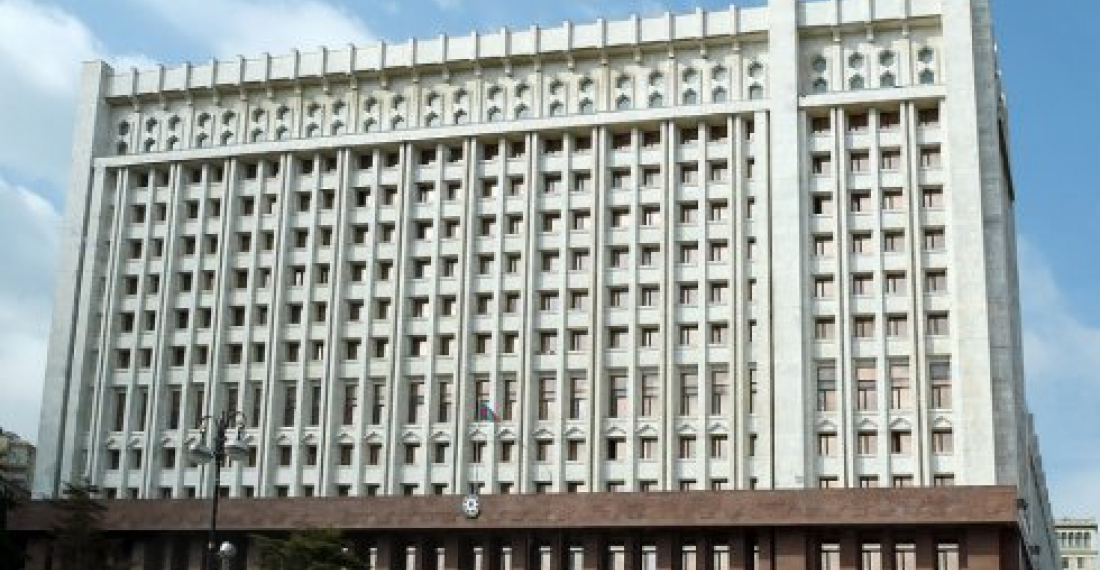
Фото: Здание Администрации президента Азербайджана в Баку

Related articles

Editor's choice
News
COP 17 in Armenia

COP 17 in Armenia

Armenia is currently hosting the COP17 conference of the Convention on Biological Diversity, which began earlier this week (19 October) and will run until 30 October, bringing around 15,000 participants from 196 different countries to Yerevan. At a leaders' summit held as part of COP17, Prime Minister Nikol Pashinyan expressed realistic ambitions: “We are halfway towards achieving these goals (Kunming-Montreal Global Biodiversity Framework), and we must honestly acknowledge that we are not yet moving in the right direction. Our task now is not to make new promises, but to fulfil the commitments we have already made.” Pashinyan pointed towards Armenia's own records, noting that the whitefish stock in Lake Sevan has increased substantially in the last ten years. Iranian President Masoud Pezeshkian and Georgian Prime Minister Irakli Kobakhidze also addressed the summit, with Turkiye sending its agriculture minister. However, there were no reports of Azerbaijani representatives attending. The conference has given Yerevan a valuable international platform, yet the absence of Azerbaijan is likely to be read as a sign that the peace process in the South Caucasus has not yet been translated into wider regional cooperation. The leaders' summit was opened by Armenian Prime Minister Nikol Pashinyan, who stressed that hosting the conference was a great honour for Armenia. He expressed hope that it would 'be productive and contribute to protecting our planet's biodiversity'. 'We – the citizens of Armenia, the government, state authorities and local governments – owe a debt to our nature,' the prime minister said. He noted that the international community had already developed the concept of 'living in harmony with nature’ and adopted the Kunming-Montreal Global Biodiversity Framework in 2022, setting out goals and specific targets to be achieved by 2030. 'We are halfway towards achieving these goals, and we must honestly acknowledge that we are not yet moving in the right direction. Our task now is not to make new promises, but to fulfil the commitments we have already made,' Nikol Pashinyan said. The COP17 conference is expected to adopt a declaration at leaders' level. More than 30 documents are scheduled for discussion. If approved, the commitments set out in them will become legally binding on countries that are parties to the Convention on Biological Diversity.”
Editor's choice
News
Landmines present to the European Union both a contradiction and a dilemma

Landmines present to the European Union both a contradiction and a dilemma

Finland’s decision to buy one million landmines creates a serious contradiction in the policy of the European Union, and is symbolic of a bigger dilemma facing European countries as they get used to the need to acquire “hard” power to face an increasing threat from Russia. Finland is seeking to acquire one million anti-personnel mines at a cost of 100 million euros. Finland, together with Poland, Latvia, Lithuania and Estonia last year abandoned the Ottawa agreement, the international framework that bans the use of anti-personnel mines, which the EU had been instrumental in establishing and supporting. All five countries cite the threat from Moscow as the reason. Colonel Riku Mikkonen of the Army Command told Finland’s national news agency STT that officials are now gathering information from suppliers regarding the deal, the AFP news agency reports. Helsinki would like domestic manufacturers to supply the mines, with contracts signed by the end of 2027 and production up and running by 2028. “It would be useful in many ways if Finnish companies produced the anti-personnel mines in Finland,” Mikkonen said. About half a dozen Finnish firms qualify, he told STT. “However, at this stage, buying the mines from abroad is not totally ruled out,” he added. LANDMINES PROVIDE THE EU WITH BOTH A CONTRADICTION, AND A DILEMMA Eliminating landmine contamination worldwide is one of the EU’s main soft power postures, and it basks in its record as the biggest funder of anti-landmine action in the world. But the fact that 5 of its 27 member states  have now left the Ottawa Treaty dents the EU moral high ground. It is a contradiction that is too big and important to be ignored. It also presents the European Union with a deeper dilemma. The threat from Russia is changing what the EU has stood for decades, namely a force for good able to mobilise its considerable soft power for the greater good of humanity. How the Union will implement this change will define its future. In the meantime landmines have not become any less lethal, benign, or unimportant. They remain in many parts of the world a major threat to life, an impediment to prosperity, and a potential trigger to further conflict. The 22 EU members states that still adhere to the Ottawa treaty must regroup, and be more assertive in their quest against anti-personnel land mines. All the reasons why they supported the Ottawa treaty in the first place still exist. The message must be clear: NO TO LANDMINES!

Popular

Editor's choice
Interview
Thursday Interview: Murad Muradov

Thursday Interview: Murad Muradov

Today, commonspace.eu starts a new regular weekly series. THURSDAY INTERVIEW, conducted by Lauri Nikulainen, will host  persons who are thinkers, opinion shapers, and implementors in their countries and spheres. We start the series with an interview with Murad Muradov, a leading person in Azerbaijan's think tank community. He is also the first co-chair of the Action Committee for a new Armenian-Azerbaijani Dialogue. Last September he made history by being the first Azerbaijani civil society activist to visit Armenia after the 44 day war, and the start of the peace process. Speaking about this visit Murad Muradov said: "My experience was largely positive. My negative expectations luckily didn’t play out. The discussions were respectful, the panel format bringing together experts from Armenia, Azerbaijan, and Turkey was particularly valuable during the NATO Rose-Roth Seminar in Yerevan, and media coverage, while varied in tone, remained largely constructive. Some media outlets though attempted to represent me as more of a government mouthpiece than an independent expert, which was totally misleading.  Overall, I see these initiatives as important steps in rebuilding trust and normalising professional engagement. The fact that soon a larger Azerbaijani civil society visits to Armenia followed, reinforces the sense that this process is moving in the right direction." (click the image to read the interview in full)