


Армяне отмечают 20-летие освобождения Шуши, а азербайджанцы отмечают годовщину оккупации.
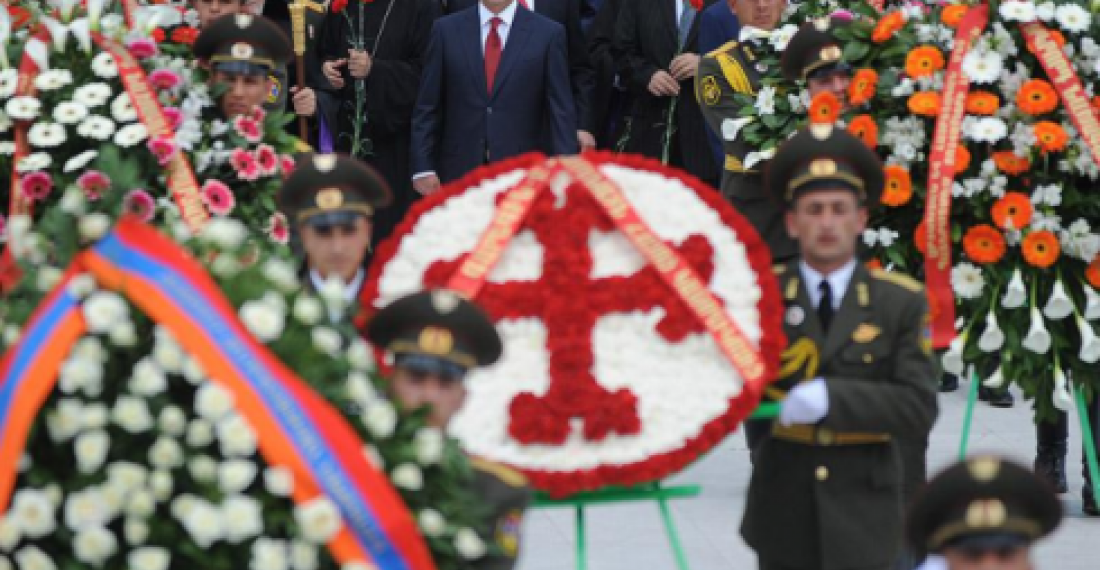
Лидер Армении, Серж Саргсян, посетил вчера Нагорный-Карабах для поднятия боевого духа в регионе после недавних инцидентов на линии соприкосновения, разделяющей армянские и азербайджанские силы. Глава государства также посетил город Шуша, который, как говорят  армяне, они освободили в 1992 году, а азербайджанцы утверждают об оккупации этого города.

Президента сопровождали во время его визита Католикос всех армян, Гарегин II, и президент самопровозглашенной Нагорно-Карабахской Республики (НКР), Бако Саакян.

На сайте президента Армении сказано, что визит был совершен "в рамках торжеств, посвященных Дню Победы, Армии обороны НКР и 20-летию освобождения Шуши".

В то же время в понедельник, в Баку, открылась художественная и фото выставка под названием "Шуша - жемчужина истории и культуры Азербайджана". Согласно подписанному Президентом Ильхамом Алиевым указу, в связи с 20-летием со дня оккупации Шуши во всех культурных центрах Азербайджана проводятся мероприятия, сказал выступавший на открытии выставки в Музейном центре министр культуры и туризма Абульфас Гараев. "Шуша, которая была заложена в 1747 году, всегда была городом Азербайджана, и так будет всегда. Шуша является консерваторией Азербайджана", сказал он.

Шуша занимает свое место в истории Азербайджана, сказал на мероприятии председатель Общественного объединения "Азербайджанская община Нагорного Карабаха", глава исполнительной власти Шушинского района Байрам Сафаров."На сегодняшний день армия Азербайджана готова освободить Шушу, но азербайджанская сторона пытается вернуть оккупированные земли мирным путем. Если не получится, Шуша и другие оккупированные земли будут возвращены любыми путями", - сказал он.

В то же время, в течение нескольких часов после вступления в должность президент России, Владимир Путин, подписал распоряжение "О мерах по реализации внешнеполитического курса". По данным администрации президента России "Распоряжение принято в целях реализации согласованной внешней политики Российской Феддерации, будет защищать национальные интересы на основе принципов прагматизма, открытости и многовекторности в условиях формирования новой полицентричной системы международных отношений".

По Нагорному-Карабаху Распоряжение дает инструкции по "урегулированию нагорно-карабахского конфликта в сотрудничестве с другими странами-сопредседателями Минской группы ОБСЕ, и основано на принципах, изложенных в совместных заявлениях президента России, президента Соединенных Штатов Америки и Президента Франции, сделанных между 2009 и 2011 годами".

Источник: commonspace.eu

Фото: Президент Армении, Серж Саргсян, возложил венок по случаю Дня Победы во время своего визита в Нагорный Карабах 8 мая. (фото любезно предоставлено пресс-службой президента Армении).

Related articles

Editor's choice
News
Pope Leo XIV, has called on world leaders to lay down their weapons and choose “encounter” over domination

Pope Leo XIV, has called on world leaders to lay down their weapons and choose “encounter” over domination

The leader of the Catholic Church, Pope Leo XIV, has called on world leaders to lay down their weapons and choose “encounter” over domination. “Let those who have weapons lay them down!”, the Pope urged on Easter Sunday in his traditional Urbi et Orbi message. Speaking to the tens of thousands of pilgrims gathered in St Peter's Square, Pope Leo urged "those who have the power to unleash wars" to chose peace.  This should not be a peace “imposed by force”, he stressed, but one achieved through dialogue – “not with the desire to dominate others, but to encounter them”. Pope Leo warned that the world is “growing accustomed to violence”. We are “becoming indifferent”, he said, not only to the deaths of thousands of people, but to the “hatred and division” war causes, as well as its “economic and social consequences”. Borrowing a phrase from the late Pope Francis, Pope Leo warned of the “ever-increasing ‘globalisation of indifference’”. “We cannot continue to be indifferent!”, he urged. “We cannot resign ourselves to evil!”. For this reason, he said, he would be leading a prayer vigil for peace next Saturday, April 11th, in St Peter’s Basilica.
Editor's choice
News
Israel destroys 17 UNIFIL Cameras

Israel destroys 17 UNIFIL Cameras

Israeli forces destroyed 17 surveillance cameras linked to the United Nations peacekeepers’ main headquarters in southern Lebanon in 24 hours, a UN security official told AFP on Saturday. Since the start of the Israel-Hezbollah war on March 2, the UN Interim Force in Lebanon (UNIFIL) has been caught in the crossfire in the country’s south, with Hezbollah launching attacks on Israel and its troops, and Israeli forces pushing into border towns. The official, who requested anonymity, said “17 of the headquarters’ cameras have been destroyed by the Israeli army” in the coastal town of Naqura. UNIFIL spokeswoman Kandice Ardiel told AFP on Saturday that “the cameras appear to have been destroyed by some kind of laser.” She added that “(Israeli) soldiers are present in Naqura and have been undertaking massive demolitions of buildings in the village this week.” Earlier this week, Ardiel told AFP that “not only have these demolitions destroyed civilian homes and businesses, but the strength of the blasts have caused damage to UNIFIL’s headquarters.” Three Indonesian peacekeepers from the UN force have been killed in two separate incidents over the past week. UNIFIL also reported Friday an “explosion” in one of its bases near Odaisseh in south Lebanon that wounded three personnel, adding that they “do not yet know the origin of the explosion.” The Israeli army accused Hezbollah of firing “a rocket that landed in a UNIFIL outpost.” The UN office in Jakarta said on Saturday the wounded were Indonesian. Indonesia condemned the incident as “unacceptable,” saying “these events underscore the urgent need to strengthen protection for UN peacekeeping forces amid an increasingly dangerous conflict situation.” According to the UN, 97 force members have been killed in violence since its establishment in 1978 to monitor the withdrawal of Israeli forces after they invaded Lebanon.

Popular

Editor's choice
Interview
Thursday Interview: Murad Muradov

Thursday Interview: Murad Muradov

Today, commonspace.eu starts a new regular weekly series. THURSDAY INTERVIEW, conducted by Lauri Nikulainen, will host  persons who are thinkers, opinion shapers, and implementors in their countries and spheres. We start the series with an interview with Murad Muradov, a leading person in Azerbaijan's think tank community. He is also the first co-chair of the Action Committee for a new Armenian-Azerbaijani Dialogue. Last September he made history by being the first Azerbaijani civil society activist to visit Armenia after the 44 day war, and the start of the peace process. Speaking about this visit Murad Muradov said: "My experience was largely positive. My negative expectations luckily didn’t play out. The discussions were respectful, the panel format bringing together experts from Armenia, Azerbaijan, and Turkey was particularly valuable during the NATO Rose-Roth Seminar in Yerevan, and media coverage, while varied in tone, remained largely constructive. Some media outlets though attempted to represent me as more of a government mouthpiece than an independent expert, which was totally misleading.  Overall, I see these initiatives as important steps in rebuilding trust and normalising professional engagement. The fact that soon a larger Azerbaijani civil society visits to Armenia followed, reinforces the sense that this process is moving in the right direction." (click the image to read the interview in full)



