АрмИнфо: Россия, Грузия и Армения лидируют среди стран СНГ по количеству ищущих убежище в странах Европы


Ереван, 23.03.13. АрмИнфо.

Россия, Грузия и Армения лидируют среди стран СНГ по количеству ищущих убежище в странах Европы. Как сообщает АПА, об этом говорится в докладе Управления верховного комиссара ООН по делам беженцев (УВКБ).

"Из стран СНГ по количеству поданных с целью получения убежища заявлений лидируют Россия (20 522 заявок, 4-е место), Грузия (10 611 заявок, 10-е место), Армения (4 450 заявок, 22-е место)", - отмечается в докладе.

Азербайджан занимает 34-е место по количеству лиц, ищущих убежище в европейских странах.

На первом месте в списках просителей международной защиты за границей граждане Афганистана. На них приходятся 36 600 заявлений. Второе место по числу петиций о предоставлении статуса беженца в промышленно развитых странах занимают граждане Сирии.

В целом, за получением убежища в 38 странах Европы в 2012 году обратились 355 500 человек. Наиболее привлекательными европейскими странами для искателей статуса беженца в прошлом году стали Германия, Франция, Швеция. Но больше всех прошений об убежище в 2012 году пришлись на США - 83 400 заявлений. 
 

Related articles

Editor's choice
News
Far-Right Rally Against Eagle Hills, Launch Movement to ‘Protect Georgian Lands’

Far-Right Rally Against Eagle Hills, Launch Movement to ‘Protect Georgian Lands’

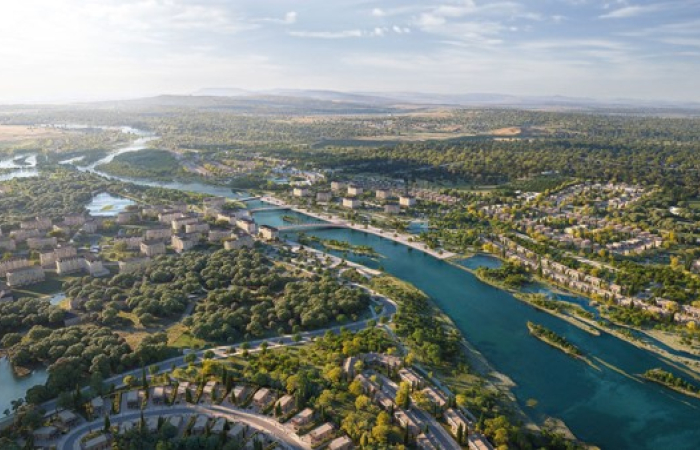
Far-right groups in Georgia rallied in Tbilisi on September 20 against the UAE-based Eagle Hills investment and its planned large-scale developments near Tbilisi and Batumi. Organizers described the demonstration as a protest against “Arab towns” and announced the creation of a “National Unity for the Protection of Georgian Lands” to coordinate opposition to the projects. The initiative plans to bring together political groups, academics, lawyers and economists opposed to the investment. Organizers also announced plans for legal challenges before Georgia’s Constitutional Court, administrative courts and Prosecutor’s Office, alongside further demonstrations. The Eagle Hills project, representing $6.5 billion in real estate, is promoted by the Georgian government as the largest investment in the country’s history. Critics have questioned the agreement’s transparency, financial viability and potential environmental and social effects. Far-right groups have additionally linked the project to fears about immigration and demographic change. Eagle Hills’ project was announced in January 2025 following Prime Minister Irakli Kobakhidze’s visit to the United Arab Emirates. Its expansion has since become a focal point for both economic debate and nationalist opposition, with different groups raising distinct concerns about the investment. The governing Georgian Dream party has condemned the protests.

Popular

Editor's choice
Interview
Thursday Interview: Murad Muradov

Thursday Interview: Murad Muradov

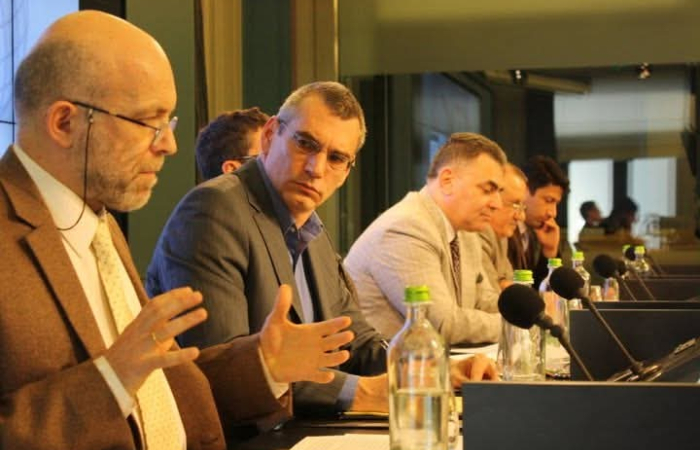
Today, commonspace.eu starts a new regular weekly series. THURSDAY INTERVIEW, conducted by Lauri Nikulainen, will host  persons who are thinkers, opinion shapers, and implementors in their countries and spheres. We start the series with an interview with Murad Muradov, a leading person in Azerbaijan's think tank community. He is also the first co-chair of the Action Committee for a new Armenian-Azerbaijani Dialogue. Last September he made history by being the first Azerbaijani civil society activist to visit Armenia after the 44 day war, and the start of the peace process. Speaking about this visit Murad Muradov said: "My experience was largely positive. My negative expectations luckily didn’t play out. The discussions were respectful, the panel format bringing together experts from Armenia, Azerbaijan, and Turkey was particularly valuable during the NATO Rose-Roth Seminar in Yerevan, and media coverage, while varied in tone, remained largely constructive. Some media outlets though attempted to represent me as more of a government mouthpiece than an independent expert, which was totally misleading.  Overall, I see these initiatives as important steps in rebuilding trust and normalising professional engagement. The fact that soon a larger Azerbaijani civil society visits to Armenia followed, reinforces the sense that this process is moving in the right direction." (click the image to read the interview in full)