Азербайджанцы помянули жертв Черного января

Сегодня народ Азербайджана вспоминает жертв "Черного января", когда 19 и 20 января 1990 года в Баку советскими войсками были убиты более ста мирных жителей.

Президент Ильхам Алиев вместе с женой Мехрибан Алиевой возложили венок к Вечному огню в Баку. В мемориальной церемонии также приняли участие другие высшие должностные лица, религиозные деятели и иностранные послы.

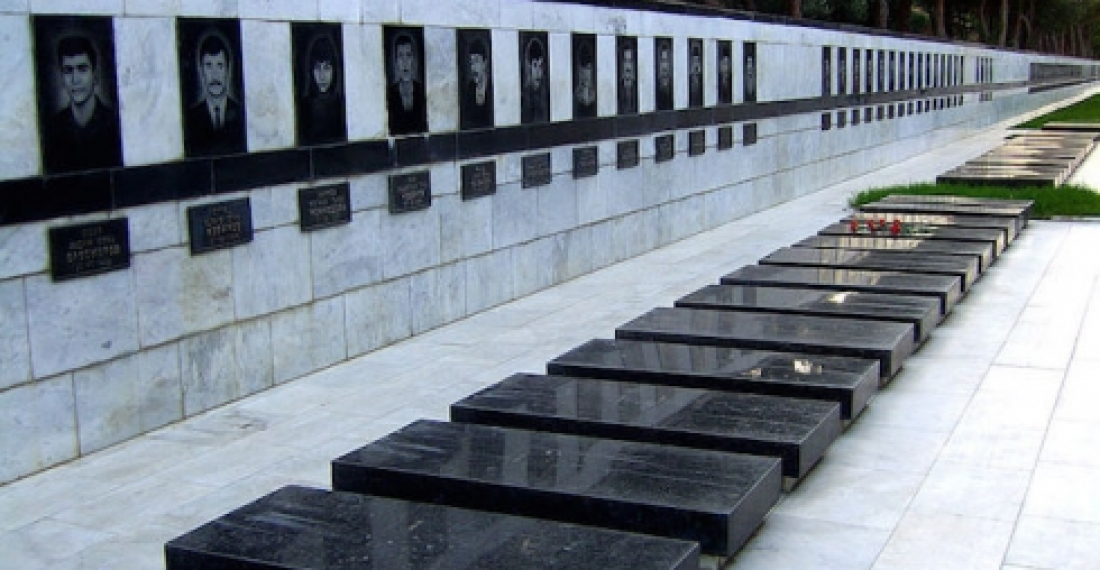
В этот день азербайджанцы традиционно возлагают цветы на Аллее "Мучеников" в Баку, где и были убиты многие из них.

События 26-й летней давности положили конец советской власти в Азербайджане, и дискредитировали правление Москвы после убийств.

Возвращаясь к зиме 1990 года, в Баку проводились спровоцированный Азербайджанским Народным фронтом народные протесты, которые призывали к восстановлению государственности Азербайджана.

В ответ 19 января после последовавшей напряженности в Нагорном Карабахе, где армяне пытались выйти из остава Азербайджанской ССР, президент СССР Михаил Горбачев объявил чрезвычайное положение.

Поздно ночью 26,000 советских солдат вошли в Баку, разбив баррикады, с целью разгона протестов.

Во время этих столкновений были убиты десятки мирных азербайджанцев, так же жертвы были и со стороны советских солдат. Вокруг числа жертв до сих пор идут споры.

Сцена стреляющих советских войск по своим собственным гражданам ускорило окончательный распад Союза, который произошел вскоре после января 1990 года.

В 1995 году Горбачев признался в том, что "Провозглашение чрезвычайного положения в Баку и отправка армии в город была самой большой ошибкой в ​​моей политической жизни."

Новости касательно этих событий активно скрывали в то время, только "Радио Свободы", и отличительный голос Мирзы Хазара, сообщало азербайджанцам о ходе тех событий.

Из-за массового информационного вакуума, реакция со стороны международного сообщества была небольшой в то время, что лишний раз дает повод азербайджанцам почтить память погибших много лет спустя.

источник: commonspace.eu

Фото: Жертвы Черного января на Аллее мучеников, Баку
 

Related articles

Editor's choice
News
The British prime minister says Europe must "stand on its own two feet" when it comes to defence

The British prime minister says Europe must "stand on its own two feet" when it comes to defence

The UK will deploy a carrier strike group, led by the aircraft carrier HMS Prince of Wales to the Arctic and the High North as part of efforts to bolster security against Russian threats. British prime minister, Sir Keir Starmer announced the deployment in a speech on Saturday (14 February) at the Munich Security Conference. Europe must be ready to fight to protect its people, values, and way of life,  Sir Keir told the Conference. Starmer also called for deeper links and cooperation, including economic ties, between the UK and EU. The PM stressed the continent must "stand on its own two feet" when it comes to defence commitments. "We must build our hard power, because that is the currency of the age," he told the conference. (Click image to read the full story).

Popular

Editor's choice
Interview
Thursday Interview: Murad Muradov

Thursday Interview: Murad Muradov

Today, commonspace.eu starts a new regular weekly series. THURSDAY INTERVIEW, conducted by Lauri Nikulainen, will host  persons who are thinkers, opinion shapers, and implementors in their countries and spheres. We start the series with an interview with Murad Muradov, a leading person in Azerbaijan's think tank community. He is also the first co-chair of the Action Committee for a new Armenian-Azerbaijani Dialogue. Last September he made history by being the first Azerbaijani civil society activist to visit Armenia after the 44 day war, and the start of the peace process. Speaking about this visit Murad Muradov said: "My experience was largely positive. My negative expectations luckily didn’t play out. The discussions were respectful, the panel format bringing together experts from Armenia, Azerbaijan, and Turkey was particularly valuable during the NATO Rose-Roth Seminar in Yerevan, and media coverage, while varied in tone, remained largely constructive. Some media outlets though attempted to represent me as more of a government mouthpiece than an independent expert, which was totally misleading.  Overall, I see these initiatives as important steps in rebuilding trust and normalising professional engagement. The fact that soon a larger Azerbaijani civil society visits to Armenia followed, reinforces the sense that this process is moving in the right direction." (click the image to read the interview in full)