


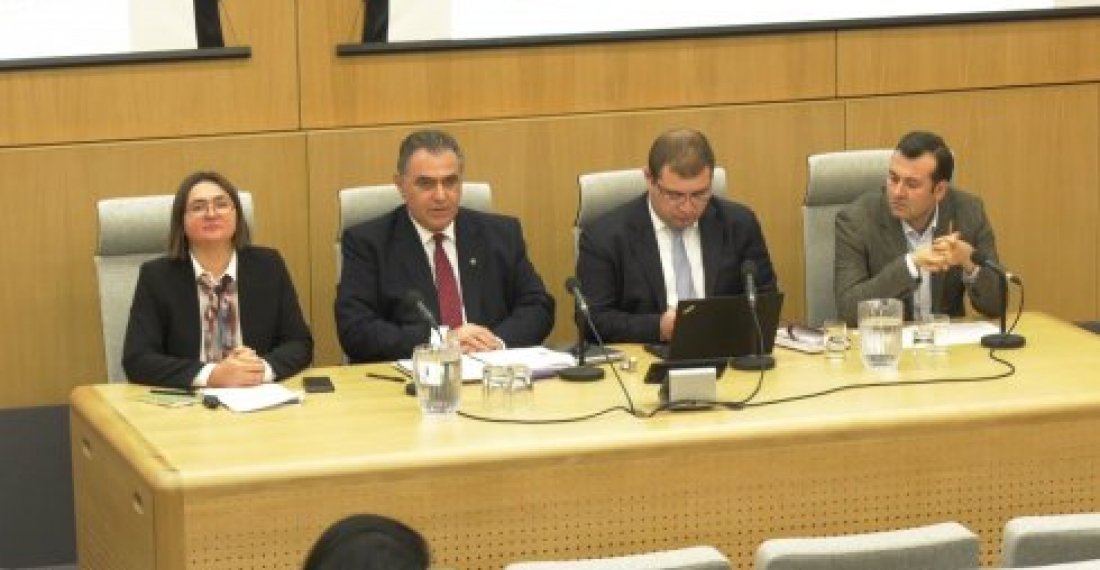
В Оксфорде прошли обсуждения по теме Южный Кавказ за пределами неразрешенных конфликтов (видео)

Обсуждения современного Южного Кавказа невозможны без вопроса о неразрешенных конфликтах в регионе. На 3-й Оксфордской конференции по современным проблемам Южного Кавказа одна из тем панельных дискуссий была посвящена конфликтам в регионе: "Выход из порочного круга: может ли регион выйти из трясины конфликта?"

В дискуссий приняли участие Вероника Мовчан из Berlin Economics; Ахмад Алили из Центра экономического и социального развития, Баку; и Эдуард Абраамян из Лестерского университета. Дискуссию возглавил директор LINKS, Деннис Саммут.

Конференция проходила в Оксфордском университете в понедельник, 12 ноября 2018 года. Она была организована LINKS и RESC в рамках программы EPNK Европейского Союза на тему «Региональное сотрудничество на Южном Кавказе: трудное, но необходимое».

Вы можете просмотреть полностью прошедшие дискуссий (на английском языке) на YouTube канале Сommonspace.eu здесь

источник: commonspace.eu

фото: Вероника Мовчан из Berlin Economics; Деннис Саммут из LINKS; Ахмад Алили из Центра экономического и социального развития, Баку; и Эдуард Абраамян из Лестерского университета на панельной дискуссии «Выход из порочного круга: может ли регион выйти из трясины конфликта?» в Оксфорде, 12 ноября 2018 года


 

Related articles

Popular

Editor's choice
Interview
Thursday Interview: Murad Muradov

Thursday Interview: Murad Muradov

Today, commonspace.eu starts a new regular weekly series. THURSDAY INTERVIEW, conducted by Lauri Nikulainen, will host  persons who are thinkers, opinion shapers, and implementors in their countries and spheres. We start the series with an interview with Murad Muradov, a leading person in Azerbaijan's think tank community. He is also the first co-chair of the Action Committee for a new Armenian-Azerbaijani Dialogue. Last September he made history by being the first Azerbaijani civil society activist to visit Armenia after the 44 day war, and the start of the peace process. Speaking about this visit Murad Muradov said: "My experience was largely positive. My negative expectations luckily didn’t play out. The discussions were respectful, the panel format bringing together experts from Armenia, Azerbaijan, and Turkey was particularly valuable during the NATO Rose-Roth Seminar in Yerevan, and media coverage, while varied in tone, remained largely constructive. Some media outlets though attempted to represent me as more of a government mouthpiece than an independent expert, which was totally misleading.  Overall, I see these initiatives as important steps in rebuilding trust and normalising professional engagement. The fact that soon a larger Azerbaijani civil society visits to Armenia followed, reinforces the sense that this process is moving in the right direction." (click the image to read the interview in full)

