Южная Осетия отложила проведение референдума о присоединении на 2017 год

Как стало известно в четверг вечером, правительство непризнанной республики Южная Осетия отложило предлагаемый референдум о присоединении к Российской Федерации.

Об этом заявил президент самопровозглашенной Республики, Леонид Тибилов, по итогам встречи с другими политическими представителями. Вокруг некоторых деталей референдума были разногласия, например, должен ли он состоятся до или после президентских выборов, и будет ли на нем поставлен вопрос непосредственно о присоединении, или же каснется только конституционных поправок, которые позволят позже вступить в состав Российской Федерации.

Правительство США решительно осудила любые референдумы о вступлении.

"Наша позиция по Грузии заключается в следующем: Мы поддерживаем суверенитет Грузии и ее территориальную целостность, которая включает в себя Южную Осетию. Следовательно, мы не признаем попытки Южной Осетии в обретении независимости или суверенитета, мы это не поддерживаем", заявил представитель Государственного департамента, Марк Тонер.

Как предполагалось ранее в этом году, на референдум планировалось вынесение вопроса о изменении в статью 10 Конституции, которая позволила бы обратиться к российскому руководству с вопросом о присоединении.

Недавно Леонид Тибилов заявлял, что референдум будет проведен "до августа" этого года. "Я абсолютно уверен, что люди скажут" да "," сказал он в апреле. В ответ на это президент России Владимир Путин заявил, что он "не может противостоять" любому предложенному референдуму. Тибилов неоднократно ясно излогал свое стремление к полной интеграции Южной Осетии с Россией.

Россия признала Южную Осетию, наряду с Абхазией, после войны с Грузией в августе 2008 года.

источник: commonspace.eu по материалам агентств

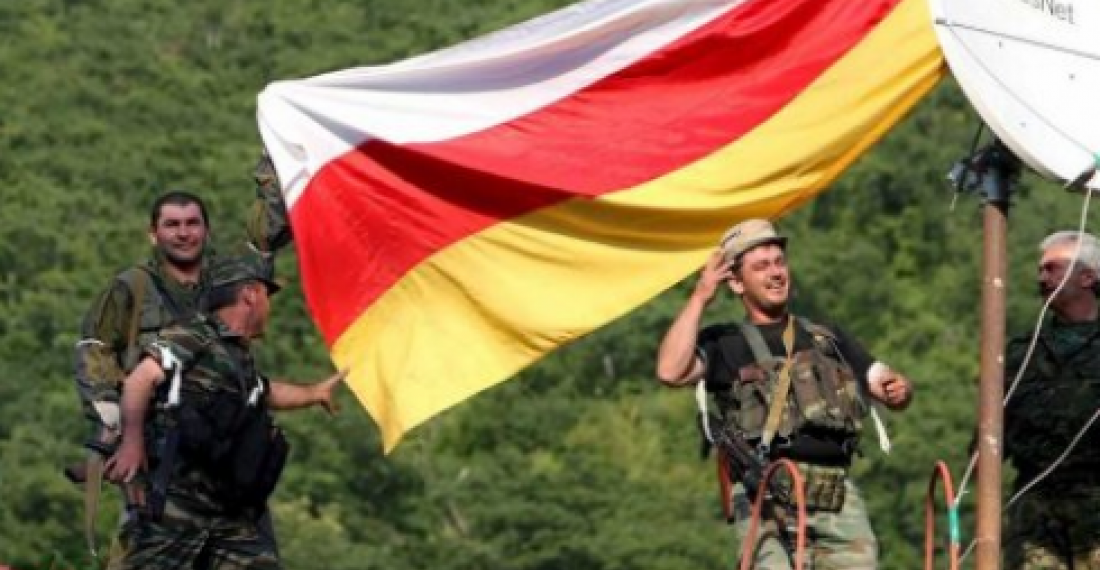
фото: флаг самопровозглашенной Республики Южная Осетия
 

Related articles

Editor's choice
News
Georgian Patriarch buried amid scenes of nation-wide grief

Georgian Patriarch buried amid scenes of nation-wide grief

Catholicos-Patriarch of All Georgia, Ilia II, was was buried in Tbilisi on Sunday (22 March) amid expressions and scenes of nation-wide grief. Crowds filled the Holy Trinity Cathedral, and the route to the Sioni Cathedral where he will be buried, many shouting "We love you, Patriarch".  The service was led by Ecumenical Patriarch, His Holiness Bartholomew I, together with Metropolitan Shio and members of the Holy Synod of the Georgian Church. Soldiers lined the route from Trinity Cathedral to Sion Cathedral, but tens of thousands of people were also present Ilia II died on March 17. Since March 18, his body has been laying in state in the Trinity Cathedral where thousands of citizens paid tribute. During these days, the flow of people who wanted to say goodbye to the Patriarch flowed to the cathedral continuously, 24 hours a day. Citizens often had to stand in a queue for several hours to enter the cathedral.   Read the Obituary of Ilia II,  written by Dennis Sammut at  Read the Obituary of Ilia II,  written by Dennis Sammut here  Read the Obituary of Ilia II,  written by Dennis Sammut here   https://www.commonspace.eu/node/13740

Popular

Editor's choice
Interview
Thursday Interview: Murad Muradov

Thursday Interview: Murad Muradov

Today, commonspace.eu starts a new regular weekly series. THURSDAY INTERVIEW, conducted by Lauri Nikulainen, will host  persons who are thinkers, opinion shapers, and implementors in their countries and spheres. We start the series with an interview with Murad Muradov, a leading person in Azerbaijan's think tank community. He is also the first co-chair of the Action Committee for a new Armenian-Azerbaijani Dialogue. Last September he made history by being the first Azerbaijani civil society activist to visit Armenia after the 44 day war, and the start of the peace process. Speaking about this visit Murad Muradov said: "My experience was largely positive. My negative expectations luckily didn’t play out. The discussions were respectful, the panel format bringing together experts from Armenia, Azerbaijan, and Turkey was particularly valuable during the NATO Rose-Roth Seminar in Yerevan, and media coverage, while varied in tone, remained largely constructive. Some media outlets though attempted to represent me as more of a government mouthpiece than an independent expert, which was totally misleading.  Overall, I see these initiatives as important steps in rebuilding trust and normalising professional engagement. The fact that soon a larger Azerbaijani civil society visits to Armenia followed, reinforces the sense that this process is moving in the right direction." (click the image to read the interview in full)