


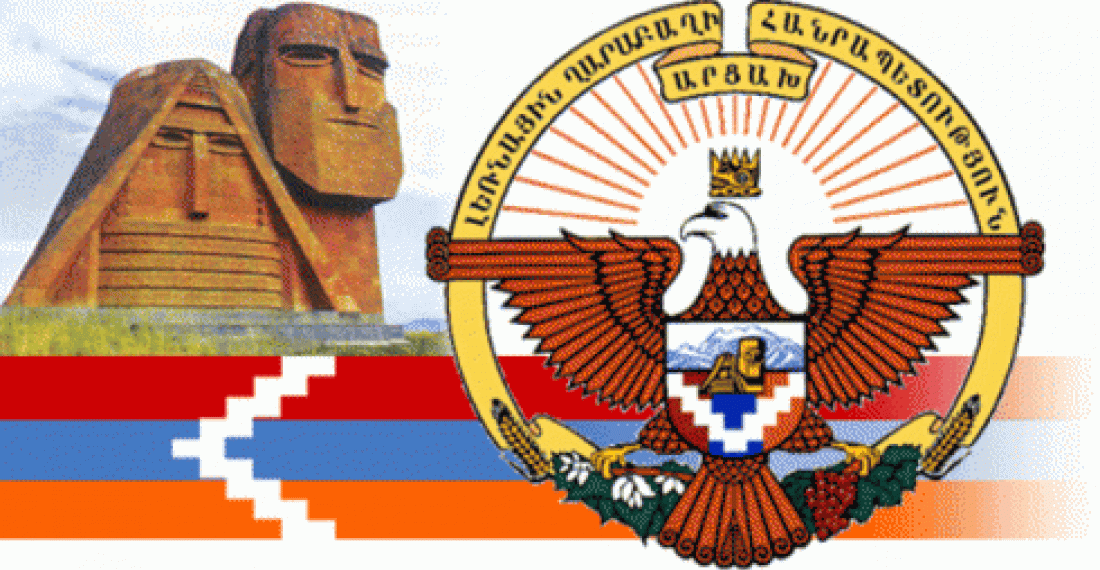
В МИД НКР состоялась встреча с делегацией из Словакии

13 февраля исполняющий обязанности министра иностранных дел Нагорно-Карабахской Республики Василий Атаджанян принял делегацию представителей образовательных и предпринимательских кругов Словацкой Республики, возглавляемую первым председателем Национального Совета Словакии Франтишеком Миклошко.

Как сообщили АрмИнфо в пресс-службе МИД НКР, в ходе встречи Василий Атаджанян представил в общих чертах историю Арцаха (Нагорного

Карабаха), истоки возникновения карабахской проблемы, нынешний этап переговорного процесса по урегулированию конфликта и позицию официального Степанакерта.  "К сожалению, Нагорный Карабах, историческая часть Армении, был в принудительном порядке включен в состав Азербайджанской ССР. На протяжении всех 75-ти лет нахождения Нагорного Карабаха в составе советского Азербайджана Баку вел политику по вытеснению коренного армянского населения из края", - отметил и.о. главы МИД НКР. При этом он подчеркнул, что после развала СССР народу НКР удалось провозгласить на безупречной правовой основе независимое государство и, отразив военную агрессию Азербайджана, создать цивилизованное, демократическое общество.

Касаясь процесса урегулирования конфликта, Василий Атаджанян отметил деструктивную позицию официального Баку, фактически срывающего переговорный процесс. По его словам, для достижения прогресса необходимо решить главный вопрос - признать независимый статус Нагорного Карабаха.  Василий Атаджанян ответил на вопросы гостей, касающиеся региональных процессов, гуманитарных проблем в контексте карабахского конфликта, положения в различных сферах жизнедеятельности НКР. Члены делегации выступили с конкретными предложениями по осуществлению программ в НКР.  Василий Атаджанян выразил благодарность Франтишеку Миклошко и членам делегации, а также организатору визита - президенту Форума армянских союзов Европы Ашоту Григоряну, за последовательную и открытую поддержку справедливой борьбы карабахского народа, вручив им памятные сувениры.


 

Related articles

Editor's choice
News
The British prime minister says Europe must "stand on its own two feet" when it comes to defence

The British prime minister says Europe must "stand on its own two feet" when it comes to defence

The UK will deploy a carrier strike group, led by the aircraft carrier HMS Prince of Wales to the Arctic and the High North as part of efforts to bolster security against Russian threats. British prime minister, Sir Keir Starmer announced the deployment in a speech on Saturday (14 February) at the Munich Security Conference. Europe must be ready to fight to protect its people, values, and way of life,  Sir Keir told the Conference. Starmer also called for deeper links and cooperation, including economic ties, between the UK and EU. The PM stressed the continent must "stand on its own two feet" when it comes to defence commitments. "We must build our hard power, because that is the currency of the age," he told the conference. (Click image to read the full story).

Popular

Editor's choice
Interview
Thursday Interview: Murad Muradov

Thursday Interview: Murad Muradov

Today, commonspace.eu starts a new regular weekly series. THURSDAY INTERVIEW, conducted by Lauri Nikulainen, will host  persons who are thinkers, opinion shapers, and implementors in their countries and spheres. We start the series with an interview with Murad Muradov, a leading person in Azerbaijan's think tank community. He is also the first co-chair of the Action Committee for a new Armenian-Azerbaijani Dialogue. Last September he made history by being the first Azerbaijani civil society activist to visit Armenia after the 44 day war, and the start of the peace process. Speaking about this visit Murad Muradov said: "My experience was largely positive. My negative expectations luckily didn’t play out. The discussions were respectful, the panel format bringing together experts from Armenia, Azerbaijan, and Turkey was particularly valuable during the NATO Rose-Roth Seminar in Yerevan, and media coverage, while varied in tone, remained largely constructive. Some media outlets though attempted to represent me as more of a government mouthpiece than an independent expert, which was totally misleading.  Overall, I see these initiatives as important steps in rebuilding trust and normalising professional engagement. The fact that soon a larger Azerbaijani civil society visits to Armenia followed, reinforces the sense that this process is moving in the right direction." (click the image to read the interview in full)

