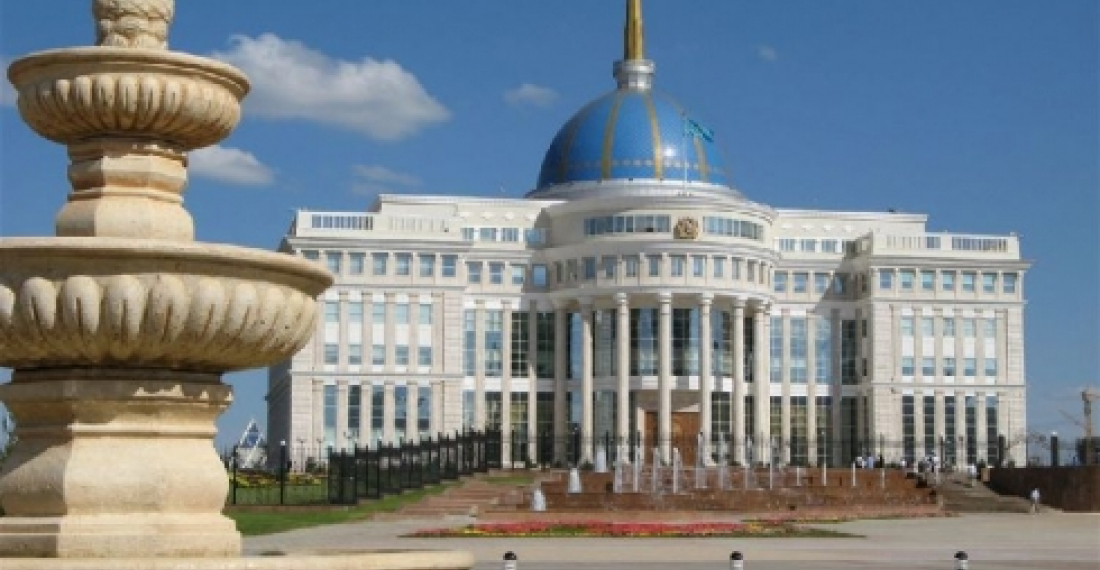
СЛЕДУЮЩАЯ ОСТАНОВКА АСТАНА

Президент России Дмитрий Медведев, как ожидается, встретиться со своим армянским коллегой Сержем Саргсяном в эти выходные, в Астане, на полях саммита Организация Договора о коллективной безопасности (ОДКБ). Этой встрече предшествует четырех часовая встреча между Медведевым и Президентом Азербайджана Ильхамом Алиевым в Сочах, в минувший вторник.

Нет никаких сомнений, что российская дипломатия приложит все свои усилия для достижения прорыва на переговорах по карабахскому конфликту после провала саммита в Казани. Но руководство России все больше осознает ограниченность того, что она может достичь в этом вопросе. Кажется, некоторые из них даже советуют президенту Медведеву проявить осторожность, уделять не слишком много времени и политического доверия процессу, который вряд ли будет иметь положительный результат.


Четырех часовая встреча Алиева и Медведева в Сочах, судя по всему, была, как обычно, дружественной и откровенной. Между ними существуют хорошие личные взаимоотношения. Но результаты встречи остаются неясными. Не было никаких официальных комментариев по итогам переговоров, за исключением краткого заявления главы отдела внешних связей в администрации президента Азербайджана Новруза Мамедова, который подтвердил, что переговоры должны продолжаться.


В Астане Медведев попытается сохранить сокращение разрыва между армянской и азербайджанской сторонами. По настроениям в регионе в настоящее время у него это вряд ли получится. И все же президент России не должен отказываться от своих дипломатических усилий. Что сейчас очевидно, это необходимость изменения подхода со стороны международных посредников. Россия должна быть частью этого нового подхода. Она может внести большой вклад в этот процесс - русские начинают понимать, что есть ограничения на то, чего они могут достичь, действуя самостоятельно.


Этот комментарий был подготовлен редакторской группой commonspace.eu

Related articles

Editor's choice
News
The British prime minister says Europe must "stand on its own two feet" when it comes to defence

The British prime minister says Europe must "stand on its own two feet" when it comes to defence

The UK will deploy a carrier strike group, led by the aircraft carrier HMS Prince of Wales to the Arctic and the High North as part of efforts to bolster security against Russian threats. British prime minister, Sir Keir Starmer announced the deployment in a speech on Saturday (14 February) at the Munich Security Conference. Europe must be ready to fight to protect its people, values, and way of life,  Sir Keir told the Conference. Starmer also called for deeper links and cooperation, including economic ties, between the UK and EU. The PM stressed the continent must "stand on its own two feet" when it comes to defence commitments. "We must build our hard power, because that is the currency of the age," he told the conference. (Click image to read the full story).

Popular

Editor's choice
Interview
Thursday Interview: Murad Muradov

Thursday Interview: Murad Muradov

Today, commonspace.eu starts a new regular weekly series. THURSDAY INTERVIEW, conducted by Lauri Nikulainen, will host  persons who are thinkers, opinion shapers, and implementors in their countries and spheres. We start the series with an interview with Murad Muradov, a leading person in Azerbaijan's think tank community. He is also the first co-chair of the Action Committee for a new Armenian-Azerbaijani Dialogue. Last September he made history by being the first Azerbaijani civil society activist to visit Armenia after the 44 day war, and the start of the peace process. Speaking about this visit Murad Muradov said: "My experience was largely positive. My negative expectations luckily didn’t play out. The discussions were respectful, the panel format bringing together experts from Armenia, Azerbaijan, and Turkey was particularly valuable during the NATO Rose-Roth Seminar in Yerevan, and media coverage, while varied in tone, remained largely constructive. Some media outlets though attempted to represent me as more of a government mouthpiece than an independent expert, which was totally misleading.  Overall, I see these initiatives as important steps in rebuilding trust and normalising professional engagement. The fact that soon a larger Azerbaijani civil society visits to Armenia followed, reinforces the sense that this process is moving in the right direction." (click the image to read the interview in full)