


Швейцария предлагает новый подход в карабахском конфликте, основанный на стуктурированных переговорах.

В начале визита на Южный Кавказ президент Швейцарской Конфедерации и нынешний глава ОБСЕ предложил "начать структурированные переговоры, ведущие к мирному соглашению".

Президент Швейцарской Конфедерации, и текущий председатель ОБСЕ в Европе, в понедельник провел интенсивный день встреч в Баку, в ходе которого он встретился с президентом Азербайджана Ильхамом Алиевым, с официальными лицами правительства, представителями оппозиционных партий и организаций и НПО, а также представителями лиц, перемещенных в результате конфликта.

В заявлении Министерства иностранных дел Швейцарии говорится, что президент Буркхальтер призвал стороны к приверженности в поиске решения, заявив об этом в качестве председателя ОБСЕ: ""Мы уверены, что должны шаг за шагом продвигаться к миру. Возникла необходимость в проведении новой встречи между президентами Азербайджана и Армении. Было предложено провести эту встречу в Париже, и мы тоже поддержали эту мысль. Мы выступаем за проведение этой встречи в ближайшем будущем. Эта встреча должна стать точкой отсчета новой фазы переговоров. С другой стороны, это может стать процессом структурированных переговоров, которые приведут к мирному соглашению. А этот переговорный процесс должен идти на основе Мадридских принципов", - заявил глава ОБСЕ. Он подчеркнул, что Швейцарский Председательство в ОБСЕ готово и намерено поддерживать обе стороны в своем стремлении, если это необходимо.

Кроме того, он высказался в пользу активизации прямых контактов между представителями гражданского общества с обеих сторон, как способ уменьшить предрассудки и укрепить взаимное доверие. Он также выразил обеспокоенность по поводу репрессивных действий в отношении лиц, работающих на сближение между двумя странами.

Политический редактор Commonspace.eu так прокомментировал новую швейцарскую инициативу:

"Это важное развитие, направленное на выход из существующего тупика в переговорах по урегулированию нагорно-карабахского конфликта. Призыв к структурированным переговорам, ведущих к мирному соглашению означает, что международное сообщество стремится перейти от нынешнего специального  формата, где стороны взаимодействуют в свое удовольствие и на досуге, к более расписанному по времени процессу с четким концом игры. Более подробной информации нет, и на данный момент, кажется, что сопредседатели МГ ОБСЕ останутся центром усилий международного сообщества по урегулированию конфликта. Но это явная попытка перенести переговоры на новый, более интенсивный уровень. Реакция в Баку, где Буркхальтер провел ​​первый день своего визита на Южный Кавказ, до сих пор положительная. Президент Алиев приветствовал гостя и усилия Буркхальтера по  урегулированию конфликта. Президент Буркхальтер, как ожидается, прибудут в Армению в среду. Швейцарское правительство ясно дало понять в своем заявлении, что встреча между президентами Армении и Азербайджана должна будет дать толчок новой инициативе. Президент Швейцарии назвал продолжающиеся нарушения режима прекращения огня, который он описывает как "неприемлемые" и выражает "озабоченность" о репрессиях тех, кто работает для содействия процессу между Арменией и Азербайджаном.

Понятно, что Швейцария не просто предпринимает дипломатические шаги, которых ожидают от нынешнего председателя ОБСЕ, но и предлагает четкую дорожную карту сторонам для продвижения вперед. Эта возможность не должна быть упущена. Правительства Армении и Азербайджана должны быстро одобрить новый швейцарский подход и подойти к нему конструктивно."

источник: commonspace.eu 

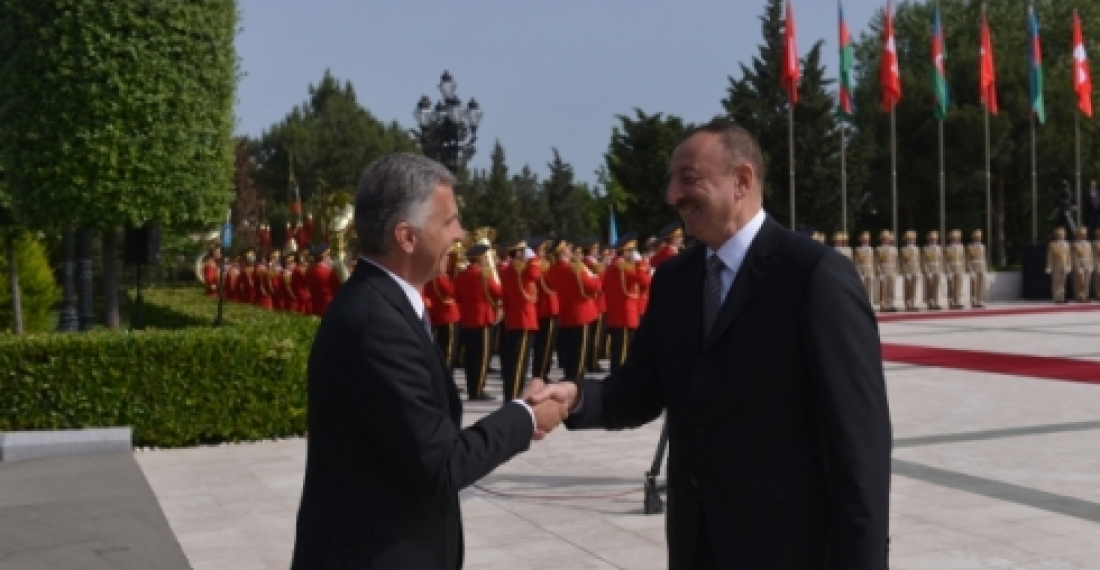
фото: Президент Алиев приветствует президента Дидье Burkhalter Швейцарской Конфедерации в Баку в понедельник, 2 июня 2014 года.


Related articles

Editor's choice
News
''Coalition of the Willing'' meets in Kyiv to restate its support for Ukraine

''Coalition of the Willing'' meets in Kyiv to restate its support for Ukraine

The ''Coalition of the  Willing''  of thirty five countries, has renewed its support of Ukriane, at a meeting in Kyiv, held on Ukraine's national day on 24 August, under the chairmanship of British Prime Minister,A ndy Burnham. Burnham has promised to keep up the pressure on Russia despite Moscow's "outrageous threats", on his first official visit to Ukraine as UK prime minister. Burnham met Ukrainian President Volodymyr Zelensky and chaired his first meeting of the "coalition of the willing", set up by the UK and France under his predecessor Sir Keir Starmer. He said the coalition was "doing everything we can" while urging the US Congress to "ratchet up" economic pressure on Russia. The government has agreed to hand over blueprints for British-made components for the Scalp missile, a French version of the UK's Storm Shadow cruise missile - allowing Ukraine to produce the long-range weapon domestically. During the meeting with France and Ukraine, Burnham said allies were doing "everything we can" to "dig into our own stocks and help others dig into their stocks" of air defences to protect Ukraine. "This is the moment to keep up the pressure on Russia, the moment to squeeze their ability to fund this illegal war," Burnham said, praising the "strength" of the Ukrainian people. "Ukraine has been Europe's protector, not a drain on our security but the front line in keeping Europe safe." It comes after Kremlin spokesman Dmitry Peskov criticised the UK's decision to share the missile blueprints. Peskov said it prevented "even the slightest progress" towards achieving peace. He told reporters on Monday that the Russian military was already gathering data to locate any missile production sites to destroy them. "Britain is involved in this war on the side of the Kyiv regime. Britain methodically and regularly adds fuel to the fire," he added. In response, Burnham said: "Who started the fire? That's the question, isn't it?" He added the issue of missile interceptors would be the main topic at the coalition of the willing meeting. Burnham chaired his first meeting of the "coalition of the willing" in Kyiv Burnham has been reaffirming the UK's backing for Kyiv in the wake of escalating Russian strikes on Ukraine in recent weeks - including one on a shopping centre on Friday that killed at least 16 people. In a joint statement after the meeting, Burnham and co-chairs French President Emmanuel Macron and German Chancellor Friedrich Merz said the group would aim to strength Kyiv's air defences "as a matter or urgent priority". They also condemned Moscow's "systemic and escalating strikes against Ukraine's cities, critical infrastructure and civilians" and pledged to "constrain Russia's war chest through sanctions and actions against the "shadow fleet". (click image to read more).

Popular

Editor's choice
Interview
Thursday Interview: Murad Muradov

Thursday Interview: Murad Muradov

Today, commonspace.eu starts a new regular weekly series. THURSDAY INTERVIEW, conducted by Lauri Nikulainen, will host  persons who are thinkers, opinion shapers, and implementors in their countries and spheres. We start the series with an interview with Murad Muradov, a leading person in Azerbaijan's think tank community. He is also the first co-chair of the Action Committee for a new Armenian-Azerbaijani Dialogue. Last September he made history by being the first Azerbaijani civil society activist to visit Armenia after the 44 day war, and the start of the peace process. Speaking about this visit Murad Muradov said: "My experience was largely positive. My negative expectations luckily didn’t play out. The discussions were respectful, the panel format bringing together experts from Armenia, Azerbaijan, and Turkey was particularly valuable during the NATO Rose-Roth Seminar in Yerevan, and media coverage, while varied in tone, remained largely constructive. Some media outlets though attempted to represent me as more of a government mouthpiece than an independent expert, which was totally misleading.  Overall, I see these initiatives as important steps in rebuilding trust and normalising professional engagement. The fact that soon a larger Azerbaijani civil society visits to Armenia followed, reinforces the sense that this process is moving in the right direction." (click the image to read the interview in full)

