


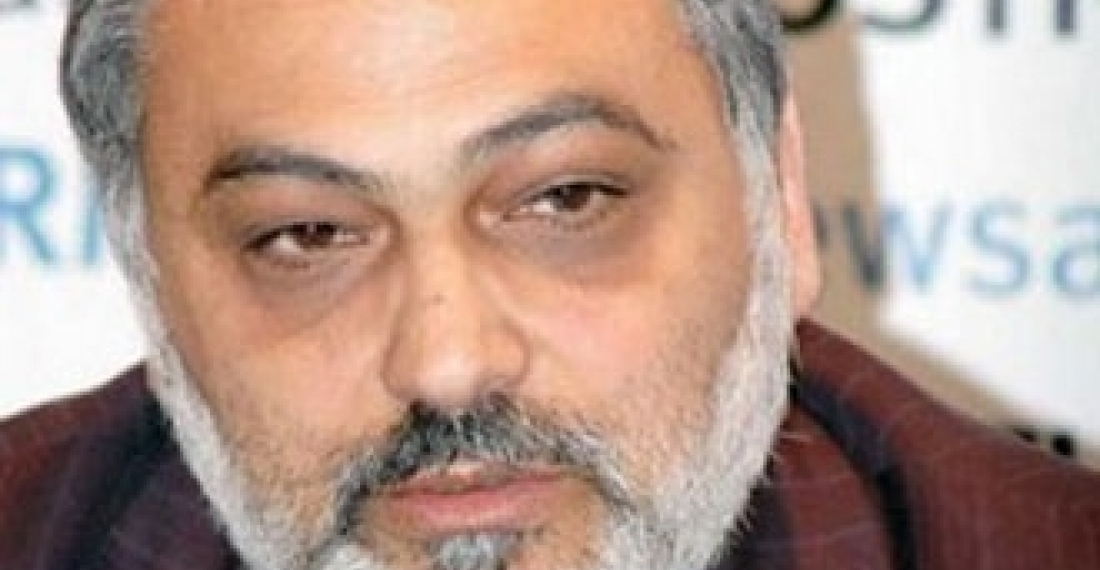
Рубен Сафрастян:

Политика официальной Анкары в отношении Армении за последнее время не подверглась принципиальным изменениям. Не изменила Турция и свою позицию в отношении карабахской проблемы, продолжая поддерживать Азербайджан, в некоторых случаях даже больше самого Азербайджана. Подобное мнение выразил сегодня журналистам директор Института востоковедения  Национальной Академии наук Рубен Сафрастян.

"Учитывая, что наиболее важным вопросом для Турции является Ближний Восток, где она ведет активную политику, пытаясь получить дивиденды, на сегодняшний день у турецкой элиты даже нет принципиальной позиции в отношении Армении, как нет и заинтересованности в нормализации отношений с Ереваном. При этом, Анкара продолжает демонстрировать Вашингтону определенные шаги в направлении нормализации отношений с Арменией, которые являются имитацией и пиаром. Мне кажется, что сегодняшняя Турция может себе это позволить, учитывая ее возрастающую роль на Ближнем и Среднем Востоке, которая представляет большую важность для США.  Именно поэтому Вашингтон  не использует в полной мере свои рычаги давления на Анкару", - заметил тюрколог.

Отметив, что Турция продолжает играть крайне негативную роль в переговорном процессе по мирному урегулированию НКК, Сафрастян охарактеризовал турецко- азербайджанские отношения как отношения двух государств, преследующих свои собственные цели. По его мнению, несмотря на то, что Турция заинтересована в Азербайджане в качестве союзника, учитывая, что в ее стратегии на Южном Кавказе для Азербайджана отведена важная роль, между этими двумя странами есть противоречия связанные с проектом , и стоимости транзита азербайджанского газа по территории Турции.
 

Related articles

Editor's choice
News
The British prime minister says Europe must "stand on its own two feet" when it comes to defence

The British prime minister says Europe must "stand on its own two feet" when it comes to defence

The UK will deploy a carrier strike group, led by the aircraft carrier HMS Prince of Wales to the Arctic and the High North as part of efforts to bolster security against Russian threats. British prime minister, Sir Keir Starmer announced the deployment in a speech on Saturday (14 February) at the Munich Security Conference. Europe must be ready to fight to protect its people, values, and way of life,  Sir Keir told the Conference. Starmer also called for deeper links and cooperation, including economic ties, between the UK and EU. The PM stressed the continent must "stand on its own two feet" when it comes to defence commitments. "We must build our hard power, because that is the currency of the age," he told the conference. (Click image to read the full story).

Popular

Editor's choice
Interview
Thursday Interview: Murad Muradov

Thursday Interview: Murad Muradov

Today, commonspace.eu starts a new regular weekly series. THURSDAY INTERVIEW, conducted by Lauri Nikulainen, will host  persons who are thinkers, opinion shapers, and implementors in their countries and spheres. We start the series with an interview with Murad Muradov, a leading person in Azerbaijan's think tank community. He is also the first co-chair of the Action Committee for a new Armenian-Azerbaijani Dialogue. Last September he made history by being the first Azerbaijani civil society activist to visit Armenia after the 44 day war, and the start of the peace process. Speaking about this visit Murad Muradov said: "My experience was largely positive. My negative expectations luckily didn’t play out. The discussions were respectful, the panel format bringing together experts from Armenia, Azerbaijan, and Turkey was particularly valuable during the NATO Rose-Roth Seminar in Yerevan, and media coverage, while varied in tone, remained largely constructive. Some media outlets though attempted to represent me as more of a government mouthpiece than an independent expert, which was totally misleading.  Overall, I see these initiatives as important steps in rebuilding trust and normalising professional engagement. The fact that soon a larger Azerbaijani civil society visits to Armenia followed, reinforces the sense that this process is moving in the right direction." (click the image to read the interview in full)

