


Рамиз Мехтиев в Тегеране. Влиятельный азербайджанский посланник на встрече с президентом Ирана и другими должностными лицами.
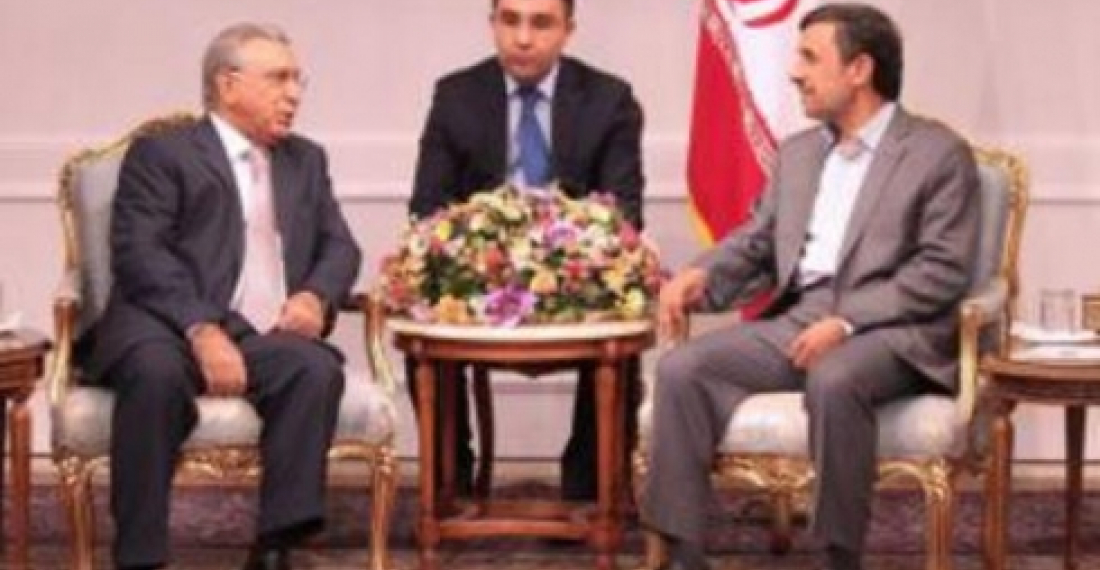

Глава Администрации Президента Азербайджана, Рамиз Мехтиев, встретился в Тегеране с президентом Ирана, Махмудом Ахмадинежадом. Мехтиев, который также является секретарем Совета национальной безопасности Азербайджана, передал послание президента Алиева иранскому руководству.

Сайт Администрации Президента цитирует Ахмадинежада, который заявил на встрече с Мехтиев, что ирано-азербайджанские отношения имеют глубокие корни и попытка создать проблемы между двумя странами западным спецслужбам не удастся. Согласно сообщению иранского информационного агентства ИРНА "Ахмадинежад отметил, что у братских отношений между Тегераном и Баку есть враги, которы не хотят видеть две страны и два народа, стоящих бок о бок друг с другом."

Политический редактор Commonspace.eu в комментарии сообщает: "Несмотря на выражения братской любви визит влиятельного посланника из Баку связан с недавним ухудшением отношений между Азербайджаном и Ираном. Обе страны за последнее время ни раз обвиняли друг друга во вмешательстве в их внутренние дела. Рамиз Мехтиев является вторым наиболее важным чиновником в азербайджанской властной иерархии и он очень редко отправляется на такие миссий. Обе стороны пытаются сохранить солидарность в обществе несмотря на различия между ними."

Источник: commonspace.eu

Фото: Рамиз Мехтиев на встрече с президентом Ирана Ахманидежадом в Тегеране в понедельник, 29 апреле 2013 года.

Related articles

Editor's choice
News
European leaders outline position on current situation in the Middle East

European leaders outline position on current situation in the Middle East

The leaders of the 27 member states of the European Union met in Brussels on Thursday, 19 March 2026, to discuss the current global situation, and, in particular, the crisis in the Gulf, and the wider Middle East. EU leaders adopted conclusions on Ukraine, the Middle East, competitiveness and the single market, European defence and security, migration, multilateralism, strengthening Europe's democratic resilience, protecting children online, the EU's eastern regions and Dniester river. The leaders also met UN Secretary-General António Guterres to discuss the geopolitical situation and multilateralism. In their decision the EU leaders said, "Developments in Iran and the wider region threaten regional and global security. The European Council calls for de-escalation and maximum restraint, the protection of civilians and civilian infrastructure and full respect of international law by all parties, including the principles of the United Nations Charter and international humanitarian law. In this regard, it calls for a moratorium on strikes against energy and water facilities." The statement adds, "The European Union will continue to protect its security and interests, working with regional and global partners to counter the impact of the ongoing hostilities. The European Union and its Member States are taking all necessary steps to ensure the safety of EU citizens in the region, including by providing conditions for their safe departure." (Click the image above to read more).

Popular

Editor's choice
Interview
Thursday Interview: Murad Muradov

Thursday Interview: Murad Muradov

Today, commonspace.eu starts a new regular weekly series. THURSDAY INTERVIEW, conducted by Lauri Nikulainen, will host  persons who are thinkers, opinion shapers, and implementors in their countries and spheres. We start the series with an interview with Murad Muradov, a leading person in Azerbaijan's think tank community. He is also the first co-chair of the Action Committee for a new Armenian-Azerbaijani Dialogue. Last September he made history by being the first Azerbaijani civil society activist to visit Armenia after the 44 day war, and the start of the peace process. Speaking about this visit Murad Muradov said: "My experience was largely positive. My negative expectations luckily didn’t play out. The discussions were respectful, the panel format bringing together experts from Armenia, Azerbaijan, and Turkey was particularly valuable during the NATO Rose-Roth Seminar in Yerevan, and media coverage, while varied in tone, remained largely constructive. Some media outlets though attempted to represent me as more of a government mouthpiece than an independent expert, which was totally misleading.  Overall, I see these initiatives as important steps in rebuilding trust and normalising professional engagement. The fact that soon a larger Azerbaijani civil society visits to Armenia followed, reinforces the sense that this process is moving in the right direction." (click the image to read the interview in full)


