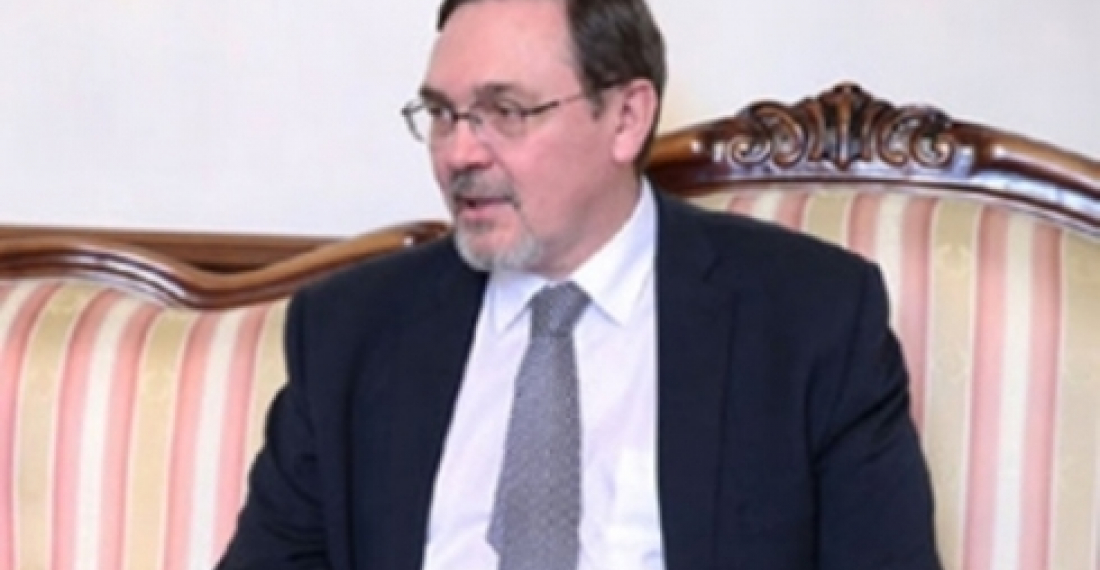
Посол России в Армении наместник короля? Попытка российской дипломатии заставить молчать гражданское общество Армении расстроило элиты, в том числе и самых покорных.

Этот материал подготовлен редакцией commonspace.eu

Степень, в которой Армения стала зависимой от России в военной и экономической сферах уже в прошлом становилась предметом многочисленных комментариев и спекуляций. Такое беспокойство иногда выражается публично, но еще больше о нем разговаривают армяне в частных беседах. Апологеты президента Армении Сержа Саргсяна и его внешней политики часто ссылаются на исторический опыт Армении, ее блокады со стороны Турции и Азербайджана, на ее географическое расположение, и на отсутствие природных ресурсов, как на причины, нынешних отношении Армении с Россией.  Безопасность Армении и Нагорного Карабаха являются главным для страны, как часто напоминает своим сторонникам и критикам президент Саргсян.

Таким образом, когда Армения подписала с Россией долгосрочное военное соглашение многие вздохнули, но сказали, что это было неизбежно. Когда российские политики начали называть Армению форпостом России некоторые назвали это обычным эмоцианальным взрывом нерепрезентативных политиков. Когда Президент Серж Саргсян резко изменил свою собственную политику, отказавшись от планов по вступлению в Ассоциацию и подписанию соглашения о свободной торговле с ЕС и вместо этого решил вступить в Таможенный Союз продвигаемый Россией, что вызвало возмущение даже среди некоторых  собственных сторонников, но в конце концов они все сыграли хорошую мину, и решили идти вместе, несмотря на многочисленные опасения.

Однако этой тенденции, кажется, нет конца. Ранее на этой неделе посол России в Армении Иван Волынкин публично выступал за умолкание некоторых неправительственных организаций, которые ставят под вопрос касательно проводимой "Российской политики". В интервью с русско-армянской газете "Ноев Ковчег", Волынкин сказал:

"Я уверен в том, что России надо более активно заявлять о своем присутствии здесь на информационном поле Армении. Однако, заниматься нейтрализацией тех НПО на территории Армении, которые хотят вбить клин в российско-армянские отношения, видимо, нужно, используя и другие методы. В России, кстати, принят закон, который вполне конкретно регулирует деятельность НПО" - сказал он, обращаясь к спорному закону, который вынуждает, финансируемые иностранные НПО регистрироваться в качестве "иностранных агентов" в России.

Посольство России в Ереване после президентских выборов в Армении находится в некотором смысле в панике, т.к. кандидат от оппозиции Раффи Ованнисян Посольство России в Ереване был в некотором состоянии паники после президентских выборов в Армении в прошлом году, которые видели кандидат от оппозиции Раффи Ованнисян получил гораздо болеьше голосов, чем ожидалось, даже в той в несколько сверхуправляемой политической среде. Неожиданный результат застал Кремль врасплох. 

Однако, последняя попытка заставить замолчать гражданское общество Армении сильно расстроило армянскую элиту, в том числе самых покорных.

Глава МИД Армении был вынужден принять государственную позицию, сказав, что все НПО в Армении действуют в рамках закона. Представитель Министерства, Тигран Балаян, сказал, что немыслимо, чтобы какое-либо НПО смогло вбить клин в Армяно-Российские отношения, которые основаны на многовековой дружбе и выдержали испытание временем.

Но инцидент поднял ряд вопросов о перспективе прямого вмешательства России в политическую жизнь Армении - вмешательство, которое может влиять на все рычаги - военные, финансовые, экономические и другие, которые есть у России в Армении. Если Иван Волынкин готов вмешаться в это публично с тем, чтобы заставить замолчать несколько НПО, которые критичны к отношениям между Арменией и Россией, то можно только гадать, в какой степени он вмешается, если этим отношениям будет угрожать более серьезная угроза. Действуя больше как наместник, чем посол, Волынкин дал почувствовать, как выглядит "мягка сила" России. 

Этот материал был подготовлен редакцией commonspace.eu.
Related articles

Editor's choice
News
Germany accuses Russia of cyberattacks and disinformation campaign

Germany accuses Russia of cyberattacks and disinformation campaign

The German government holds Russia responsible for a cyberattack on German air traffic control, and for targeted disinformation campaigns before the last federal election. According to the German Foreign Office in Berlin, the incidents could be clearly attributed to the Russian military intelligence service, the GRU. In response, the Russian ambassador to Berlin was summoned to the Foreign Ministry. "We have been observing a massive increase in threatening hybrid activities by Russia for some time now," a spokesperson for the Foreign Ministry stated. These range from disinformation campaigns and espionage to cyberattacks and sabotage attempts. The aim is to divide society, sow distrust, and undermine confidence in democratic institutions. The spokesperson added that with these actions, Russia is "very concretely threatening our security, not only through its war of aggression against Ukraine, but also here in Germany."  The Foreign Ministry spokesperson explained that the cyberattack on air traffic control in August 2024 was clearly attributed to the hacker collective "APT28," known as "Fancy Bear," and to the responsibility of the Russian military intelligence service, the GRU. Furthermore, it could now be "conclusively stated" that Russia had attempted "to influence and destabilize both the last Federal election and the ongoing internal affairs of the Federal Republic of Germany." There was "absolutely irrefutable evidence" for this". The so-called "Storm 1516" campaign, which has been running since 2024, is allegedly backed by "reliable information" that the Moscow-based think tank "Center for Geopolitical Expertise" is behind it. The Center is also said to be supported by Russian military intelligence. Its primary aim is to influence democratic elections in the West. (Click the image to read more).
Editor's choice
News
NATO Chief says war is on Europe's doorstep, and warns against complacency

NATO Chief says war is on Europe's doorstep, and warns against complacency

Russia could attack a NATO country within the next five years, the Secretary General of NATO, Mark Rutte, said in a stark new warning. "NATO's own defences can hold for now," Rutte warned in Berlin, but conflict was "next door" to Europe, and he feared "too many are quietly complacent, and too many don't feel the urgency, too many believe that time is on our side. "Russia is already escalating its covert campaign against our societies," Rutte said in a speech in Germany. "We must be prepared for the scale of war our grandparents or great-grandparents endured." Earlier this month, Russia's President Vladimir Putin said his country was not planning to go to war with Europe, but it was ready "right now" if Europe wanted to - or started a war. But similar reassurances were given by Moscow in 2022, just before 200,000 Russian troops crossed the border and invaded Ukraine. Putin has accused European countries of hindering US efforts to bring peace in Ukraine - a reference to the role Ukraine's European allies have recently played in trying to change a US peace plan to end the war, whose initial draft was seen as favouring Russia. But Putin was not sincere, Nato's secretary-general said in the German capital, Berlin. Supporting Ukraine, he added, was a guarantee for European security. "Just imagine if Putin got his way; Ukraine under the boot of Russian occupation, his forces pressing against a longer border with Nato, and the significantly increased risk of an armed attack against us." Russia's economy has been on a war footing for more than three years now - its factories churn out ever more supplies of drones, missiles and artillery shells. According to a recent report by the Kiel Institute for the World Economy, Russia has been producing each month around 150 tanks, 550 infantry fighting vehicles, 120 Lancet drones and more than 50 artillery pieces. The UK, and most of its Western allies, are simply not anywhere near this point. Analysts say it would take years for Western Europe's factories to come close to matching Russia's mass-production of weapons. "Allied defence spending and production must rise rapidly, our armed forces must have what they need to keep us safe," the Nato chief said.

Popular

Editor's choice
News
Germany accuses Russia of cyberattacks and disinformation campaign

Germany accuses Russia of cyberattacks and disinformation campaign

The German government holds Russia responsible for a cyberattack on German air traffic control, and for targeted disinformation campaigns before the last federal election. According to the German Foreign Office in Berlin, the incidents could be clearly attributed to the Russian military intelligence service, the GRU. In response, the Russian ambassador to Berlin was summoned to the Foreign Ministry. "We have been observing a massive increase in threatening hybrid activities by Russia for some time now," a spokesperson for the Foreign Ministry stated. These range from disinformation campaigns and espionage to cyberattacks and sabotage attempts. The aim is to divide society, sow distrust, and undermine confidence in democratic institutions. The spokesperson added that with these actions, Russia is "very concretely threatening our security, not only through its war of aggression against Ukraine, but also here in Germany."  The Foreign Ministry spokesperson explained that the cyberattack on air traffic control in August 2024 was clearly attributed to the hacker collective "APT28," known as "Fancy Bear," and to the responsibility of the Russian military intelligence service, the GRU. Furthermore, it could now be "conclusively stated" that Russia had attempted "to influence and destabilize both the last Federal election and the ongoing internal affairs of the Federal Republic of Germany." There was "absolutely irrefutable evidence" for this". The so-called "Storm 1516" campaign, which has been running since 2024, is allegedly backed by "reliable information" that the Moscow-based think tank "Center for Geopolitical Expertise" is behind it. The Center is also said to be supported by Russian military intelligence. Its primary aim is to influence democratic elections in the West. (Click the image to read more).