


После 20 лет приготовлении настало время созвать минскую конференцию.
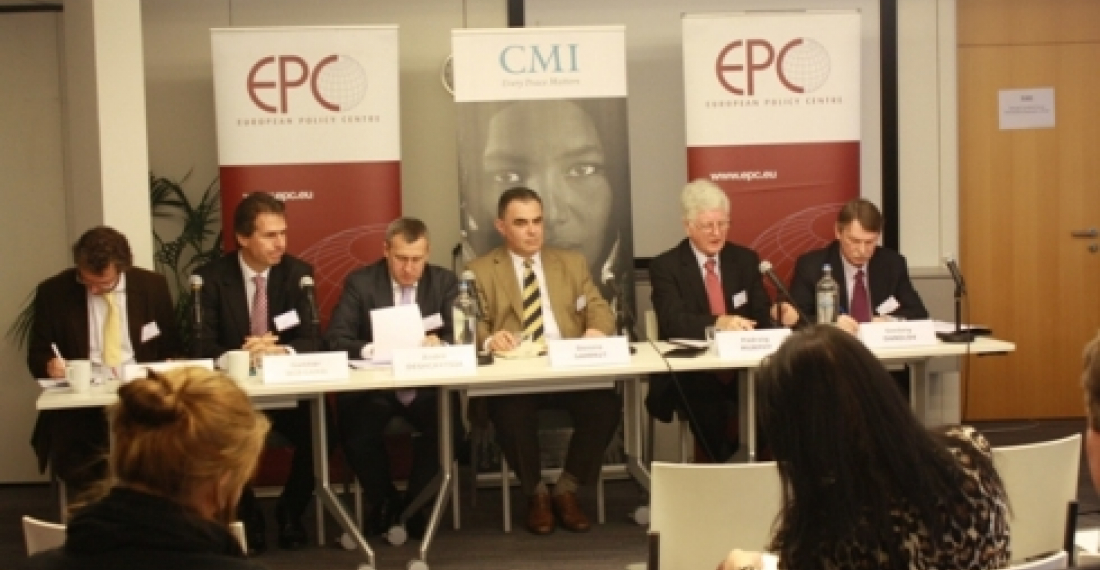
Двадцать лет назад была создана Минская группа ОБСЕ для посредничества в урегулировании конфликта вокруг Нагорного Карабаха. Группа должна была подготовить почву для проведения полноценной конференции ОБСЕ в Минске, чтобы помочь привести конфликт к полному его разрешению. Но спустя уже двадцать лет никакого крупного прорыва так и не было достигнуто и сейчас Минская конференция должна быть созвана в любом случае. Об этом было сказано во время конференции, посвященной миротворческому опыту ОБСЕ, которая состоялась в Брюсселе в понедельник, 10 декабря, которая была открыта министром иностранных дел и нынешним председателем Ирландии и ОБСЕ, Имоном Гилмором. Более ста дипломатов, чиновников ЕС, представителей общественных организаций и средств массовой информации, аналитических центров, приняли участие в данном событии, которое было организовано Центром европейской политики и Управлением кризисных ситуации.

С призывом к созыву Минской конференции выступил директор LINKS, Деннис Саммут, во время своего выступления в группе, которая сосредоточена на урегулировании нагорно-карабахского конфликта. Деннис Саммут говорил о развитии Минского процесса в течение последних двух десятилетий и о неудачах процесса в достижении каких-либо существенных прорывов в урегулировании нагорно-карабахского конфликта. Он сказал, что нынешнее соглашение включающее тайные переговоры между двумя сторонами конфликта: Арменией и Азербайджаном, и тремя сопредседателя Минского процесса ОБСЕ: Франция, Россия и Соединенные Штаты стали слишком уютны, время от времени с временным выходом из них одной из конфликтующих сторон. С другой стороны, замена Минского процесса другим механизмом займет долгое время и, вероятно, будет использоваться сторонами для скорее позерства нежели для достижения прорыва. Поэтому международному сообществу приходится действовать в рамках существующей структуры. Деннис Саммут заявил о том, что и количество участников и сферы переговоров должны быть расширены, и надо переключится на другие методы, так как очевидно, что переговоры потерпели неудачу. Один из способов, которым это можно было бы сделать это созыв Минской конференции.

Деннис Саммут также заявил, что уроки, извлеченные из других процессов урегулирования конфликтов показали, что политическая воля к компромиссу не проявится сама по себе, и что она должна быть вызвана через методом кнута и пряника со стороны международного сообщества.

Ранее некоторые участники говорили о роли ОБСЕ в миротворческих процессах на евразийском пространстве. Было отмечено, что в то время как был внесен значительный вклад, и было несколько достижений, общая картина такова, что у ОБСЕ неоднородный послужной список в этой области.

Источник: commonspace.eu

Photo: The first panel of the conference "The OSCE peacemaking experience: What lessons and challenges for the EU" from left to right: James Nixey (Chatham House), Gunnar Wiegan (Director for Russia, Eastern Partnership, Central Asia, Regional co-operation and OSCE at the European External Action Service); Andreii Deshchytsia (Special Represnetative of the incoming Ukrainian Chairmanship of the OSCE), Dennis Sammut (Director, LINKS), Padraig Murphy (Special Representative of the Irish Chairmanship of the OSCE) and Dimitriy Danilov, (Head of the European Security Studies Department, Institute for Europe, Russian Academy of Sciences.) Picture courtesy of the European Policy Centre.

Related articles

Editor's choice
News
''Coalition of the Willing'' meets in Kyiv to restate its support for Ukraine

''Coalition of the Willing'' meets in Kyiv to restate its support for Ukraine

The ''Coalition of the  Willing''  of thirty five countries, has renewed its support of Ukriane, at a meeting in Kyiv, held on Ukraine's national day on 24 August, under the chairmanship of British Prime Minister,A ndy Burnham. Burnham has promised to keep up the pressure on Russia despite Moscow's "outrageous threats", on his first official visit to Ukraine as UK prime minister. Burnham met Ukrainian President Volodymyr Zelensky and chaired his first meeting of the "coalition of the willing", set up by the UK and France under his predecessor Sir Keir Starmer. He said the coalition was "doing everything we can" while urging the US Congress to "ratchet up" economic pressure on Russia. The government has agreed to hand over blueprints for British-made components for the Scalp missile, a French version of the UK's Storm Shadow cruise missile - allowing Ukraine to produce the long-range weapon domestically. During the meeting with France and Ukraine, Burnham said allies were doing "everything we can" to "dig into our own stocks and help others dig into their stocks" of air defences to protect Ukraine. "This is the moment to keep up the pressure on Russia, the moment to squeeze their ability to fund this illegal war," Burnham said, praising the "strength" of the Ukrainian people. "Ukraine has been Europe's protector, not a drain on our security but the front line in keeping Europe safe." It comes after Kremlin spokesman Dmitry Peskov criticised the UK's decision to share the missile blueprints. Peskov said it prevented "even the slightest progress" towards achieving peace. He told reporters on Monday that the Russian military was already gathering data to locate any missile production sites to destroy them. "Britain is involved in this war on the side of the Kyiv regime. Britain methodically and regularly adds fuel to the fire," he added. In response, Burnham said: "Who started the fire? That's the question, isn't it?" He added the issue of missile interceptors would be the main topic at the coalition of the willing meeting. Burnham chaired his first meeting of the "coalition of the willing" in Kyiv Burnham has been reaffirming the UK's backing for Kyiv in the wake of escalating Russian strikes on Ukraine in recent weeks - including one on a shopping centre on Friday that killed at least 16 people. In a joint statement after the meeting, Burnham and co-chairs French President Emmanuel Macron and German Chancellor Friedrich Merz said the group would aim to strength Kyiv's air defences "as a matter or urgent priority". They also condemned Moscow's "systemic and escalating strikes against Ukraine's cities, critical infrastructure and civilians" and pledged to "constrain Russia's war chest through sanctions and actions against the "shadow fleet". (click image to read more).

Popular

Editor's choice
Interview
Thursday Interview: Murad Muradov

Thursday Interview: Murad Muradov

Today, commonspace.eu starts a new regular weekly series. THURSDAY INTERVIEW, conducted by Lauri Nikulainen, will host  persons who are thinkers, opinion shapers, and implementors in their countries and spheres. We start the series with an interview with Murad Muradov, a leading person in Azerbaijan's think tank community. He is also the first co-chair of the Action Committee for a new Armenian-Azerbaijani Dialogue. Last September he made history by being the first Azerbaijani civil society activist to visit Armenia after the 44 day war, and the start of the peace process. Speaking about this visit Murad Muradov said: "My experience was largely positive. My negative expectations luckily didn’t play out. The discussions were respectful, the panel format bringing together experts from Armenia, Azerbaijan, and Turkey was particularly valuable during the NATO Rose-Roth Seminar in Yerevan, and media coverage, while varied in tone, remained largely constructive. Some media outlets though attempted to represent me as more of a government mouthpiece than an independent expert, which was totally misleading.  Overall, I see these initiatives as important steps in rebuilding trust and normalising professional engagement. The fact that soon a larger Azerbaijani civil society visits to Armenia followed, reinforces the sense that this process is moving in the right direction." (click the image to read the interview in full)



