


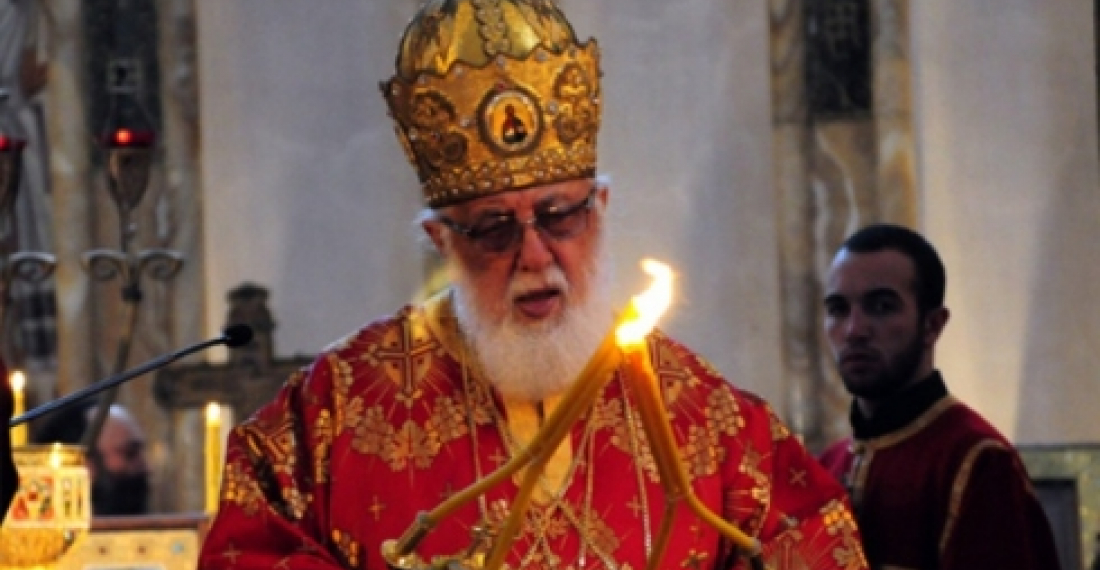
Патриарх остается символом грузинского единства. В Тбилиси прошли торжества по случаю 80-летия Католикоса-Патриарха всея Грузии Илии II.

Православные лидеры со всего мира собрались в Тбилиси, чтобы отпраздновать 80-летие Ильи II, Католикоса-Патриарха всея Грузии. Юбилей также совпал с 35-летием интронизации Патриарха. Среди приглашенных патриарх Константинопольский, Бартоломео II, патриарх Сербии и Болгарии, а также высокопоставленная делегация от Русской Православной Церкви.

Илия II родился 4 января 1913 года под именем Ираклий Гудушаури-Шиолашвили во Владикавказе, Россия, Северная Осетия, хотя его семья родом из Восточной Грузии. Он окончил Московскую духовную семинарию и был рукоположен в сан диакона в 1957 году и монахом в 1959 году, окончил Московскую духовную академию в 1960 году и вернулся в Грузию, где он был назначен в качестве священника в Саборе, в Батуми. В 1963 году он стал епископом Батуми и Шемокмеди и был назначен Патриаршим викарием. С 1963 по 1972 г. он также был первым ректором Духовной семинарии в Мцхете - единственное духовное училище в Грузии на то время. В 1967 году он был хиротонисан во епископа Сухуми и Абхазии и возведен в сан митрополита в 1969. 25 декабря 1977 года он был избран новым Католикосом-Патриархом всея Грузии.

Политический редактор Commonspace.eu в комментарии пишит:

"Илия II играл огромную роль как символ грузинского единства на протяжении последних турбулентных четверть века грузинской истории - с момента, когда начала рушится советская власть в 1980-х годах, вплоть до настоящего времени, когда хрупкая грузинская демократия и государственность испытывают период сложной политической кохабитации. Патриарх, стоявший всё время выше политики, никогда не боялся выражать свои мысли по различным вопросам. Так было и в советское время, и также в современной независимой Грузии. Из-за этого он часто подвергался нападкам слева и справа, но он никогда не терял доверие грузинского народа. Во времена Ильи II Православная Церковь постоянно проявляла себя, как наиболее надежное учреждение по мнению общественности в опросах, которые проводились на протяжении многих лет.

В послании Патриарха на Пасху в прошлом году затрагивалась ситуация в тюрьмах Грузии. Правительство того времени раскритиковало его позицию, но его позиция была полностью оправдана несколько месяцев спустя, когда были обнародованы видеозаписи с жестоким обращением с заключенными. Патриарх также выступал за диалог с Россией и поддерживал хорошие отношения с руководством Русской Православной Церкви в трудные годы после войны между Грузией и Россией в 2008. Во время напряженных выборов 2012 года патриарх старался держаться вне политики и призвал своих епископов и священников сделать то же самое. Он постоянно призывал к единству грузинского народа.

Многие грузины беспокоятся о здоровье Патриарха, и о том, что произойдет с Грузинской православной церкви, когда он умрет. Некоторые также считают, что Церкви необходимо обновить свою позицию по ряду социальных вопросов, которые остаются актуальными в 21-ом веке. Однако, на данный момент грузинский народ в течение следующих нескольких дней, с лидерами православной общины по всему миру будут праздновать 80-летие и 35-летие интронизации Илией II."


Источник: Commonspace.eu

Фото: Илья II, Католикос-Патриарх Всея Грузии (фото из архива)

Related articles

Editor's choice
News
''Coalition of the Willing'' meets in Kyiv to restate its support for Ukraine

''Coalition of the Willing'' meets in Kyiv to restate its support for Ukraine

The ''Coalition of the  Willing''  of thirty five countries, has renewed its support of Ukriane, at a meeting in Kyiv, held on Ukraine's national day on 24 August, under the chairmanship of British Prime Minister,A ndy Burnham. Burnham has promised to keep up the pressure on Russia despite Moscow's "outrageous threats", on his first official visit to Ukraine as UK prime minister. Burnham met Ukrainian President Volodymyr Zelensky and chaired his first meeting of the "coalition of the willing", set up by the UK and France under his predecessor Sir Keir Starmer. He said the coalition was "doing everything we can" while urging the US Congress to "ratchet up" economic pressure on Russia. The government has agreed to hand over blueprints for British-made components for the Scalp missile, a French version of the UK's Storm Shadow cruise missile - allowing Ukraine to produce the long-range weapon domestically. During the meeting with France and Ukraine, Burnham said allies were doing "everything we can" to "dig into our own stocks and help others dig into their stocks" of air defences to protect Ukraine. "This is the moment to keep up the pressure on Russia, the moment to squeeze their ability to fund this illegal war," Burnham said, praising the "strength" of the Ukrainian people. "Ukraine has been Europe's protector, not a drain on our security but the front line in keeping Europe safe." It comes after Kremlin spokesman Dmitry Peskov criticised the UK's decision to share the missile blueprints. Peskov said it prevented "even the slightest progress" towards achieving peace. He told reporters on Monday that the Russian military was already gathering data to locate any missile production sites to destroy them. "Britain is involved in this war on the side of the Kyiv regime. Britain methodically and regularly adds fuel to the fire," he added. In response, Burnham said: "Who started the fire? That's the question, isn't it?" He added the issue of missile interceptors would be the main topic at the coalition of the willing meeting. Burnham chaired his first meeting of the "coalition of the willing" in Kyiv Burnham has been reaffirming the UK's backing for Kyiv in the wake of escalating Russian strikes on Ukraine in recent weeks - including one on a shopping centre on Friday that killed at least 16 people. In a joint statement after the meeting, Burnham and co-chairs French President Emmanuel Macron and German Chancellor Friedrich Merz said the group would aim to strength Kyiv's air defences "as a matter or urgent priority". They also condemned Moscow's "systemic and escalating strikes against Ukraine's cities, critical infrastructure and civilians" and pledged to "constrain Russia's war chest through sanctions and actions against the "shadow fleet". (click image to read more).

Popular

Editor's choice
Interview
Thursday Interview: Murad Muradov

Thursday Interview: Murad Muradov

Today, commonspace.eu starts a new regular weekly series. THURSDAY INTERVIEW, conducted by Lauri Nikulainen, will host  persons who are thinkers, opinion shapers, and implementors in their countries and spheres. We start the series with an interview with Murad Muradov, a leading person in Azerbaijan's think tank community. He is also the first co-chair of the Action Committee for a new Armenian-Azerbaijani Dialogue. Last September he made history by being the first Azerbaijani civil society activist to visit Armenia after the 44 day war, and the start of the peace process. Speaking about this visit Murad Muradov said: "My experience was largely positive. My negative expectations luckily didn’t play out. The discussions were respectful, the panel format bringing together experts from Armenia, Azerbaijan, and Turkey was particularly valuable during the NATO Rose-Roth Seminar in Yerevan, and media coverage, while varied in tone, remained largely constructive. Some media outlets though attempted to represent me as more of a government mouthpiece than an independent expert, which was totally misleading.  Overall, I see these initiatives as important steps in rebuilding trust and normalising professional engagement. The fact that soon a larger Azerbaijani civil society visits to Armenia followed, reinforces the sense that this process is moving in the right direction." (click the image to read the interview in full)


