


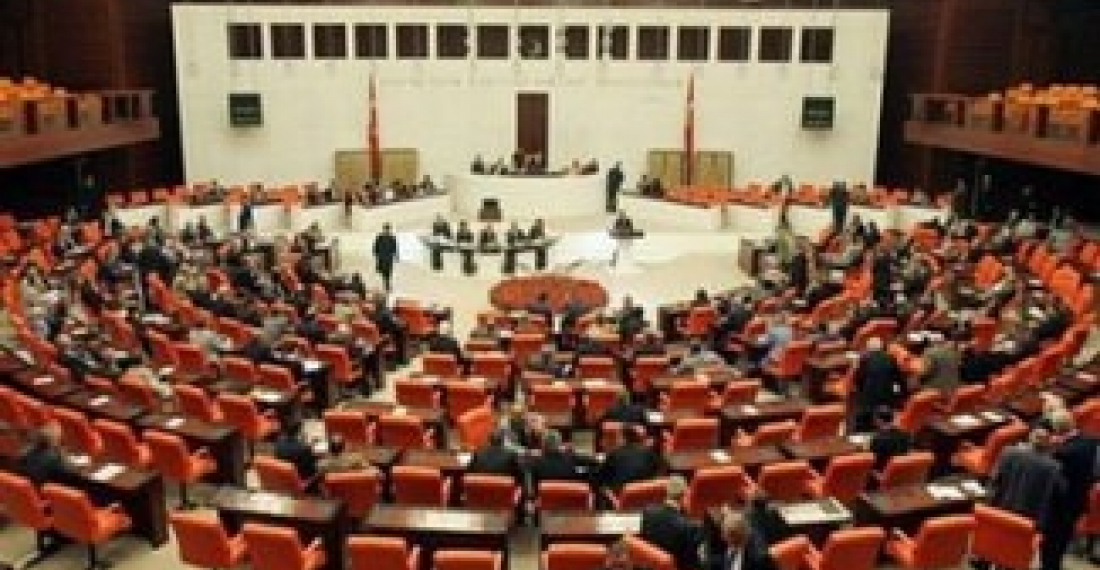
Парламент Турции:

Тихий раскол между Турцией и Францией теперь рискует превратится в бурные дебаты между турецкими чиновниками и президентом Франции в споре за членство Турции в ЕС. Армянский вопрос вновь возник на переднем плане в отношениях между Турцией и Францией из-за решения провести на следующей неделе в Национальном Собрании Франции голосование по резолюции, предусматривающей наказание за отрицание Геноцида армян, что вызвало ярость в Анкаре. Об этом пишет турецкая газета «Заман».

Газета пишет, что Турция предупредила Париж, что принятие резолюции нанесет непоправимый ущерб двусторонним отношениям. Анкара повторила свое предупреждение с тем, чтобы парламент Франции пересмотрел вопрос о голосовании по резолюции. Накануне, Анкара обнародовала заявление на веб-сайте посольства Турции в Париже, в котором усилила тон предупреждения. В заявлении отмечается, что "французские руководители должны оставить историю историкам", и что французский парламент должен воздержаться от принятия решений по историческим событиям.

Предупреждения Анкары опираются на доклад французской парламентской комиссии по расследованию, который вынес в 2008 году решение, что парламенты не должны «писать об исторических инцидентах или назначать наказания». Если такая резолюция будет принята, то она будет предусматривать наказание в качестве тюремного заключения сроком на год, а также штраф в размере 45 тыс. евро для лиц, которые не признают убийства армян в 1915 году во время падения Османской империи Геноцидом.

Французский парламент юридически назвал известные события Геноцидом в 2001 году, но несколько попыток принять резолюцию о наказании за отрицание Геноцида потерпели неудачу, так и не дойдя до Сената. Дебаты во Франции о необходимости такого закона была изначально возобновлена французским президентом Николя Саркози, пригрозившим Турции во время своего визита в Ереван в октябре. Саркози сказал в Ереване, что станет инициатором подобной меры, чтобы оказать давление на Турцию признать Геноцид. Турция отнесла ультиматум Саркози к предвыборной риторике. Анкара предупредила президента Франции не затрагивать очень чувствительный для народов Армении и Турции вопрос.

Тем не менее, неоднократные утверждения Саркози, что Турция не принадлежит к ЕС, потому что это не европейская страна вызвала еще большее беспокойство Турции.

В ответ на замечания Саркози о том, что Турция должна быть "мостом между Востоком и Западом, вместо того, чтобы претендовать на место с обеих сторон", турецкий министр по делам ЕС и главный переговорщик Эгемен Багис ответил во вторник, заявив, что Саркози "падает все ниже и ниже", пытаясь исправить свою ошибку.

"Некоторые политики, возможно, занимаются риторикой, обеспокоенные предстоящими выборами в своих странах", - заявил Багис, не придавая прямого значения комментариям Саркози. Он добавил, что Турция заботится о развитии своей страны, и реформы проводились не с тем, что угодить европейцам, но и улучшить качество жизни турецкого народа.

Турция ведет переговоры, чтобы стать частью блока 27 европейских государств в течение многих лет, но был достигнут очень незначительный прогресс. Саркози остается известным противником вступления Турции в ЕС, хотя он первоначально предусматривал возможность, что Турция в конечном итоге присоединится к ЕС.

Дипломатические источники во вторник заявили, что считают Саркози ответственным за голосование по резолюции 19 декабря, что делается президентов ради стремленя укрепить свои позиции в среде армянской диаспоры Франции в преддверии президентских выборов.

Соперник Саркози от социалистической партия Франсуа Холланд также в пользу принятия законодательства, предусматривающее уголовную ответственность за отрицание Геноцида.

Между тем, спикер парламента Турции Джемиль Чичек обратился с письмом к своему французскому коллеге Бернару Аккуайе, в котором выразил беспокойство Турции по поводу законопроекта. Чичек предупредил, что принятие подобного законопроекта может навредить отношениям между Турцией и Францией. Чичек отметил в своем письме, что обязанность национальных парламентов не писать историю, и что вопрос должен быть оставлен на изучение историкам и исследователям.


Related articles

Editor's choice
News
Russia adds pressure on Armenia ahead of key elections; recalls Ambassador in Yerevan for consultations

Russia adds pressure on Armenia ahead of key elections; recalls Ambassador in Yerevan for consultations

Ahead of key parliamentary elections,scheduled to be held in Armenia on Sunday, 7 June, Russia continues to attempt to put pressure on the Armenian Government led by prime minister Nikol Pashinyan. On 30 May, Russia recalled its Ambassador to Yerevan for consultations. A terse statement, published on the website of the Russian Foreign Ministry, said, "The Ambassador of the Russian Federation to the Republic of Armenia , S.P. Kopyrkin, has been summoned to Moscow for consultations in connection with the steps taken by the Armenian leadership to move closer to the European Union, which are detrimental to cooperation within the EAEU." This followed a statement issued the day before, by the leaders of the Eurasian Economic Union (EAEU) that challenges the Armenian trajectory towards approximating to the European Union. Vladimir Putin is undertood to have personally pushed the other four EAEU leaders to issue the statement, which said: "Taking into account the significant risks to the economic security of the member states of the Eurasian Economic Union (hereinafter referred to as the Union) arising in connection with the preparation of the Republic of Armenia for accession to the European Union, as well as the need to prevent the associated damage to the member states of the Union: decided that the members of the Eurasian Intergovernmental Council from the Republic of Belarus, the Republic of Kazakhstan, the Kyrgyz Republic and the Russian Federation will report at the next meeting of the Supreme Eurasian Economic Council in December 2026 on the possible consequences of the suspension of the Treaty on the Eurasian Economic Union with respect to the Republic of Armenia. We share the position on the need to hold a national referendum in the Republic of Armenia as soon as possible on joining the European Union or continuing to be part of the Eurasian Economic Union."
Editor's choice
News
The leaders of the states of the Eurasian Economic Union issued a tough statement warning fellow-member state Armenia of the consequences of its desire to join the European Union.

The leaders of the states of the Eurasian Economic Union issued a tough statement warning fellow-member state Armenia of the consequences of its desire to join the European Union.

The leaders of the states of the Eurasian Economic Union (EEAS) issued a tough statement warning fellow-member state Armenia of the consequences of its desire to join the European Union. The stark, sharply worded,  warning, comes days before crucial parliamentary elections in Armenia, scheduled for 7 June. The full statement said, “We, the Presidents of the Republic of Belarus, the Republic of Kazakhstan, the Kyrgyz Republic and the Russian Federation, Taking into account the actions of the Republic of Armenia aimed at joining the European Union, including the approval in 2025 by the National Assembly of the Republic of Armenia and the signing by the President of the Republic of Armenia of the Law of the Republic of Armenia "On the Start of the Process of Accession of the Republic of Armenia to the European Union", as well as the confirmation by the European Union of the European aspirations of the Government of the Republic of Armenia, expressed in the joint declaration following the first Armenia-European Union summit, adopted on 5 May 2026, Taking into account the significant risks to the economic security of the member states of the Eurasian Economic Union (hereinafter referred to as the Union) arising in connection with the preparation of the Republic of Armenia for accession to the European Union, as well as the need to prevent the associated damage to the member states of the Union: decided that the members of the Eurasian Intergovernmental Council from the Republic of Belarus, the Republic of Kazakhstan, the Kyrgyz Republic and the Russian Federation will report at the next meeting of the Supreme Eurasian Economic Council in December 2026 on the possible consequences of the suspension of the Treaty on the Eurasian Economic Union with respect to the Republic of Armenia. We share the position on the need to hold a national referendum in the Republic of Armenia as soon as possible on joining the European Union or continuing to be part of the Eurasian Economic Union. Astana, May 29, 2026” A meeting of the Supreme Eurasian Economic Council was held in Astana, Kazakhstan, on May 29, 2026. The meeting of the Supreme Eurasian Economic Council in a restricted format was attended by Russian President Vladimir Putin, Belarusian President Alexander Lukashenko , Kazakh President Kassym-Jomart Tokayev , Kyrgyz President Sadyr Japarov , Armenian Deputy Prime Minister Mher Grigoryan, and Chairman of the Board of the Eurasian Economic Commission Bakytzhan Sagintayev. From the Russian side, the meeting was also attended by Deputy Prime Minister and member of the Council of the Eurasian Economic Commission Alexey Overchuk and Presidential Aide Yury Ushakov . The heads of delegations from EAEU observer states, including President of Uzbekistan Shavkat Mirziyoyev , Vice President of Cuba Salvador Valdés Mesa, Minister of Industry, Mines, and Trade of Iran Mohammad Atabak, and CIS Secretary General Sergei Lebedev, joined the expanded meeting . Following the meeting of the Supreme Eurasian Economic Council, a number of documents were signed .

Popular

Editor's choice
Interview
Thursday Interview: Murad Muradov

Thursday Interview: Murad Muradov

Today, commonspace.eu starts a new regular weekly series. THURSDAY INTERVIEW, conducted by Lauri Nikulainen, will host  persons who are thinkers, opinion shapers, and implementors in their countries and spheres. We start the series with an interview with Murad Muradov, a leading person in Azerbaijan's think tank community. He is also the first co-chair of the Action Committee for a new Armenian-Azerbaijani Dialogue. Last September he made history by being the first Azerbaijani civil society activist to visit Armenia after the 44 day war, and the start of the peace process. Speaking about this visit Murad Muradov said: "My experience was largely positive. My negative expectations luckily didn’t play out. The discussions were respectful, the panel format bringing together experts from Armenia, Azerbaijan, and Turkey was particularly valuable during the NATO Rose-Roth Seminar in Yerevan, and media coverage, while varied in tone, remained largely constructive. Some media outlets though attempted to represent me as more of a government mouthpiece than an independent expert, which was totally misleading.  Overall, I see these initiatives as important steps in rebuilding trust and normalising professional engagement. The fact that soon a larger Azerbaijani civil society visits to Armenia followed, reinforces the sense that this process is moving in the right direction." (click the image to read the interview in full)

