


Отношения между Грузией и Арменией во многом являются примером для подражания.

Этот материал подготовлен редакцией commonspace.eu.

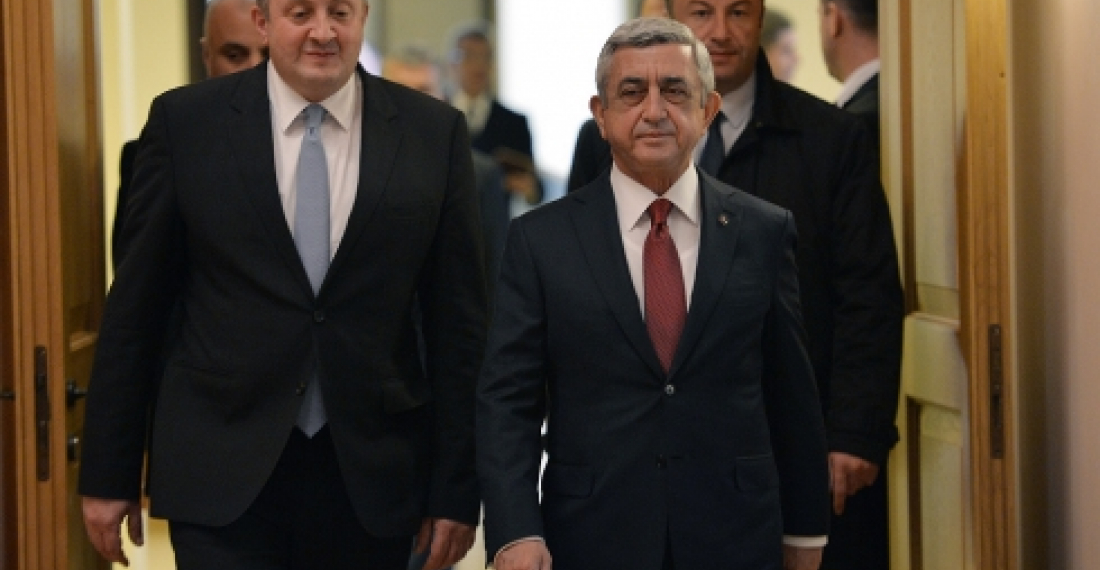
Президент Армении Серж Саргсян в пятницу с официальным визитом посетил Грузию, во время которого он встретился с президентом Георгием Маргвелашвили, премьер-министром Ираклием Гарибашвили, и председателем парламента Давидом Усупашвили.

Это самый последний визит в серии официальных визитов между двумя соседними странами, который выходит за рамки тонкостей протокола, и подчеркивает, что эти две страны приступили к процессу сотрудничества по ряду существенных вопросов.

Армения и Грузия являются соседствующими странами с общей историей. Население этих двух стран взаимодействовало между собой, вступали в браки и жили вместе на протяжении многих веков. В основном здоровый сопернический дух между ними иногда может привезти к излишним разногласиям.

В сложившемся геополитическом контексте обе страны выбрали диаметрально разные направления - Грузия в качестве ассоциированного члена Европейского Союза с надеждами стремится к полноправному членству в ЕС и НАТО; Армения же уже полноправный член Евразийского экономического союза во главе с Россией и Организации Договора о коллективной безопасности (ОДКБ). Некоторые опасались, что две страны могут стать линией разлома между двумя конкурирующими блоками. Лидеры Армении и Грузии ясно дали понять, что они не хотят этого, и дружественный визит президента Армении в Тбилиси вновь подтверждает это. Президент Саргсян, выступая после встречи с президентом Маргвелашвили подчеркнул это, заявив, что "имеющееся в подобных вопросах взаимопонимание в первую очередь обусловлено осознанием приоритетности армяно-грузинских братских отношений, а также способностью мыслить в долгосрочном разрезе. Более того, основанный на глубинных связях наших народов активный межгосударственный диалог создает серьезные предпосылки для предначертания новых направлений всестороннего партнерства".

Грузия в настоящее время проводит активную политику в Кавказском регионе. Это означает, сильные двусторонние отношения с Азербайджаном и Арменией, а также расширение связей с Турцией и Ираном. Отношения Грузии с Россией по-прежнему осложнены поддержкой России Абхазии и Южной Осетии, которые находятся под ее протекцией. Грузия может во многом извлечь выгоду от расширенного регионального сотрудничества, и даже ее роль в качестве ассоциированного члена ЕС гораздо усилится благодаря активной и позитивной политике на Кавказе. В настоящее время руководство Грузии это понимает и активно проводит эту политику.

Что касается Армении, то ситуация несколько иная. Страна вовлечена в войну с Азербайджаном и в историческое противостояние с Турцией, что упорствует и омрачает современные отношения. Для Армения поддержание хороших отношений с Грузией является стратегическим приоритетом, что все армянские лидеры понимали и понимают.

Вопросы в грузино-армянских отношениях конечно же есть, и такая близость и взаимодействие приносят с собой также потенциал для разногласий. Тем не менее, обе страны мудро согласились работать над решением этих проблем, и не пытаться усугублять их. Следовательно, отношения между Грузией и Арменией во многом являются примером для подражания. Они имеют потенциал к дальнейшему расширению. И обе стороны должны быть осторожны, чтобы не падаться самодовольству, потому как такой потенциал содержит в себе также свои проблемы. Однако, на данный момент обе страны мудро решили превратить то, что могло бы стать неловким положением, во взаимную выгоду.

источник: Этот материал подготовлен редакцией commonspace.eu.

фото: Президент Армении Серж Саргсян с президентом Грузии Георгием Маргвелашвили в Президентском дворце в Тбилиси в пятницу, 30 октября 2015 г. (фото любезно предоставлено пресс-службой президента Армении).
 

Related articles

Editor's choice
News
Germany accuses Russia of cyberattacks and disinformation campaign

Germany accuses Russia of cyberattacks and disinformation campaign

The German government holds Russia responsible for a cyberattack on German air traffic control, and for targeted disinformation campaigns before the last federal election. According to the German Foreign Office in Berlin, the incidents could be clearly attributed to the Russian military intelligence service, the GRU. In response, the Russian ambassador to Berlin was summoned to the Foreign Ministry. "We have been observing a massive increase in threatening hybrid activities by Russia for some time now," a spokesperson for the Foreign Ministry stated. These range from disinformation campaigns and espionage to cyberattacks and sabotage attempts. The aim is to divide society, sow distrust, and undermine confidence in democratic institutions. The spokesperson added that with these actions, Russia is "very concretely threatening our security, not only through its war of aggression against Ukraine, but also here in Germany."  The Foreign Ministry spokesperson explained that the cyberattack on air traffic control in August 2024 was clearly attributed to the hacker collective "APT28," known as "Fancy Bear," and to the responsibility of the Russian military intelligence service, the GRU. Furthermore, it could now be "conclusively stated" that Russia had attempted "to influence and destabilize both the last Federal election and the ongoing internal affairs of the Federal Republic of Germany." There was "absolutely irrefutable evidence" for this". The so-called "Storm 1516" campaign, which has been running since 2024, is allegedly backed by "reliable information" that the Moscow-based think tank "Center for Geopolitical Expertise" is behind it. The Center is also said to be supported by Russian military intelligence. Its primary aim is to influence democratic elections in the West. (Click the image to read more).
Editor's choice
News
NATO Chief says war is on Europe's doorstep, and warns against complacency

NATO Chief says war is on Europe's doorstep, and warns against complacency

Russia could attack a NATO country within the next five years, the Secretary General of NATO, Mark Rutte, said in a stark new warning. "NATO's own defences can hold for now," Rutte warned in Berlin, but conflict was "next door" to Europe, and he feared "too many are quietly complacent, and too many don't feel the urgency, too many believe that time is on our side. "Russia is already escalating its covert campaign against our societies," Rutte said in a speech in Germany. "We must be prepared for the scale of war our grandparents or great-grandparents endured." Earlier this month, Russia's President Vladimir Putin said his country was not planning to go to war with Europe, but it was ready "right now" if Europe wanted to - or started a war. But similar reassurances were given by Moscow in 2022, just before 200,000 Russian troops crossed the border and invaded Ukraine. Putin has accused European countries of hindering US efforts to bring peace in Ukraine - a reference to the role Ukraine's European allies have recently played in trying to change a US peace plan to end the war, whose initial draft was seen as favouring Russia. But Putin was not sincere, Nato's secretary-general said in the German capital, Berlin. Supporting Ukraine, he added, was a guarantee for European security. "Just imagine if Putin got his way; Ukraine under the boot of Russian occupation, his forces pressing against a longer border with Nato, and the significantly increased risk of an armed attack against us." Russia's economy has been on a war footing for more than three years now - its factories churn out ever more supplies of drones, missiles and artillery shells. According to a recent report by the Kiel Institute for the World Economy, Russia has been producing each month around 150 tanks, 550 infantry fighting vehicles, 120 Lancet drones and more than 50 artillery pieces. The UK, and most of its Western allies, are simply not anywhere near this point. Analysts say it would take years for Western Europe's factories to come close to matching Russia's mass-production of weapons. "Allied defence spending and production must rise rapidly, our armed forces must have what they need to keep us safe," the Nato chief said.

Popular

Editor's choice
News
Germany accuses Russia of cyberattacks and disinformation campaign

Germany accuses Russia of cyberattacks and disinformation campaign

The German government holds Russia responsible for a cyberattack on German air traffic control, and for targeted disinformation campaigns before the last federal election. According to the German Foreign Office in Berlin, the incidents could be clearly attributed to the Russian military intelligence service, the GRU. In response, the Russian ambassador to Berlin was summoned to the Foreign Ministry. "We have been observing a massive increase in threatening hybrid activities by Russia for some time now," a spokesperson for the Foreign Ministry stated. These range from disinformation campaigns and espionage to cyberattacks and sabotage attempts. The aim is to divide society, sow distrust, and undermine confidence in democratic institutions. The spokesperson added that with these actions, Russia is "very concretely threatening our security, not only through its war of aggression against Ukraine, but also here in Germany."  The Foreign Ministry spokesperson explained that the cyberattack on air traffic control in August 2024 was clearly attributed to the hacker collective "APT28," known as "Fancy Bear," and to the responsibility of the Russian military intelligence service, the GRU. Furthermore, it could now be "conclusively stated" that Russia had attempted "to influence and destabilize both the last Federal election and the ongoing internal affairs of the Federal Republic of Germany." There was "absolutely irrefutable evidence" for this". The so-called "Storm 1516" campaign, which has been running since 2024, is allegedly backed by "reliable information" that the Moscow-based think tank "Center for Geopolitical Expertise" is behind it. The Center is also said to be supported by Russian military intelligence. Its primary aim is to influence democratic elections in the West. (Click the image to read more).

