


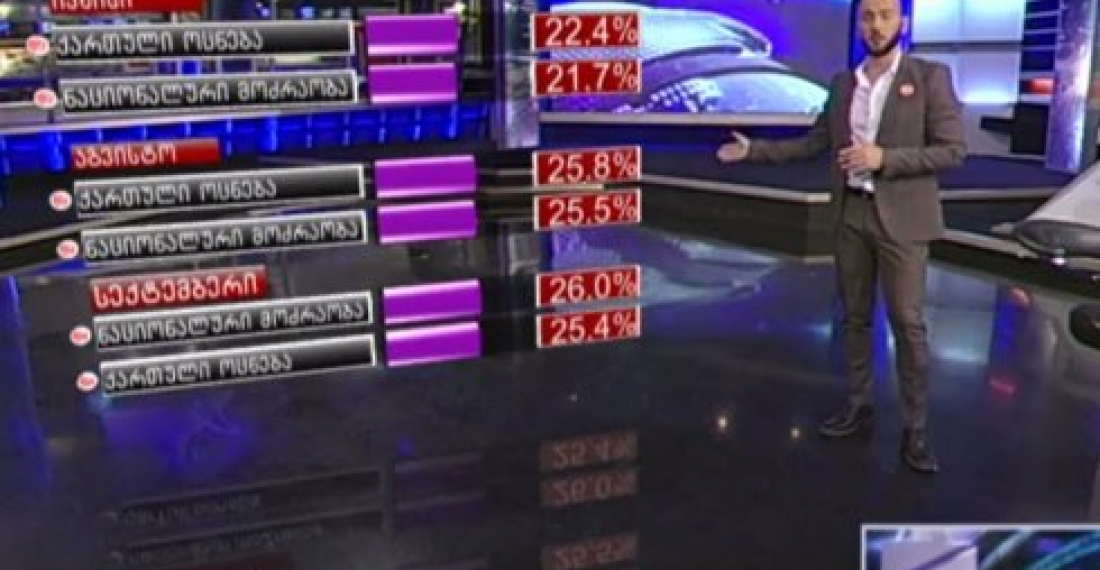
Сумасшедшие опросы Грузии

Грузия приближается к парламентским выборам, которые состоятся уже в эту в субботу, 8 октября, и вновь возникают вопросы касательно достоверности опросов общественного мнения, а также касательно возможных манипуляций ими и "exit polls" различными политическими силами.

Проблема это не нова. Опросы общественного мнения, проведенные накануне парламентских выборов в 2012 году, оказалось не только недостоверными, но вводили в заблуждение.

Опросы, проведенные Американским Национальным Демократическим Институтом (NDI) в преддверии выборов, состоявшихся 1 октября 2012 года, чрезвычайно недооценили поддержку коалиции "Грузинская мечта". В опубликованном докладе от 7 сентября 2012 NDI заявил о 12% поддержке коалиции "Грузинская мечта" (на основе данных полученных от респондентов, которые скорее всего собирались принять участие в голосовании) против проецируемой поддержки "Единого национального движения" (ЕНД) в 37% - это, согласно данным опроса, проведенных незадолго до выборов. На самих же выборах коалиция "Грузинская мечта" получила 54,97% в то время как ЕНД получило 40,34%. Излишне говорить, что разница между данными опросов и фактическими результатами выборов выходят далеко за пределы любой возможной погрешности.

Проблема пока еще сохраняется. Согласно опросам общественного мнения, опубликованным за последние дни, они снова дают совершенно разные картины.

1 октября оппозиционный телеканал "Рустави-2" сообщил на своем сайте следующее:

"Согласно данным проведенных исследований компанией GFK, "Единое Национальное движение" опережает "Грузинскую мечту" в рейтингах. На вопрос, за какую партию бы вы проголосовали на парламентских выборах, результаты распределились следующим образом . "Единое Национальное Движение" - 26%; затем следует "Грузинская мечта" - 25.4%. Всего за одну неделю до выборов, по заказу телекомпании "Рустави-2" компания GFK провела исследования общественного мнения и опубликованы результаты третьего предвыборного опроса".

Почти в то же самое время телекомпания "Imedi ТV", которая считается про-правительственной телекомпанией, дала совершенно иную картину. Как сообщает сайт Аgenda.ge 30 сентября:

"Опрос, по заказу компании "Имеди ТВ" и проведенный американской исследовательской фирмой JPM, демонстрирует, что нынешняя правящая партия победит на выборах. Опрос телекомпании "Имеди ТВ" демонстрирует, что правящая партия имеет наибольшую поддержку со стороны избирателей.

Главным вопросом, проведенного опроса, был - за кого вы будете голосовать. Результаты показали: Грузинская мечта-демократическая Грузия - 32,7%; Единое национальное движение - 12,8% "

По словам политического редактора Commonspace.eu, "политическим обозревателям необходимо проявить осторожность в отношении своих оценок этих выборов из-за ненадежности опросов общественного мнения в прошлом, и текущих расхождений между ними в преддверии голосования, которое должно состоятся в эту субботу. Как мы с вами уже наблюдали, недавние опросы общественного мнения в Великобритании (в преддверии всеобщих выборов и референдума по Brexit), опросы общественного мнения являются неточными даже в самых опытных демократиях. В такой ситуации, как в Грузии, они должны, в лучшем случае, быть восприняты с недоверием. Что же будет иметь значение так это результаты выборов, которые опубликует Центральная избирательная комиссия в воскресенье утром. Грузинский народ должен быть заверен в том, что единственное, что имеет значение, это их голос, а не то, что говорят опросы общественного мнения".

источник: commonspace.eu

фото: Скриншот данных результатов опроса общественного мнения в эфире одной из телекомпании Грузии


 

Related articles

Editor's choice
News
Germany accuses Russia of cyberattacks and disinformation campaign

Germany accuses Russia of cyberattacks and disinformation campaign

The German government holds Russia responsible for a cyberattack on German air traffic control, and for targeted disinformation campaigns before the last federal election. According to the German Foreign Office in Berlin, the incidents could be clearly attributed to the Russian military intelligence service, the GRU. In response, the Russian ambassador to Berlin was summoned to the Foreign Ministry. "We have been observing a massive increase in threatening hybrid activities by Russia for some time now," a spokesperson for the Foreign Ministry stated. These range from disinformation campaigns and espionage to cyberattacks and sabotage attempts. The aim is to divide society, sow distrust, and undermine confidence in democratic institutions. The spokesperson added that with these actions, Russia is "very concretely threatening our security, not only through its war of aggression against Ukraine, but also here in Germany."  The Foreign Ministry spokesperson explained that the cyberattack on air traffic control in August 2024 was clearly attributed to the hacker collective "APT28," known as "Fancy Bear," and to the responsibility of the Russian military intelligence service, the GRU. Furthermore, it could now be "conclusively stated" that Russia had attempted "to influence and destabilize both the last Federal election and the ongoing internal affairs of the Federal Republic of Germany." There was "absolutely irrefutable evidence" for this". The so-called "Storm 1516" campaign, which has been running since 2024, is allegedly backed by "reliable information" that the Moscow-based think tank "Center for Geopolitical Expertise" is behind it. The Center is also said to be supported by Russian military intelligence. Its primary aim is to influence democratic elections in the West. (Click the image to read more).
Editor's choice
News
NATO Chief says war is on Europe's doorstep, and warns against complacency

NATO Chief says war is on Europe's doorstep, and warns against complacency

Russia could attack a NATO country within the next five years, the Secretary General of NATO, Mark Rutte, said in a stark new warning. "NATO's own defences can hold for now," Rutte warned in Berlin, but conflict was "next door" to Europe, and he feared "too many are quietly complacent, and too many don't feel the urgency, too many believe that time is on our side. "Russia is already escalating its covert campaign against our societies," Rutte said in a speech in Germany. "We must be prepared for the scale of war our grandparents or great-grandparents endured." Earlier this month, Russia's President Vladimir Putin said his country was not planning to go to war with Europe, but it was ready "right now" if Europe wanted to - or started a war. But similar reassurances were given by Moscow in 2022, just before 200,000 Russian troops crossed the border and invaded Ukraine. Putin has accused European countries of hindering US efforts to bring peace in Ukraine - a reference to the role Ukraine's European allies have recently played in trying to change a US peace plan to end the war, whose initial draft was seen as favouring Russia. But Putin was not sincere, Nato's secretary-general said in the German capital, Berlin. Supporting Ukraine, he added, was a guarantee for European security. "Just imagine if Putin got his way; Ukraine under the boot of Russian occupation, his forces pressing against a longer border with Nato, and the significantly increased risk of an armed attack against us." Russia's economy has been on a war footing for more than three years now - its factories churn out ever more supplies of drones, missiles and artillery shells. According to a recent report by the Kiel Institute for the World Economy, Russia has been producing each month around 150 tanks, 550 infantry fighting vehicles, 120 Lancet drones and more than 50 artillery pieces. The UK, and most of its Western allies, are simply not anywhere near this point. Analysts say it would take years for Western Europe's factories to come close to matching Russia's mass-production of weapons. "Allied defence spending and production must rise rapidly, our armed forces must have what they need to keep us safe," the Nato chief said.

Popular

Editor's choice
News
Germany accuses Russia of cyberattacks and disinformation campaign

Germany accuses Russia of cyberattacks and disinformation campaign

The German government holds Russia responsible for a cyberattack on German air traffic control, and for targeted disinformation campaigns before the last federal election. According to the German Foreign Office in Berlin, the incidents could be clearly attributed to the Russian military intelligence service, the GRU. In response, the Russian ambassador to Berlin was summoned to the Foreign Ministry. "We have been observing a massive increase in threatening hybrid activities by Russia for some time now," a spokesperson for the Foreign Ministry stated. These range from disinformation campaigns and espionage to cyberattacks and sabotage attempts. The aim is to divide society, sow distrust, and undermine confidence in democratic institutions. The spokesperson added that with these actions, Russia is "very concretely threatening our security, not only through its war of aggression against Ukraine, but also here in Germany."  The Foreign Ministry spokesperson explained that the cyberattack on air traffic control in August 2024 was clearly attributed to the hacker collective "APT28," known as "Fancy Bear," and to the responsibility of the Russian military intelligence service, the GRU. Furthermore, it could now be "conclusively stated" that Russia had attempted "to influence and destabilize both the last Federal election and the ongoing internal affairs of the Federal Republic of Germany." There was "absolutely irrefutable evidence" for this". The so-called "Storm 1516" campaign, which has been running since 2024, is allegedly backed by "reliable information" that the Moscow-based think tank "Center for Geopolitical Expertise" is behind it. The Center is also said to be supported by Russian military intelligence. Its primary aim is to influence democratic elections in the West. (Click the image to read more).

