


По распоряжению президента Азербайджана были помилованы десятки оппозиционеров

Президент Азербайджана Ильхам Алиев в субботу (16 марта) подписал указ о помиловании ряда осужденных. Согласно приказу, в общей сложности были помилованы 431 человек. Из них 399 человек были освобождены от отбывания оставшейся части приговора, в то время как у других приговор был сокращен.

Президентское помилование совпало с праздником Новруз, одним из важнейших ежегодных праздников в Азербайджане. Хотя президент и так обычно прощает осужденных по случаю праздника, в этом году этот список был более значим, поскольку в него входят десятки людей, которые считаются активистами оппозиции, большинство из которых были названы международными правозащитные организации как политзаключенные или узники совести. На влиятельном веб-сайте Haqqin.az говорится, что в амнистию были включены 50 «оппозиционных» активистов. Среди них активисты молодежного движения "Нида" Гиас Ибрагимов, Байрам Мамедов, Илькин Рустамзаде, представители партии Народного фронта Азербайджана Гезьял Байрамлы и Фуад Гахраманлы. Также был освобожден бывший министр здравоохранения Али Инсанов, который в 2005 году был заключен в тюрьму за участие в попытке государственного переворота. Также были освобождены ряд жителей села Нардаран, известного своей религиозной активностью и оплотом религиозной оппозиции властям Баку.

В редакционной статье, опубликованной в воскресенье (17 марта), Haqqin.az говорит, что президентское помилование не является признаком слабости. «Это далеко не так, власть сильнее и эффективнее, чем когда-либо. Однако с первых дней нового 2019 года Ильхам Алиев объявил новый курс по экономической либерализации. Новое поколение «молодых реформаторов» пришли во власть. В администрации президента началась активная борьба с коррупцией, кумовством и монополией на прибыльные сферы экономики». Сайт упрекает тех зарубежных критиков правительства, которые в прошлом не понимали, что Азербайджан нуждается в твердом правительстве. «В таких странах, как Азербайджан, правительство должно быть обязательно решительным, жестким и отвечать на вызовы времени. Но между решительностью и репрессивностью существует очень тонкая, почти невидимая грань. Власти Азербайджана не репрессивны, но они решительны и эффективны. Если в таких странах, как Азербайджан, эффективность власти начнет ослабевать, то это приведет, если не к упадку всей политической системы, то, по крайней мере, к кризису системы властных отношений».

В статье на Haqqin.az, написанной ее владельцем Эйнуллы Фаттулаевым, говорится, что президентское помилование «еще раз подтверждает, насколько уверенно и сильны власти Азербайджана перед реальными и мнимыми угрозами. Правительство призывает оппозицию к честной и цивилизованной борьбе за власть. И этот путь проходит только через урны для голосования». Редакция делает вывод, что «власть может быть смещена только по количеству бюллетеней, а не по количеству баррикад, угрожающих стабильности и порядку».

Политический редактор Commonspace.eu считает, что "с движением одного пера президент Ильхам Алиев изменил динамику азербайджанской политики. Помилование такого количества противников правительства - от молодежных активистов до религиозных фанатиков и амбициозных олигархов - является решительным, и некоторые могут даже сказать, что с точки зрения правительства это рискованная мера. По сути, это оливковая ветвь для критиков правительства, как внутри страны, так и за ее пределами, внутри страны и за рубежом. Ее значение не следует преуменьшать. Президент Алиев в последние недели готовил страну к серьезным изменениям. Это президентское помилование вполне может стать первым шагом вперед".

источник: commonspace.eu

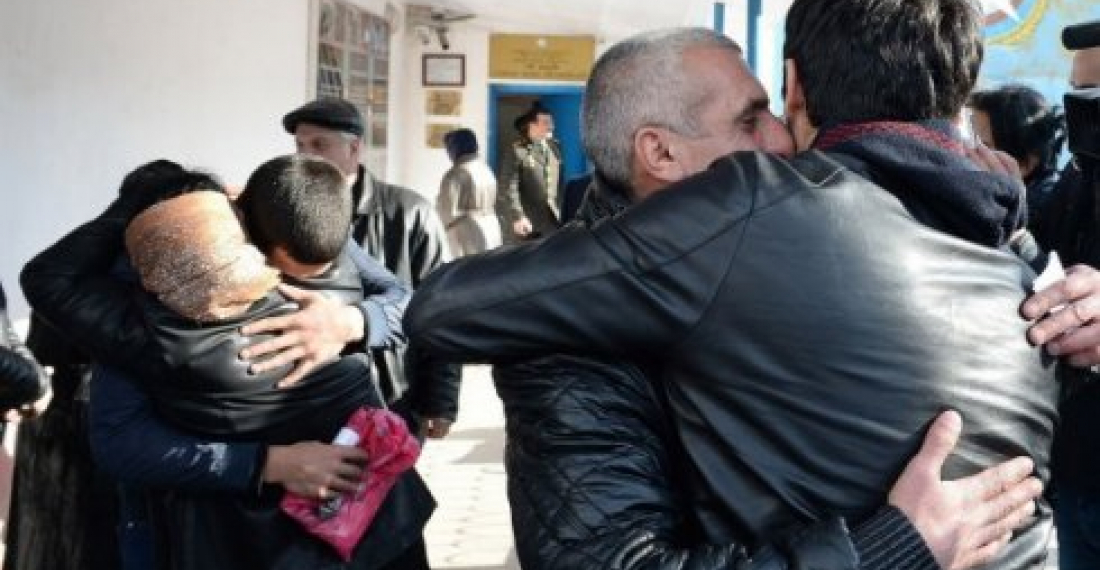
фото: Эмоциональные сцены, когда помилованные заключенные встречали родственников в Баку в воскресенье (17 марта) после президентского помилования, совпавшего с праздником Новруз. (фото любезно предоставлено Haqqin.az, Баку)


 

Related articles

Editor's choice
News
Germany accuses Russia of cyberattacks and disinformation campaign

Germany accuses Russia of cyberattacks and disinformation campaign

The German government holds Russia responsible for a cyberattack on German air traffic control, and for targeted disinformation campaigns before the last federal election. According to the German Foreign Office in Berlin, the incidents could be clearly attributed to the Russian military intelligence service, the GRU. In response, the Russian ambassador to Berlin was summoned to the Foreign Ministry. "We have been observing a massive increase in threatening hybrid activities by Russia for some time now," a spokesperson for the Foreign Ministry stated. These range from disinformation campaigns and espionage to cyberattacks and sabotage attempts. The aim is to divide society, sow distrust, and undermine confidence in democratic institutions. The spokesperson added that with these actions, Russia is "very concretely threatening our security, not only through its war of aggression against Ukraine, but also here in Germany."  The Foreign Ministry spokesperson explained that the cyberattack on air traffic control in August 2024 was clearly attributed to the hacker collective "APT28," known as "Fancy Bear," and to the responsibility of the Russian military intelligence service, the GRU. Furthermore, it could now be "conclusively stated" that Russia had attempted "to influence and destabilize both the last Federal election and the ongoing internal affairs of the Federal Republic of Germany." There was "absolutely irrefutable evidence" for this". The so-called "Storm 1516" campaign, which has been running since 2024, is allegedly backed by "reliable information" that the Moscow-based think tank "Center for Geopolitical Expertise" is behind it. The Center is also said to be supported by Russian military intelligence. Its primary aim is to influence democratic elections in the West. (Click the image to read more).
Editor's choice
News
NATO Chief says war is on Europe's doorstep, and warns against complacency

NATO Chief says war is on Europe's doorstep, and warns against complacency

Russia could attack a NATO country within the next five years, the Secretary General of NATO, Mark Rutte, said in a stark new warning. "NATO's own defences can hold for now," Rutte warned in Berlin, but conflict was "next door" to Europe, and he feared "too many are quietly complacent, and too many don't feel the urgency, too many believe that time is on our side. "Russia is already escalating its covert campaign against our societies," Rutte said in a speech in Germany. "We must be prepared for the scale of war our grandparents or great-grandparents endured." Earlier this month, Russia's President Vladimir Putin said his country was not planning to go to war with Europe, but it was ready "right now" if Europe wanted to - or started a war. But similar reassurances were given by Moscow in 2022, just before 200,000 Russian troops crossed the border and invaded Ukraine. Putin has accused European countries of hindering US efforts to bring peace in Ukraine - a reference to the role Ukraine's European allies have recently played in trying to change a US peace plan to end the war, whose initial draft was seen as favouring Russia. But Putin was not sincere, Nato's secretary-general said in the German capital, Berlin. Supporting Ukraine, he added, was a guarantee for European security. "Just imagine if Putin got his way; Ukraine under the boot of Russian occupation, his forces pressing against a longer border with Nato, and the significantly increased risk of an armed attack against us." Russia's economy has been on a war footing for more than three years now - its factories churn out ever more supplies of drones, missiles and artillery shells. According to a recent report by the Kiel Institute for the World Economy, Russia has been producing each month around 150 tanks, 550 infantry fighting vehicles, 120 Lancet drones and more than 50 artillery pieces. The UK, and most of its Western allies, are simply not anywhere near this point. Analysts say it would take years for Western Europe's factories to come close to matching Russia's mass-production of weapons. "Allied defence spending and production must rise rapidly, our armed forces must have what they need to keep us safe," the Nato chief said.

Popular

Editor's choice
News
Germany accuses Russia of cyberattacks and disinformation campaign

Germany accuses Russia of cyberattacks and disinformation campaign

The German government holds Russia responsible for a cyberattack on German air traffic control, and for targeted disinformation campaigns before the last federal election. According to the German Foreign Office in Berlin, the incidents could be clearly attributed to the Russian military intelligence service, the GRU. In response, the Russian ambassador to Berlin was summoned to the Foreign Ministry. "We have been observing a massive increase in threatening hybrid activities by Russia for some time now," a spokesperson for the Foreign Ministry stated. These range from disinformation campaigns and espionage to cyberattacks and sabotage attempts. The aim is to divide society, sow distrust, and undermine confidence in democratic institutions. The spokesperson added that with these actions, Russia is "very concretely threatening our security, not only through its war of aggression against Ukraine, but also here in Germany."  The Foreign Ministry spokesperson explained that the cyberattack on air traffic control in August 2024 was clearly attributed to the hacker collective "APT28," known as "Fancy Bear," and to the responsibility of the Russian military intelligence service, the GRU. Furthermore, it could now be "conclusively stated" that Russia had attempted "to influence and destabilize both the last Federal election and the ongoing internal affairs of the Federal Republic of Germany." There was "absolutely irrefutable evidence" for this". The so-called "Storm 1516" campaign, which has been running since 2024, is allegedly backed by "reliable information" that the Moscow-based think tank "Center for Geopolitical Expertise" is behind it. The Center is also said to be supported by Russian military intelligence. Its primary aim is to influence democratic elections in the West. (Click the image to read more).

