


Парламентарии и активисты гражданского общества в Азербайджане обсуждают следующие шаги по Карабаху

На встрече за круглым столом в Баку в рамках кампании «ЮЖНЫЙ КАВКАЗ СВОБОДНЫЙ ОТ НАЕЗМНЫХ МИН» активисты гражданского общества призывают активизировать усилия по мирному урегулированию нагорно-карабахского конфликта.

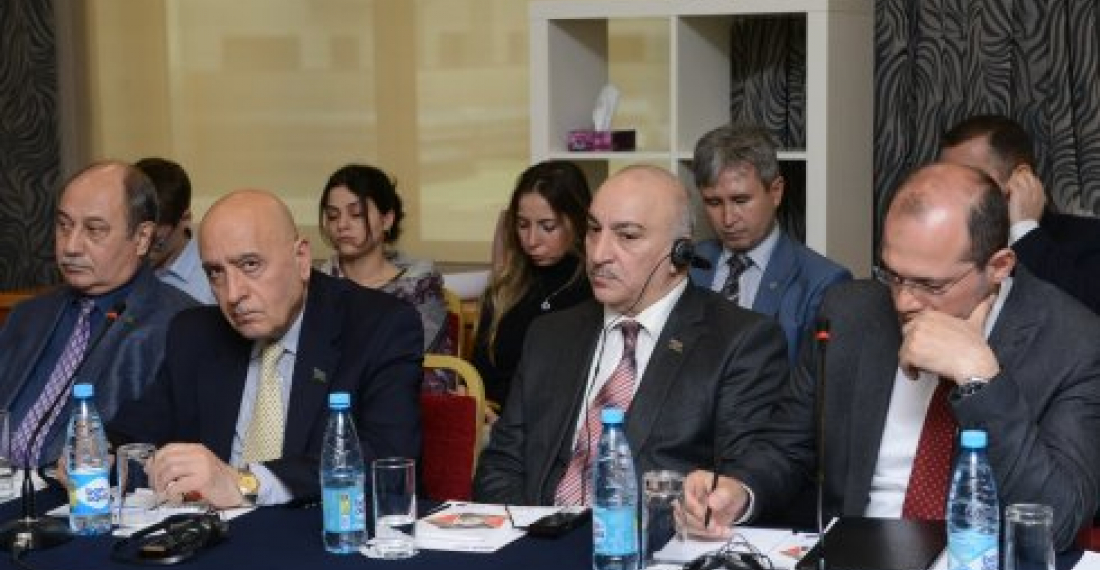
Члены Милли Меджлиса (парламента) Азербайджана и лидеры ведущих организаций гражданского общества, занимающиеся вопросами, связанными с нагорно-карабахским конфликтом, обсудили следующие шаги по урегулированию конфликта на встрече за круглым столом, состоявшейся в Баку в понедельник, 8 апреля. Круглый стол «Контекстуальные вызовы усилиям по ликвидации бедствий, связанных с наземными минами и неразорвавшимися боеприпасами, на Южном Кавказе» был проведен в рамках общерегиональной кампании «ЮЖНЫЙ КАВКАЗ СВОБОДНЫЙ ОТ НАЗЕМНЫХ МИН», проходящей 4-10 апреля. Мероприятие было организовано Кавказским центром анализа политики и LINKS (Диалог, анализ и исследования).

Среди членов парламента, присутствовавших на встрече, были Араз Ализаде, Тахир Керимли, Фазиль Мустафа, Расим Мусабеков и Сахиб Алиев.

Среди присутствующих лидеров гражданского общества были Аваз Гасанов из Общественного объединения гуманитарных исследований, Арзу Абуллаева из Хельсинкской гражданской ассамблеи, Вагиф Джахангиор из азербайджанской общины Нагорного Карабаха и Мамад Хасан Гасанов из Общественного союза Азербайджана за поддержку жертв наземных мин.

На встрече обсуждалось текущее состояние процесса урегулирования конфликта после недавних встреч лидеров Армении и Азербайджана. Активисты гражданского общества были в целом оптимистичны в отношении перспектив мира, в то время как парламентарии были более осторожны, при этом некоторые высказывали сомнение в том, возможно ли вообще мирное урегулирование конфликта.

Аваз Гасанов сказал, что процесс миростроительства трудно измерить, но в этот важный момент необходимо активизировать усилия общества. Он уверен, что лидеры двух стран понимают необходимость мира и делают правильные шаги. Он рассказал о своих собственных визитах в Нагорный Карабах, где он также мог увидеть проблему наземных мин и ее влияние на население.

Арзу Абуллаева сказала, что нынешняя ситуация не является устойчивой, но решение этому не военное. Она осудила большой приток вооружений в регион и сказала, что одна из стран-сопредседателей Минской группы, в то время как является посредником мира, вооружает обе стороны. Арзу Абдуллаева сказала, что кампания ЮЖНЫЙ КАВКАЗ СВОБОДНЫЙ ОТ НАЗЕМНЫХ МИН заслуживает похвалы, но ее также следует расширить, чтобы она стала «Южным Кавказом свободный от оружия».

Мамед Хасан Гасанов из Общественного объединения Азербайджана за поддержку жертв наземных мин сказал, что между армянами и азербайджанцами полностью отсутствует доверие. Он сказал, что Азербайджан прилагает усилия для достижения мира, и надеется, что армянская сторона сделает то же самое. Он приветствовал проведение кампании ЮЖНЫЙ КАВКАЗ СВОБОДНЫЙ ОТ НАЗЕМНЫХ МИН и сказал, что это серьезная проблема, которой необходимо уделить должное внимание.

Депутат Сахиб Алиев сказал, что каждый день конфликт приносит новые жертвы, и это трагическая ситуация для обеих сторон. Он призвал армянскую сторону прекратить нарушать режим прекращения огня.

Также на встрече присутствовали представители различных государственных структур. Среди присутствовавших на встрече были также представитель-резидент ООН Гулам Исачай, представители Международного комитета Красного Креста, а также представители ряда посольств и международных организаций.

Участники встречи выразили поддержку кампании ЮЖНЫЙ КАВКАЗ СВОБОДНЫЙ ОТ НАЗЕМНЫХ МИН и приветствовали усилия по ликвидации бедствия невзорвавшихся боеприпасов в регионе.

Похожий материал: В Баку обсудили проблему разминирования в контексте карабахского конфликта

Похожий материал: Лидеры перевернули страницу по Карабаху. Теперь очередь за остальными!

источник: commonspace.eu

фото: Члены азербайджанского Милли Меджлиса на заседании круглого стола в Баку, 8 апреля 2019 года.


 

Related articles

Editor's choice
News
Germany accuses Russia of cyberattacks and disinformation campaign

Germany accuses Russia of cyberattacks and disinformation campaign

The German government holds Russia responsible for a cyberattack on German air traffic control, and for targeted disinformation campaigns before the last federal election. According to the German Foreign Office in Berlin, the incidents could be clearly attributed to the Russian military intelligence service, the GRU. In response, the Russian ambassador to Berlin was summoned to the Foreign Ministry. "We have been observing a massive increase in threatening hybrid activities by Russia for some time now," a spokesperson for the Foreign Ministry stated. These range from disinformation campaigns and espionage to cyberattacks and sabotage attempts. The aim is to divide society, sow distrust, and undermine confidence in democratic institutions. The spokesperson added that with these actions, Russia is "very concretely threatening our security, not only through its war of aggression against Ukraine, but also here in Germany."  The Foreign Ministry spokesperson explained that the cyberattack on air traffic control in August 2024 was clearly attributed to the hacker collective "APT28," known as "Fancy Bear," and to the responsibility of the Russian military intelligence service, the GRU. Furthermore, it could now be "conclusively stated" that Russia had attempted "to influence and destabilize both the last Federal election and the ongoing internal affairs of the Federal Republic of Germany." There was "absolutely irrefutable evidence" for this". The so-called "Storm 1516" campaign, which has been running since 2024, is allegedly backed by "reliable information" that the Moscow-based think tank "Center for Geopolitical Expertise" is behind it. The Center is also said to be supported by Russian military intelligence. Its primary aim is to influence democratic elections in the West. (Click the image to read more).
Editor's choice
News
NATO Chief says war is on Europe's doorstep, and warns against complacency

NATO Chief says war is on Europe's doorstep, and warns against complacency

Russia could attack a NATO country within the next five years, the Secretary General of NATO, Mark Rutte, said in a stark new warning. "NATO's own defences can hold for now," Rutte warned in Berlin, but conflict was "next door" to Europe, and he feared "too many are quietly complacent, and too many don't feel the urgency, too many believe that time is on our side. "Russia is already escalating its covert campaign against our societies," Rutte said in a speech in Germany. "We must be prepared for the scale of war our grandparents or great-grandparents endured." Earlier this month, Russia's President Vladimir Putin said his country was not planning to go to war with Europe, but it was ready "right now" if Europe wanted to - or started a war. But similar reassurances were given by Moscow in 2022, just before 200,000 Russian troops crossed the border and invaded Ukraine. Putin has accused European countries of hindering US efforts to bring peace in Ukraine - a reference to the role Ukraine's European allies have recently played in trying to change a US peace plan to end the war, whose initial draft was seen as favouring Russia. But Putin was not sincere, Nato's secretary-general said in the German capital, Berlin. Supporting Ukraine, he added, was a guarantee for European security. "Just imagine if Putin got his way; Ukraine under the boot of Russian occupation, his forces pressing against a longer border with Nato, and the significantly increased risk of an armed attack against us." Russia's economy has been on a war footing for more than three years now - its factories churn out ever more supplies of drones, missiles and artillery shells. According to a recent report by the Kiel Institute for the World Economy, Russia has been producing each month around 150 tanks, 550 infantry fighting vehicles, 120 Lancet drones and more than 50 artillery pieces. The UK, and most of its Western allies, are simply not anywhere near this point. Analysts say it would take years for Western Europe's factories to come close to matching Russia's mass-production of weapons. "Allied defence spending and production must rise rapidly, our armed forces must have what they need to keep us safe," the Nato chief said.

Popular

Editor's choice
News
Germany accuses Russia of cyberattacks and disinformation campaign

Germany accuses Russia of cyberattacks and disinformation campaign

The German government holds Russia responsible for a cyberattack on German air traffic control, and for targeted disinformation campaigns before the last federal election. According to the German Foreign Office in Berlin, the incidents could be clearly attributed to the Russian military intelligence service, the GRU. In response, the Russian ambassador to Berlin was summoned to the Foreign Ministry. "We have been observing a massive increase in threatening hybrid activities by Russia for some time now," a spokesperson for the Foreign Ministry stated. These range from disinformation campaigns and espionage to cyberattacks and sabotage attempts. The aim is to divide society, sow distrust, and undermine confidence in democratic institutions. The spokesperson added that with these actions, Russia is "very concretely threatening our security, not only through its war of aggression against Ukraine, but also here in Germany."  The Foreign Ministry spokesperson explained that the cyberattack on air traffic control in August 2024 was clearly attributed to the hacker collective "APT28," known as "Fancy Bear," and to the responsibility of the Russian military intelligence service, the GRU. Furthermore, it could now be "conclusively stated" that Russia had attempted "to influence and destabilize both the last Federal election and the ongoing internal affairs of the Federal Republic of Germany." There was "absolutely irrefutable evidence" for this". The so-called "Storm 1516" campaign, which has been running since 2024, is allegedly backed by "reliable information" that the Moscow-based think tank "Center for Geopolitical Expertise" is behind it. The Center is also said to be supported by Russian military intelligence. Its primary aim is to influence democratic elections in the West. (Click the image to read more).

