


Непризнанные республики Южного Кавказа укрепляют сотрудничество

Два непризнанных субъекта на Южном Кавказе предпринимают шаги по укреплению сотрудничества между ними, что может расстроить некоторых в регионе.

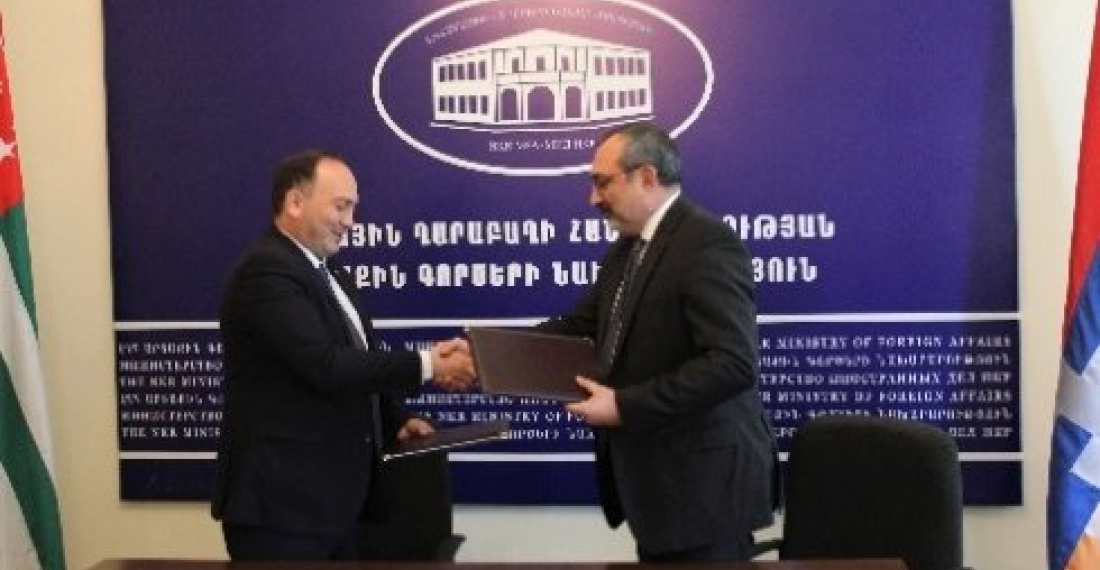
Министр иностранных дел самопровозглашенной Республики Абхазия, Даур Кове, в понедельник (28 августа) посетил Степанакерт, где провел встречу с руководством самопровозглашенной Нагорно-Карабахской Республики (НКР).

"Приветствуя гостя из Абхазии, министр иностранных дел самопровозглашенной НКР, Карен Мирзоян, сказал, что визит Даура Кове, в качестве проявления сложившихся между двумя внешнеполитическими ведомствами тесных практических и профессиональных связей, придаст также новый импульс существующим дружественным отношениям между Арцахом и Абхазией," - сообщает пресс-служба МИД cамопровозглашенной республики. Также сообщается, что "в ходе встречи стороны обсудили предстоящие шаги, направленные на развитие сотрудничества между внешнеполитическими ведомствами двух стран, а также обменялись мнениями по вопросам двусторонней повестки, коснулись международных и региональных вопросов."

По итогам встречи главы МИД самопровозглашенных республик подписали меморандум о взаимопонимании, в рамках которого они договорились "проводить консультации по вопросам информационного и общественно-экспертного взаимодействия, развития межгосударственного, межправительственного и межведомственного сотрудничества, взаимодействия по линии молодежной политики и дипломатии, а также по другим актуальным аспектам повестки дня. Меморандум также предусматривает реализацию программ в области обмена опытом и подготовки дипломатов."

По словам политического редактора Commonspace.eu:

 "Cотрудничество между непризнанными субъектами на бывшем пространстве Советского Союза началось с момента их отделения от своих государств несколько десятилетий назад. Однако, самопровозглашенная Нагорно-Карабахская Республика, признаваемая международным сообществом частью Азербайджана, всегда была несколько отчуждена от этих процессов, в основном из-за чувствительности в армяно-грузинских отношениях. Мы наблюдали гораздо более тесное сотрудничество между Абхазией и Южной Осетией, Абхазией и Приднестровьем. Визит высокопоставленного чиновника Даура Кове в Карабах, скорее всего, значительно расстроит Грузию, поскольку Абхазия признается частью Грузии подавляющим большинством международного сообщества.

Сам визит может быть реакцией на более строгую координацию на международной арене между Грузией и Азербайджаном по вопросам, связанным с их сепаратистскими регионами. Обе страны, вероятно, осудят этот визит самым решительным образом. Визит может также создать некоторые осложнения в грузино-армянских отношениях, поскольку Кове для въезда в Нагорный Карабах пришлось добираться по территории Армении. Однако, в конечном счете, визит имеет лишь незначительное символическое значение. Ни Абхазия, ни НКР не в состоянии оказать какую-либо значительную поддержку друг другу".

источник: commonspace.eu по материалам агентств

фото: Министры иностранных дел самопровозглашенных республик Абхазии и Нагорного Карабаха на встрече в Степанакерте, 28 августа 2017 года (фото предоставлено пресс-службой самопровозглашенной Нагорно-Карабахской Республики)


Related articles

Editor's choice
News
Borrell tells the European Parliament that the situation in Afghanistan was critical, but the EU will remain engaged

Borrell tells the European Parliament that the situation in Afghanistan was critical, but the EU will remain engaged

Borrell underlined that the European Union will make every effort to support the peace process and to remain a committed partner to the Afghan people. "Of course, we will have to take into account the evolving situation, but disengagement is not an option.  We are clear on that: there is no alternative to a negotiated political settlement, through inclusive peace talks.
Editor's choice
News
Germany accuses Russia of cyberattacks and disinformation campaign

Germany accuses Russia of cyberattacks and disinformation campaign

The German government holds Russia responsible for a cyberattack on German air traffic control, and for targeted disinformation campaigns before the last federal election. According to the German Foreign Office in Berlin, the incidents could be clearly attributed to the Russian military intelligence service, the GRU. In response, the Russian ambassador to Berlin was summoned to the Foreign Ministry. "We have been observing a massive increase in threatening hybrid activities by Russia for some time now," a spokesperson for the Foreign Ministry stated. These range from disinformation campaigns and espionage to cyberattacks and sabotage attempts. The aim is to divide society, sow distrust, and undermine confidence in democratic institutions. The spokesperson added that with these actions, Russia is "very concretely threatening our security, not only through its war of aggression against Ukraine, but also here in Germany."  The Foreign Ministry spokesperson explained that the cyberattack on air traffic control in August 2024 was clearly attributed to the hacker collective "APT28," known as "Fancy Bear," and to the responsibility of the Russian military intelligence service, the GRU. Furthermore, it could now be "conclusively stated" that Russia had attempted "to influence and destabilize both the last Federal election and the ongoing internal affairs of the Federal Republic of Germany." There was "absolutely irrefutable evidence" for this". The so-called "Storm 1516" campaign, which has been running since 2024, is allegedly backed by "reliable information" that the Moscow-based think tank "Center for Geopolitical Expertise" is behind it. The Center is also said to be supported by Russian military intelligence. Its primary aim is to influence democratic elections in the West. (Click the image to read more).

Popular

Editor's choice
News
Germany accuses Russia of cyberattacks and disinformation campaign

Germany accuses Russia of cyberattacks and disinformation campaign

The German government holds Russia responsible for a cyberattack on German air traffic control, and for targeted disinformation campaigns before the last federal election. According to the German Foreign Office in Berlin, the incidents could be clearly attributed to the Russian military intelligence service, the GRU. In response, the Russian ambassador to Berlin was summoned to the Foreign Ministry. "We have been observing a massive increase in threatening hybrid activities by Russia for some time now," a spokesperson for the Foreign Ministry stated. These range from disinformation campaigns and espionage to cyberattacks and sabotage attempts. The aim is to divide society, sow distrust, and undermine confidence in democratic institutions. The spokesperson added that with these actions, Russia is "very concretely threatening our security, not only through its war of aggression against Ukraine, but also here in Germany."  The Foreign Ministry spokesperson explained that the cyberattack on air traffic control in August 2024 was clearly attributed to the hacker collective "APT28," known as "Fancy Bear," and to the responsibility of the Russian military intelligence service, the GRU. Furthermore, it could now be "conclusively stated" that Russia had attempted "to influence and destabilize both the last Federal election and the ongoing internal affairs of the Federal Republic of Germany." There was "absolutely irrefutable evidence" for this". The so-called "Storm 1516" campaign, which has been running since 2024, is allegedly backed by "reliable information" that the Moscow-based think tank "Center for Geopolitical Expertise" is behind it. The Center is also said to be supported by Russian military intelligence. Its primary aim is to influence democratic elections in the West. (Click the image to read more).

