Лавров хочет спокойного Черного моря

Министр иностранных дел России Сергей Лавров считает, что ситуация в Черноморском регионе в последнее время ухудшилась, и призвал превратить регион в зону мира, стабильности и процветания.

"За четверть века своего существования ЧЭС состоялась как востребованная региональная площадка, - сказал он, выступая на встрече министров иностранных дел Организации черноморского экономического сотрудничества (ОЧЭС). - Ее дальнейший успех будет зависеть от того, насколько прагматично мы сможем выстраивать наше взаимодействие. К сожалению, в последнее время ситуация в Черноморском регионе деградировала".

"Важно эту тенденцию обратить вспять и работать над тем, чтобы превратить Причерноморье в зону мира, стабильности и процветания, - продолжил Лавров. - Убежден: организация не должна быть ареной для политических баталий, тем более сведения счетов".

Как напомнил российский министр, ОЧЭС занимается, прежде всего, экономическими вопросами, и мандат организации необходимо уважать. "В этом - залог способности ЧЭС содействовать развитию интеграционных связей", - добавил Лавров.

Однако присутствовавшие на конференции делегаты едва ли были впечатленны словами российского министра, учитывая недавние инциденты возле Крымского полуострова, в результате которых российские военно-морские силы захватили украинские судна, что привело к серьезному инциденту и к росту напряженности.

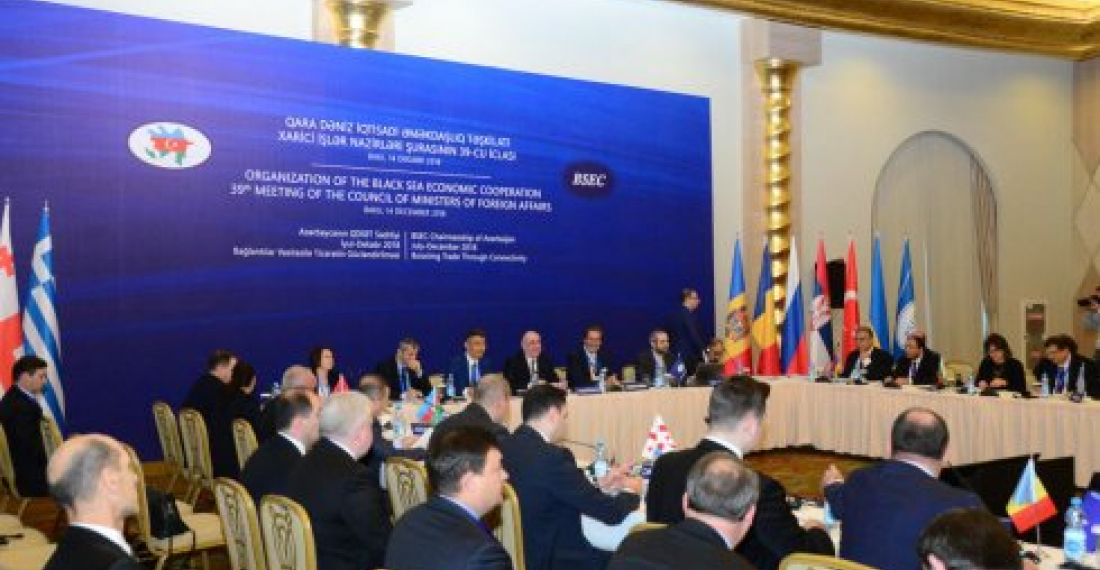
В Баку проходит 39-е заседание Совета министров иностранных дел стран-членов Организации Черноморского экономического сотрудничества (ОЧЭС), так как Азербайджан в настоящее время является председательствующей в организации страной.

На открытии встречи министр иностранных дел Азербайджана Эльмар Мамедъяров поблагодарил участников за то, что они приняли приглашение на встречу в Азербайджане. Среди присутствующих на встрече ЧЭС в Баку - старший дипломат из Армении.

Министр Мамедъяров сказал, что основными темами обсуждения в ходи встречи будут повышение эффективности работы организации, содействие торговле и содействие сотрудничеству в таких областях, как энергетика, транзит, ИКТ , туризм, сельское хозяйство и другие важные темы.

источник: commonspace.eu по материалам агентств

фото: Открытие 39-ого заседания Совета министров иностранных дел Организации Черноморского экономического сотрудничества (ОЧЭС) в Баку, 14 декабря 2018 года.
Related articles

Editor's choice
News
Borrell tells the European Parliament that the situation in Afghanistan was critical, but the EU will remain engaged

Borrell tells the European Parliament that the situation in Afghanistan was critical, but the EU will remain engaged

Borrell underlined that the European Union will make every effort to support the peace process and to remain a committed partner to the Afghan people. "Of course, we will have to take into account the evolving situation, but disengagement is not an option.  We are clear on that: there is no alternative to a negotiated political settlement, through inclusive peace talks.
Editor's choice
News
Germany accuses Russia of cyberattacks and disinformation campaign

Germany accuses Russia of cyberattacks and disinformation campaign

The German government holds Russia responsible for a cyberattack on German air traffic control, and for targeted disinformation campaigns before the last federal election. According to the German Foreign Office in Berlin, the incidents could be clearly attributed to the Russian military intelligence service, the GRU. In response, the Russian ambassador to Berlin was summoned to the Foreign Ministry. "We have been observing a massive increase in threatening hybrid activities by Russia for some time now," a spokesperson for the Foreign Ministry stated. These range from disinformation campaigns and espionage to cyberattacks and sabotage attempts. The aim is to divide society, sow distrust, and undermine confidence in democratic institutions. The spokesperson added that with these actions, Russia is "very concretely threatening our security, not only through its war of aggression against Ukraine, but also here in Germany."  The Foreign Ministry spokesperson explained that the cyberattack on air traffic control in August 2024 was clearly attributed to the hacker collective "APT28," known as "Fancy Bear," and to the responsibility of the Russian military intelligence service, the GRU. Furthermore, it could now be "conclusively stated" that Russia had attempted "to influence and destabilize both the last Federal election and the ongoing internal affairs of the Federal Republic of Germany." There was "absolutely irrefutable evidence" for this". The so-called "Storm 1516" campaign, which has been running since 2024, is allegedly backed by "reliable information" that the Moscow-based think tank "Center for Geopolitical Expertise" is behind it. The Center is also said to be supported by Russian military intelligence. Its primary aim is to influence democratic elections in the West. (Click the image to read more).

Popular

Editor's choice
News
Germany accuses Russia of cyberattacks and disinformation campaign

Germany accuses Russia of cyberattacks and disinformation campaign

The German government holds Russia responsible for a cyberattack on German air traffic control, and for targeted disinformation campaigns before the last federal election. According to the German Foreign Office in Berlin, the incidents could be clearly attributed to the Russian military intelligence service, the GRU. In response, the Russian ambassador to Berlin was summoned to the Foreign Ministry. "We have been observing a massive increase in threatening hybrid activities by Russia for some time now," a spokesperson for the Foreign Ministry stated. These range from disinformation campaigns and espionage to cyberattacks and sabotage attempts. The aim is to divide society, sow distrust, and undermine confidence in democratic institutions. The spokesperson added that with these actions, Russia is "very concretely threatening our security, not only through its war of aggression against Ukraine, but also here in Germany."  The Foreign Ministry spokesperson explained that the cyberattack on air traffic control in August 2024 was clearly attributed to the hacker collective "APT28," known as "Fancy Bear," and to the responsibility of the Russian military intelligence service, the GRU. Furthermore, it could now be "conclusively stated" that Russia had attempted "to influence and destabilize both the last Federal election and the ongoing internal affairs of the Federal Republic of Germany." There was "absolutely irrefutable evidence" for this". The so-called "Storm 1516" campaign, which has been running since 2024, is allegedly backed by "reliable information" that the Moscow-based think tank "Center for Geopolitical Expertise" is behind it. The Center is also said to be supported by Russian military intelligence. Its primary aim is to influence democratic elections in the West. (Click the image to read more).