Кадровые перестановки в Администрации президента Азербайджана

В последние два десятилетия Администрация президента была источником стабильности и застоя. По словам одного из новых назначенных лиц, изменения "преследуют цель обеспечить динамичность, скорость и оптимальность в деятельности высшего исполнительного органа страны в соответствии с новой ситуацией и вызовами".

Администрация президента, возможно, является самым важным институтом Азербайджана. В президентской республике, жестко контролируемой центром, после прихода к власти Гейдара Алиева в 1994 году Администрация президента была источником идеологии, политики и руководства, заслоняя как Кабинет министров, так и Парламент. Глава Администрации, 79-летний Рамиз Мехтиев, выходец из "старой гвардии", с тех пор являлся ее главой, якорем стабильности и стагнации.

Однако перемены витают в воздухе, и на этой неделе, вероятно, произошли самые большие изменения в этой уважаемой структуре за последние два десятилетия. Сначала было объявлено о различных структурных изменениях. Были упразднены одни отделы, созданы новые. Некоторые советники и руководители отделов бесцеремонно ушли на пенсию, вместо них появились новые лица. Пройдет некоторое время, прежде чем осядет пыль и будет понятна истинная степень этих перемен. Однако, помимо структурных и кадровых перемен, появился еще один фактор. Администрация президента охватывает как команду президента, Ильхама Алиева, так и команду первого вице-президента, Мехрибан Алиевой. Это оказало влияние на порядок старшинства в Администрации президента.

Согласно официальному уведомлению о новом составе Администрации президента, теперь он выглядит так:

Руководитель Администрации Президента Азербайджанской Республики Рамиз Мехтиев.

Помощник Президента Азербайджанской Республики Джамиля Аббасова.

Начальник Секретариата Первого вице-президента Азербайджанской Республики Алтай Гасанов.

Помощник Президента по вопросам аграрной политики - заведующий отделом Азер Амирасланов.

Помощник Президента по территориально-организационным вопросам - заведующий отделом Зейнал Нагдалиев.

Помощник Президента по работе с правоохранительными органами и военным вопросам - заведующий отделом Фуад Алескеров.

Помощник Президента по вопросам внешней политики - заведующий отделом Новруз Мамедов.

Помощник Президента по общественно-политическим вопросам - заведующий отделом Али Гасанов.

Помощник Президента по экономическим вопросам - заведующий отделом Али Асадов.

Помощник Президента по вопросам экономической политики и промышленности - заведующий отделом Натиг Амиров.

Assistant to the President for Multinational Relations, Multiculturalism and Religious Issues, Department Head

Помощник Президента по межнациональным вопросам, вопросам мультикультурализма и религии - заведующий отделом

Начальник Секретариата Президента - помощник Президента Диляра Сеидзаде.

Пресс-секретарь Президента Азер Гасымов.

Начальник протокольной службы Президента Эльчин Багиров.

Заведующий отделом государственной службы и кадровых вопросов Талят Меджидов.

Заведующий отделом государственного контроля Эльдар Нуриев.

Заведующий отделом по вопросам молодежи и спорта Юсуф Мамедалиев.

Заведующий отделом по вопросам гуманитарной политики

Заведующий отделом по вопросам законодательства и правовой экспертизы Шахин Алиев.

Заведующий отделом по работе с документами и обращениями граждан Сулейман Исмаилов.

Заведующая отделом стратегического исследования и планирования Саадат Юсифова.

До сих пор со стороны государственных чиновников было немного комментариев касательно этих перемен. Однако, один из новых назначенных лиц  прокомментировать эти события. Его положение уникально, потому что он занимает две должности - глава недавно созданного отдела по вопросам молодежной политики и спорта, а также помощник первого вице-президента Мехрибан Алиевой.

Юсуф Мамедалиев родился 23 января 1979 года в Баку. Образование получил в Азербайджане. В 1997 году начал карьеру в МИД, где занимал несколько дипломатических должностей.

С января 2014 года он продолжил свою деятельность в качестве эксперта Фонда Гейдара Алиева и исполнительного директора Общественного объединения «ИДЕА».

Азербайджанское информационное агентство АПА попросило Мамедалиева прокомментировать его назначение. Он сказал:

"В первую очередь отмечу, что структурные изменения на основе распоряжения президента преследуют цель обеспечить динамичность, скорость и оптимальность в деятельности высшего исполнительного органа страны в соответствии с новой ситуацией и вызовами. Сильный институт президентства, несомненно, является важным условием стабильного и устойчивого управления. Как вы знаете, лица, назначенные на должность помощников президента, обладают многолетним опытом управленческой работы. Создание внутри структуры АП отдела молодежной политики и спорта преследует цель успешной реализации определенного господином президентом курса реформ с тем, чтобы более эффективно исполнять поставленные задачи. И я в свою очередь выражая еще раз благодарность господину президенту, осознавая возложенную на меня ответственность, постараюсь оправдать оказанное мне доверие."

Отвечая на вопрос о своем двойном назначении, Юсуф Мамедалиев сказал АПА:

"В целом, сегодня Азербайджан переживает важный период, характеризующийся реформами. Каждому ясно, что после референдума 26 сентября 2016 года в Азербайджане начался период формирования эффективного механизма государственного управления, укрепления вертикали исполнительной власти и исполнительской дисциплины и совершенствования механизма управления экономикой. Создание в Азербайджане института вице-президентства и назначение на должность I вице-президента Мехрибан ханум Алиевой является составной частью важных реформ. Заслуги перед народом Мехрибан ханум как общественно-политического деятеля и президента Фонда Гейдара Алиева на виду. Ее работы и неоценимые заслуги встречаются с одобрением каждым гражданином Азербайджана, а также со стороны зарубежных государств и структур. Именно по этой причине я хорошо понимаю очень важные обязательства и ответственность, которые возложила на меня должность помощника I вице-президента."

Источник: commonspace.eu по материалам АПА и других агентств

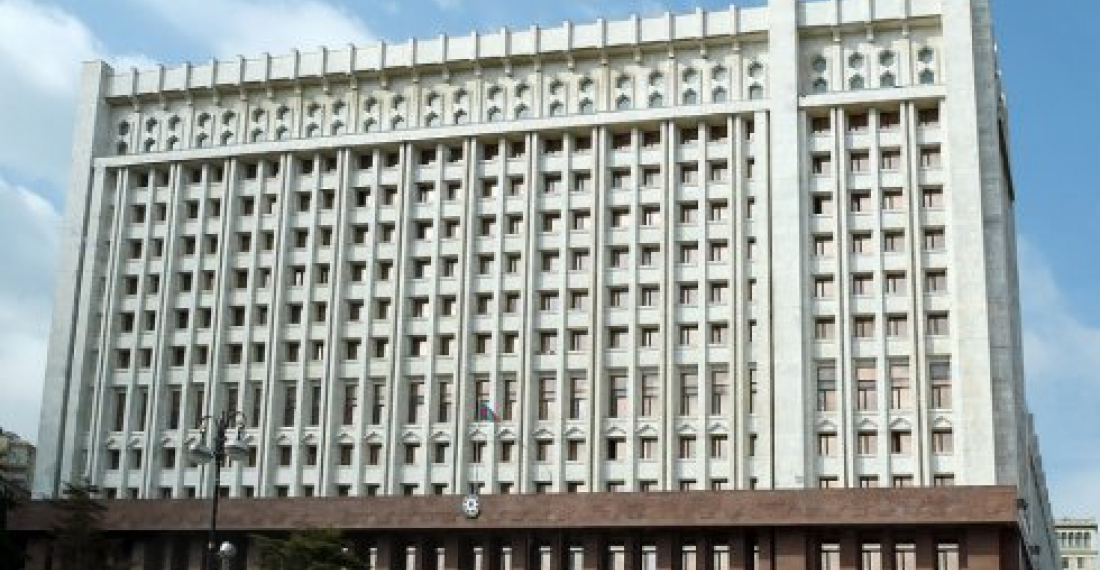
Фото: Здание Администрации президента Азербайджана в Баку

Latest

Editor's choice
Monday Commentary
Monday Commentary: PEACE IN OUR TIME?

Monday Commentary: PEACE IN OUR TIME?

Making peace between Armenia and Azerbaijan was never going to be simple, nor easy, nor quick. It is taking time, writes Dennis Sammut in this Monday Commentary. “There is a sense of realism coming from the leaders of the two countries – President Ilham Aliyev of Azerbaijan and prime minister Nikol Pashinyan of Armenia, that frankly, is necessary and welcome”, he writes. At a time when conflicts are raging all over the world – from Ukraine to the Gulf, from Africa to South Asia, the prospect that Armenia and Azerbaijan had finally, after decades of conflict that left thousands of dead and many more displaced, decided on embarking on a journey of peace was welcomed. Peace between Armenia and Azerbaijan can be top-down up to a point. Both leaders have spent political capital preparing for a peace deal. But both are aware that their people are not ready for peace yet. In fact, in Armenia, most of the elite are negative toward a peace deal with Azerbaijan. Pashinyan needs time to persuade his countryfolk. That is why 2031 is realistic. Ilham Aliyev runs a tighter shop, but he is also not immune to public opinion. Every time someone hits a landmine in Karabakh, which unfortunately happens often, peace comes into question. Which is why Aliyev chooses to sound hardline, more often than not. In pursuing the peace agenda, both Aliyev and Pashinyan need to proceed cautiously. But they are right in making peace the central issue in their agenda. It is the main issue, and the one that will define them in history. So forward, cautiously but resolutely! In pursuing the peace agenda, Aliyev and Pashinyan need to be supported clearly and unambiguously. There are too many people in Baku and Yerevan who are sitting on the sides, waiting. The international community is not doing enough. It is time to be counted. Otherwise, the spoilers will win, and the region will go back to its bad habits. (Click the image to read the full commentary).

Popular

Editor's choice
Monday Commentary
Monday Commentary: European-Azerbaijan relations need an intensive and multifaceted dialogue that is frank and honest

Monday Commentary: European-Azerbaijan relations need an intensive and multifaceted dialogue that is frank and honest

Last week I visited Baku, Azerbaijan. My visit was relatively short, but very intensive, and had many meetings with stakeholders and colleagues. When I arrived in Baku first time in 1996,  Azerbaijan was a different country: weak, poor, and shaken by defeat in war. For thirty year the Karabakh issue dominated the agenda: the political agenda but also the popular mindset. Now, thirty years later, Azerbaijan has returned to Karabakh, and peace with Armenia is on the horizon. It is a new era for Armenia-Azerbaijan relations, for the South Caucasus, but also for Europe.  But we cannot be complacent: the Peace agreement has been initialed but not signed; borders remain closed; TRIPP is ambitious but remains an idea; and there are spoilers who want to turn the clock back. We must not allow them, and in this Europe and Azerbaijan must work together. Europe’ vanguard organization is the European Union – it is a free union of 27 member states; it is a strong global economic force, and increasingly a diplomatic and military force too. But it remains “work in progress” and can often appear dysfunctional. It often lacks collective and institutional memory. In its dealings with Azerbaijan the EU has made many mistakes – not least opening the delegation here late – in 2008. It sometimes appears condescending. Some utterances from the European Parliament and from some quarters in some member states are not understandable even for me. They irritate the Azerbaijanis, but serve no other purpose But Azerbaijan has also not handled relations with the EU well. It has failed to respond when the hand of friendship reached out; and it confused irritating actions, sometimes by well-meaning people; sometimes by outright spoilers, with strategic action. In short, EU-Azerbaijan relations have suffered from a lack of proper dialogue. This dialogue must be frank, honest and multi-faceted involving different segments of society on both sides.   Is Azerbaijan Europe? When Azerbaijan applied to join the Council of Europe in the 1990s, there were some who opposed, saying this was not Europe. I was one of the people who argued that Armenia and Azerbaijan may be on the periphery of the continent geographically, but were European in essence. Certainly their elites. During the discussion on 4 September in Baku, my friend Farhad Mammedov, mentioned that Azerbaijan is not interested in joining the EU, and was now close to the Central Asian countries in the 5 plus 1 format. Neither things mean that Azerbaijan is not Europe. There are several European countries that are not in the EU, and do not want to be, for example Norway and Switzerland. Iceland has recently voted to stay out of the EU. The UK was a member and left. Europe is bigger than the EU, and the holding of the European Political Community summit in Baku in 2027 proves that. Despite all the rhetoric, I never heard the president of Azerbaijan  saying that Azerbaijan is not Europe, nor have I heard any European president say it either. Not wanting to join the EU and forging close relations with neighbouring regions does not make Azerbaijan any less European. It is only logical that when Europeans talk to Azerbaijan they talk like family. The conversation is often frank. It must also be honest, and Europeans need always to remember this too. A frank, honest and multi-faceted dialogue A frank, honest and multifaceted dialogue will contribute to relations between Azerbaijan and the rest of Europe: it will avoid misperception, which unfortunately is very common on both sides; it will provide a forum where problems can be discussed and resolved, and it will increase mutual trust, so that together common problems can be addressed. (click image to read the full Monday Commentary)
Editor's choice
Monday Commentary
Monday Commentary: “The barren rocks of Aden” and “These lands of Yemen are so ruthless”

Monday Commentary: “The barren rocks of Aden” and “These lands of Yemen are so ruthless”

There are two early 20th-century tunes that mark foreign attempts to occupy and “pacify” Yemen. The Scottish tune “The barren rocks of Aden” marks the mobilisation of Highland soldiers, enlisted to be deployed to the Yemeni port of Aden, that in 1837 became the last colony to be incorporated into the British Empire. The tune talks of the harshness of the terrain, but is celebratory, It was even played as a farewell tune to Sir William Luce at the parade in Sharjah celebrating his end as “British Viceroy” in the Middle East in 1966. The second tune is an Anatolian lament. As Ilker Sezer reminded us this weekend, in his weekly feature on “Turkiye Today”, it “mourns the tragic fate of Ottoman soldiers dispatched to the harsh, remote deserts of Yemen during the fall of the empire, young men who marched away from their villages and never returned home. Most of their names, and numbers, were never recorded. Yet, their fate left a mark on the Turkish psyche.” Subsequent invaders have discovered that Yemen is a grave that cannot be overcome by the strength of modern technology, and that whilst Yemeni society is splintered and divided, building a reliable alliance with Yemeni factions is difficult. These are the harsh lessons facing Saudi Arabia, as the Kingdom faces its biggest challenge in its modern history. The leadership of the Kingdom now has to respond decisively. At stake is their very credibility. This is likely to be a long and messy conflict. Saudi military objectives need to be focused: to box in the Houthis rather than destroy them. This is likely to include: (a) regaining territory lost on the Red Sea coast; (b) control over Bab el Mandeb Strait; (c) some kind of cordon sanitaire on the Saudi-Yemeni border; and if things go well (d) the capture of Sanaa. All this would not eliminate the Houthi problem, but it will contain it. In the end the Saudis will have to continue managing Yemen with a mixture of carrot and stick. For the moment, the stick is likely, but the carrot cannot be forgotten either. (click the image to read the Monday Commentary in full)