


Иванишвили возвращается на передовую линию грузинской политики

Иванишвили возвращается на передовую линию грузинской политики. В пятницу (11 мая) он был избран председателем правящей партии «Грузинская мечта» на конгрессе партии, прошедшем в Тбилиси.

В 2012 году Иванишвили возглавил широкую коалицию, обойдя на выборах тогдашнее правительство Михаила Саакашвили, что привело к редкой на постсоветском пространстве мирной передаче власти через урну голосования. Впоследствии он занял пост премьер-министра на один год, прежде чем уйти с поста.

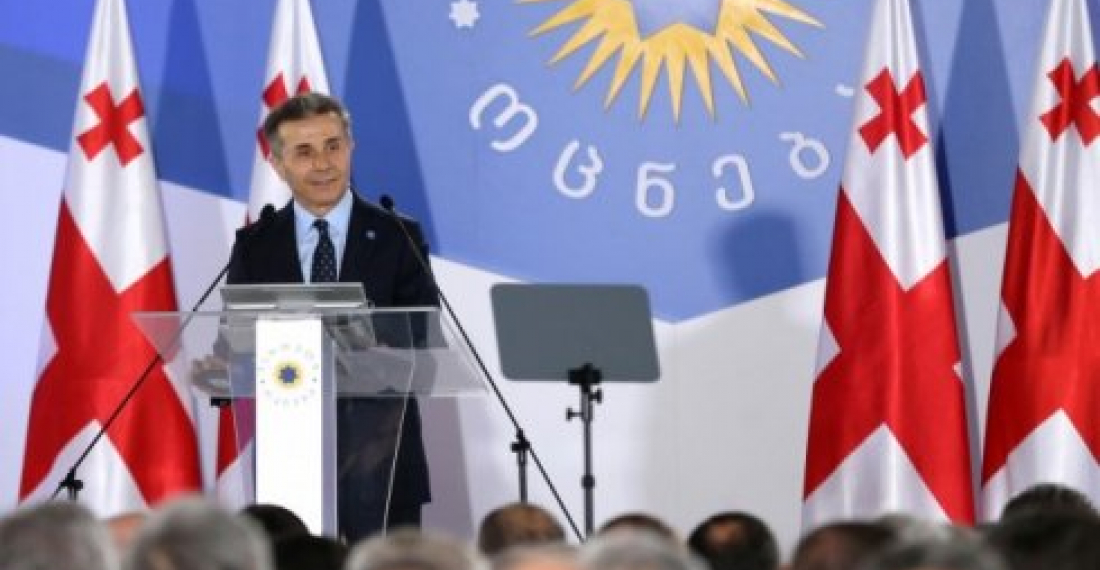
Критики Иванишвили обвиняли его в том, что он продолжает властвовать за кулисами. Выступая на 5-м Конгрессе его партии Иванишвили объяснил причины его возвращения "неблагоприятной социально-экономической обстановкой", а также постоянными попытками искусственного преувеличения сложной ситуации. "Безработица и низкие зарплаты и пенсии остаются серьезной проблемой", - сказал он.

Он обвинил своих оппонентов в том, что они "прививали атмосферу безнадежности и страха и пытались убедить людей в том, что страна находится на грани краха".

Иванишвили также рассказал о том, что он назвал разрушительными силами, которые являются угрозой грузинской демократии.

Иванишвили упомянул в качестве третьей причины своего возвращения расхождение во мнениях внутри правящей партии. "У меня есть ощущение, что Грузинская мечта - Демократическая Грузия, целостность которой лежит в ее связах с народом, может дистанцироваться от своих избирателей, если эти процессы будут углубляться, и именно поэтому я и решил вернуться", - сказал он.

По словам политического редактора Commonspace.eu, возвращение Иванишвили на передовую грузинской политики широко приветствовалось. Сторонники Грузинской мечты считают, что Иванишвили является душой партии и, что его отсутствие создало вакуум в руководстве, что угрожало успеху партии во многих областях. С другой стороны, многие критики Иванишвили говорят, что, будучи главой правящей партии Иванишвили может быть привлечен к ответственности за партийную политику и ее неудачи. Грузия находится на важном этапе в своем политическом и социально-экономическом развитии, учитывая то, что международная ситуация также осложняется. Таким образом, в интересах страны уверенное политическое руководство, и Иванишвили на данный момент является человеком, который обладает достаточной политической поддержкой в парламенте и вне его, чтобы быть таким руководителем".

источник: commonspace.eu

фото: Бидзина Иванишвили на 5-м съезде партии Грузинская мечта в Тбилиси, 11 мая 2018 года (фото любезно предоставлено www.gd.ge)


Related articles

Editor's choice
News
Nikol Pashinyan re-appointed as Armenian prime minister after decisive June election victory

Nikol Pashinyan re-appointed as Armenian prime minister after decisive June election victory

Armenia president, Vahagn Khachaturyan has re-appointed Nikol Pashinyan as Armenian prime minister, after the decisive victory of his Civil Contract party in parliamentary elections in June. During a ceremony at the Presidential Palace in Yerevan, President Khachaturyan signed a decree on the appointment of Nikol Pashinyan as Prime Minister of the Republic. President Vahagn Khachaturyan said in short remarks: It is a great honor for me to sign a decree on appointing you to the post of Prime Minister of the Republic of Armenia, for which I received a proposal from the political majority in the National Assembly, under Article 149 of the Constitution of the Republic of Armenia. I sincerely congratulate you, I wish you great patience, endurance, and determination to lead us in these difficult times, to lead the country to the future, a prosperous future. Nikol Pashinyan thanked the president and added,  I must say honestly that in 2018, when I assumed the post of Prime Minister of the Republic of Armenia as a result of the People's, non-violent, velvet revolution, it would have been difficult to predict that we would go down such a path and I think it would have been difficult to predict that we would be able to overcome this path. But we are where we are, and I think that the key role and significance in all this is unequivocally and undoubtedly the people of the Republic of Armenia, who, after all, have demonstrated special expressions of state consciousness and state-centeredness throughout this period. And of course, this is a great obligation and commitment. Of course, the Government will be formed in the near future and all members of the Government, including me, will already enshrine our obligations to our people in the text of the oath.  In the meantime Ruben Rubinyan has been elected Speaker of the National Assembly of Armenia, following a secret vote of MPs. He is a 36-year-old MP from the ruling Civil Contract party, who was one of the deputy speakers in the previous parliament and, until recently, was the special representative in the negotiations on the normalization of relations with Turkey.

Popular

Editor's choice
Interview
Thursday Interview: Murad Muradov

Thursday Interview: Murad Muradov

Today, commonspace.eu starts a new regular weekly series. THURSDAY INTERVIEW, conducted by Lauri Nikulainen, will host  persons who are thinkers, opinion shapers, and implementors in their countries and spheres. We start the series with an interview with Murad Muradov, a leading person in Azerbaijan's think tank community. He is also the first co-chair of the Action Committee for a new Armenian-Azerbaijani Dialogue. Last September he made history by being the first Azerbaijani civil society activist to visit Armenia after the 44 day war, and the start of the peace process. Speaking about this visit Murad Muradov said: "My experience was largely positive. My negative expectations luckily didn’t play out. The discussions were respectful, the panel format bringing together experts from Armenia, Azerbaijan, and Turkey was particularly valuable during the NATO Rose-Roth Seminar in Yerevan, and media coverage, while varied in tone, remained largely constructive. Some media outlets though attempted to represent me as more of a government mouthpiece than an independent expert, which was totally misleading.  Overall, I see these initiatives as important steps in rebuilding trust and normalising professional engagement. The fact that soon a larger Azerbaijani civil society visits to Armenia followed, reinforces the sense that this process is moving in the right direction." (click the image to read the interview in full)

