


Дело Самвела Бабаяна продолжает бросать тень на выборы в Армении

Суд административных районов Кентрон и Норк-Мараш города Еревана избрал меру пресечения в виде заключения под стражу сроком на два месяца в отношении Самвела Бабаяна, бывшего министра обороны Нагорного Карабаха, и союзника блока ОРО, одной из главных политических сил, участвующих в парламентских выборах, запланированных в Армении на 2 апреля.

Как ранее сообщала Служба национальной безопасности Армении, Бабаян и двое других были задержаны по подозрению ввоза в Армению ПЗРК "Игла". Служба безопасности сообщает, что двое неназванных лиц действовали по указанию Бабаяна и, что они пытались ввести систему через сухопутную границу с Грузией. Однако, Министерство внутренних дел Грузии опровергло все данные об этом инциденте, и сам Бабаян также отверг свою причастность к данному делу.

Данное дело бросает тень на текущую избирательную кампанию парламентских выборов в Армении. Бабаян считается союзником блока Оганян-Раффи-Осканян (ОРО), возглавляемого тремя бывшими министрами. Руководители блока поспешили на защиту Бабаяна. После первого заявления, опубликованного вскоре после ареста Бабаяна (читайте здесь), в четверг ОРО выступил с еще одним жестким заявлением его самого видного лидера Сейрана Оганяна, который до недавнего времени был министром обороны Армении, заявившим, что арест Бабаяна является попыткой оказать давление на блок:

"Не понимают, что он наш боевой товарищ, наш друг-единомышленник. Самвел Бабаян вместе со своими друзьями обеспечил победу в Арцахской войне. Он герой Арцаха. Я хочу сказать, мы будем стоять до конца на защите прав Самвела Бабаяна, и мы не допустим, чтобы эти власти своей напускной деятельностью добились своей цели," - заявил Оганян.

Сам Оганян в последние дни избирательной кампании стал главной мишенью для проправительственных СМИ. Ссылаясь на этот факт, другой лидер блока ОРО, бывший министр иностранных дел Раффи Ованнисян сказал: "Уверен, что Сейрана Оганяна сейчас преследуют соответствующие структуры, а также близкие к власти СМИ, также как и Самвела Бабаяна. И у меня и моей семьи был такой опыт, и любой может станет их мишенью, независимо от того являются ли они фермерами или национальными героями. Какая им разница? Я говорю не от имени г-на Оганяна, а просто делюсь с вами своим мнением как гражданин", - добавил Ованнисян.

По его словам, блок представляет угрозу для властей, и поэтому против него были предприняты превентивные меры с задержаниями. Говоря о возможности задержания Сейрана Оганяна, Ованнисян сказал: "Пусть только рискнут".

Другие политические лидеры также прокомментировали дело Бабаяна. Пресс-секретарь правящей Республиканской партии Армении (РПА) Эдуард Шармазанов заявил, что политические спекуляции по этому делу неприемлемы. Говоря о заявлениях блока ОРО, Шармазанов сказал, что попытка политизировать любой судебный процесс для повышения и без того низкого рейтинга блока - не самый лучший вариант. На просьбу прокомментировать это дело и заявления лидеров Блока ОРО премьер-министр Карен Карапетян сказал, что он предпочитает сосредоточиться на более идеологических вопросах.

Это дело также привлекло внимание международного сообщества. Глава делегации ЕС в Армении посол Петр Свитский в пятницу сообщил журналистам, что все процессы, направленные на предотвращение насилия в Армении, должны быть прозрачными.

"Мы считаем, что все разногласия и недовольства должны решаться в судах и должны быть урегулированы мирным путем. Для Европейского союза вопрос предотвращения насилия очень важен. Мы считаем, что главная ответственность за предотвращение насилия лежит на правоохранительных органах. Эти процедуры должны быть очень прозрачными. Если есть подозрение, что что-то не так, то мы считаем, что правоохранительные органы должны действовать в условиях полной прозрачности, чтобы у избирателей была уверенность, что это делается не в политических целях, и не ради запугивания других, а это делается в рамках верховенства закона," - сказал посол.

Вопросы, связанные с карабахским конфликтом, продолжают занимать видное место в избирательной кампании.

В пятницу на предвыборном митинге в административном округе Малатия-Себастия один из лидеров оппозиционного Армянского национального конгресса Левон Зурабян заявил, что победа в Карабахе была достигнута благодаря руководству тогдашнего президента и главнокомандующего Левону Тер-Петросяну.

"Когда мы выиграли войну в Карабахе в 1994 году, мы в первую очередь победили благодаря главнокомандующему Левону Тер-Петросяну, люди, солдаты и командиры могут быть героями, но победа была бы невозможна, если бы организация войны, ведение дипломатической работы и экономической поддержки военных действий, были бы организованны не правильно. Просто Тер-Петросян хотел достичь этой победы и сделать ее необратимой", - сказал Зурабян.

Зурабян также добавил, что режим прекращение огня не может бать гарантией мира.

Похожие новости:

Арестован бывший министр обороны Карабаха Самвел Бабаян

Возвращение Самвела Бабаяна в Нагорный Карабах

Источник: commonspace.eu по материалам агентств

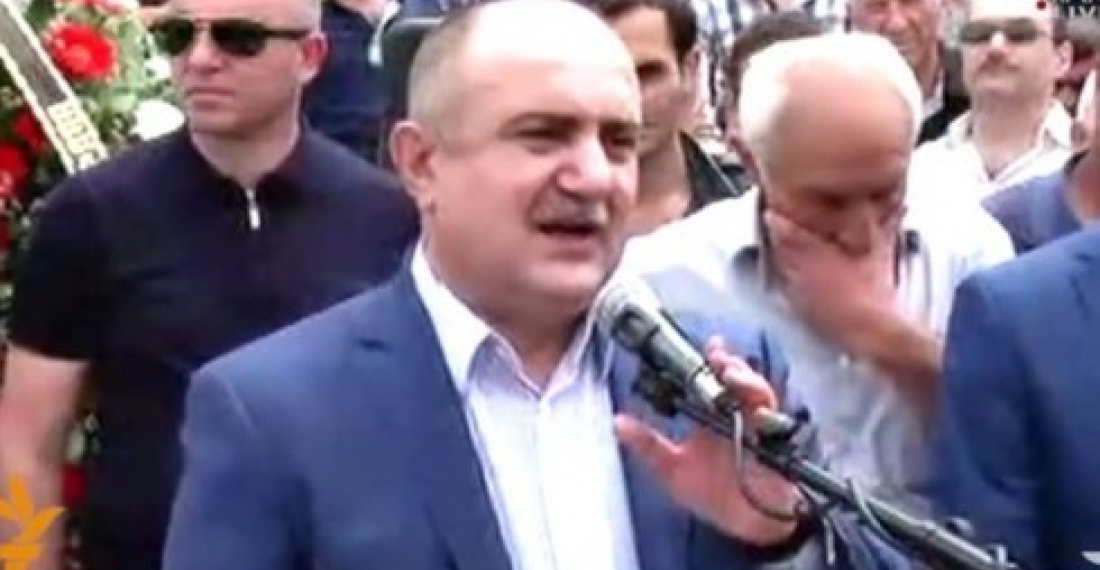
Фото: Самвел Бабаян (фото из архива) Раннее была опубликована фотография другого человека с тем же именем. Мы приносим извинения нашим читателям за это.

Latest

Editor's choice
Monday Commentary
Monday Commentary: PEACE IN OUR TIME?

Monday Commentary: PEACE IN OUR TIME?

Making peace between Armenia and Azerbaijan was never going to be simple, nor easy, nor quick. It is taking time, writes Dennis Sammut in this Monday Commentary. “There is a sense of realism coming from the leaders of the two countries – President Ilham Aliyev of Azerbaijan and prime minister Nikol Pashinyan of Armenia, that frankly, is necessary and welcome”, he writes. At a time when conflicts are raging all over the world – from Ukraine to the Gulf, from Africa to South Asia, the prospect that Armenia and Azerbaijan had finally, after decades of conflict that left thousands of dead and many more displaced, decided on embarking on a journey of peace was welcomed. Peace between Armenia and Azerbaijan can be top-down up to a point. Both leaders have spent political capital preparing for a peace deal. But both are aware that their people are not ready for peace yet. In fact, in Armenia, most of the elite are negative toward a peace deal with Azerbaijan. Pashinyan needs time to persuade his countryfolk. That is why 2031 is realistic. Ilham Aliyev runs a tighter shop, but he is also not immune to public opinion. Every time someone hits a landmine in Karabakh, which unfortunately happens often, peace comes into question. Which is why Aliyev chooses to sound hardline, more often than not. In pursuing the peace agenda, both Aliyev and Pashinyan need to proceed cautiously. But they are right in making peace the central issue in their agenda. It is the main issue, and the one that will define them in history. So forward, cautiously but resolutely! In pursuing the peace agenda, Aliyev and Pashinyan need to be supported clearly and unambiguously. There are too many people in Baku and Yerevan who are sitting on the sides, waiting. The international community is not doing enough. It is time to be counted. Otherwise, the spoilers will win, and the region will go back to its bad habits. (Click the image to read the full commentary).
Editor's choice
News
Ukraine Peace Talks Set to Expand as Russia and Europe Clash Over Post-war Security

Ukraine Peace Talks Set to Expand as Russia and Europe Clash Over Post-war Security

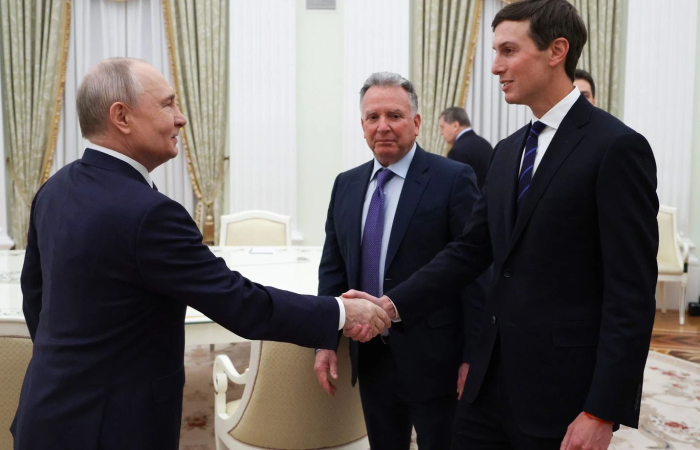
Ukraine and Russia could see European countries join the next round of peace negotiations, following talks between US special envoys Steve Witkoff and Jared Kushner and Russian President Vladimir Putin in Moscow on Thursday (November 12). However, conflicting positions over European military involvement, Ukraine’s territorial future and the continent’s security arrangements highlight the difficulties facing the diplomatic process. Speaking after the meeting, Witkoff said European participation would be an important development, describing the countries concerned as key partners. Kushner also indicated that Washington had noticed a shift in European attitudes and believed their involvement would not obstruct progress. In a statement published on X, he said the expanded discussions would address broader European security arrangements alongside territorial disputes between Russia and Ukraine. The US envoys subsequently travelled to Dublin, where they met Ukrainian President Volodymyr Zelenskyy during a European summit. Zelenskyy welcomed the possibility of European participation and expressed hope that the negotiations would include measures to reduce tensions and establish ceasefires. He also reiterated the importance of European representation in decisions concerning the continent’s security. Moscow, however, has offered a more cautious interpretation of the proposed expansion. Putin's aide, Yuri Ushakov, suggested that European countries should first reconsider their military assistance to Kyiv, arguing that their current actions demonstrated an unwillingness to pursue peace. Putin similarly called on Washington to work with its European allies to establish whether they genuinely wanted peace or continued confrontation with Russia. The Russian president also rejected the prospect of European peacekeeping troops being deployed to Ukraine following a potential agreement, describing such a presence as a continuation of the war. His position reflects wider disagreements over the future European security architecture, with Moscow seeking discussions on the continent's broader security arrangements, while European leaders insist that such negotiations cannot replace a settlement of the war. Simultaneously, Zelenskyy raised concerns about disruptions to Starshield, the US-made satellite communications service used by Ukrainian forces. He described Washington’s discussions with Moscow about Europe's future security as unusual and warned against decisions that could undermine Ukraine's sovereignty. Despite the diplomatic activity, fighting continued. Russian drone attacks killed two people in Ukraine's Sumy region and injured five in Rivne, while a separate attack in Russia's Belgorod region killed one person and injured four. Ukrainian agricultural company Kernel Holding also suspended operations at all its oilseed extraction facilities following repeated Russian attacks.

Popular

Editor's choice
Monday Commentary
Monday Commentary: European-Azerbaijan relations need an intensive and multifaceted dialogue that is frank and honest

Monday Commentary: European-Azerbaijan relations need an intensive and multifaceted dialogue that is frank and honest

Last week I visited Baku, Azerbaijan. My visit was relatively short, but very intensive, and had many meetings with stakeholders and colleagues. When I arrived in Baku first time in 1996,  Azerbaijan was a different country: weak, poor, and shaken by defeat in war. For thirty year the Karabakh issue dominated the agenda: the political agenda but also the popular mindset. Now, thirty years later, Azerbaijan has returned to Karabakh, and peace with Armenia is on the horizon. It is a new era for Armenia-Azerbaijan relations, for the South Caucasus, but also for Europe.  But we cannot be complacent: the Peace agreement has been initialed but not signed; borders remain closed; TRIPP is ambitious but remains an idea; and there are spoilers who want to turn the clock back. We must not allow them, and in this Europe and Azerbaijan must work together. Europe’ vanguard organization is the European Union – it is a free union of 27 member states; it is a strong global economic force, and increasingly a diplomatic and military force too. But it remains “work in progress” and can often appear dysfunctional. It often lacks collective and institutional memory. In its dealings with Azerbaijan the EU has made many mistakes – not least opening the delegation here late – in 2008. It sometimes appears condescending. Some utterances from the European Parliament and from some quarters in some member states are not understandable even for me. They irritate the Azerbaijanis, but serve no other purpose But Azerbaijan has also not handled relations with the EU well. It has failed to respond when the hand of friendship reached out; and it confused irritating actions, sometimes by well-meaning people; sometimes by outright spoilers, with strategic action. In short, EU-Azerbaijan relations have suffered from a lack of proper dialogue. This dialogue must be frank, honest and multi-faceted involving different segments of society on both sides.   Is Azerbaijan Europe? When Azerbaijan applied to join the Council of Europe in the 1990s, there were some who opposed, saying this was not Europe. I was one of the people who argued that Armenia and Azerbaijan may be on the periphery of the continent geographically, but were European in essence. Certainly their elites. During the discussion on 4 September in Baku, my friend Farhad Mammedov, mentioned that Azerbaijan is not interested in joining the EU, and was now close to the Central Asian countries in the 5 plus 1 format. Neither things mean that Azerbaijan is not Europe. There are several European countries that are not in the EU, and do not want to be, for example Norway and Switzerland. Iceland has recently voted to stay out of the EU. The UK was a member and left. Europe is bigger than the EU, and the holding of the European Political Community summit in Baku in 2027 proves that. Despite all the rhetoric, I never heard the president of Azerbaijan  saying that Azerbaijan is not Europe, nor have I heard any European president say it either. Not wanting to join the EU and forging close relations with neighbouring regions does not make Azerbaijan any less European. It is only logical that when Europeans talk to Azerbaijan they talk like family. The conversation is often frank. It must also be honest, and Europeans need always to remember this too. A frank, honest and multi-faceted dialogue A frank, honest and multifaceted dialogue will contribute to relations between Azerbaijan and the rest of Europe: it will avoid misperception, which unfortunately is very common on both sides; it will provide a forum where problems can be discussed and resolved, and it will increase mutual trust, so that together common problems can be addressed. (click image to read the full Monday Commentary)
Editor's choice
Monday Commentary
Monday Commentary: “The barren rocks of Aden” and “These lands of Yemen are so ruthless”

Monday Commentary: “The barren rocks of Aden” and “These lands of Yemen are so ruthless”

There are two early 20th-century tunes that mark foreign attempts to occupy and “pacify” Yemen. The Scottish tune “The barren rocks of Aden” marks the mobilisation of Highland soldiers, enlisted to be deployed to the Yemeni port of Aden, that in 1837 became the last colony to be incorporated into the British Empire. The tune talks of the harshness of the terrain, but is celebratory, It was even played as a farewell tune to Sir William Luce at the parade in Sharjah celebrating his end as “British Viceroy” in the Middle East in 1966. The second tune is an Anatolian lament. As Ilker Sezer reminded us this weekend, in his weekly feature on “Turkiye Today”, it “mourns the tragic fate of Ottoman soldiers dispatched to the harsh, remote deserts of Yemen during the fall of the empire, young men who marched away from their villages and never returned home. Most of their names, and numbers, were never recorded. Yet, their fate left a mark on the Turkish psyche.” Subsequent invaders have discovered that Yemen is a grave that cannot be overcome by the strength of modern technology, and that whilst Yemeni society is splintered and divided, building a reliable alliance with Yemeni factions is difficult. These are the harsh lessons facing Saudi Arabia, as the Kingdom faces its biggest challenge in its modern history. The leadership of the Kingdom now has to respond decisively. At stake is their very credibility. This is likely to be a long and messy conflict. Saudi military objectives need to be focused: to box in the Houthis rather than destroy them. This is likely to include: (a) regaining territory lost on the Red Sea coast; (b) control over Bab el Mandeb Strait; (c) some kind of cordon sanitaire on the Saudi-Yemeni border; and if things go well (d) the capture of Sanaa. All this would not eliminate the Houthi problem, but it will contain it. In the end the Saudis will have to continue managing Yemen with a mixture of carrot and stick. For the moment, the stick is likely, but the carrot cannot be forgotten either. (click the image to read the Monday Commentary in full)

