


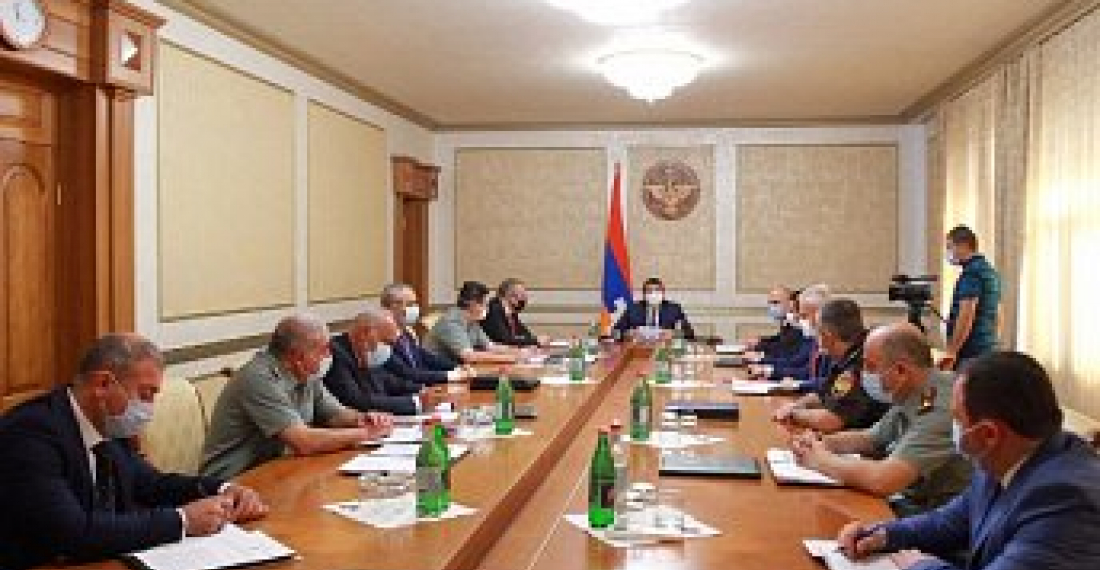
Де-факто президент Нагорного-Карабаха очерчивает красные линии для разрешения конфликта.

Де-факто президент самопровозглашенной Нагорно-Карабахской Республики (НКР) Араик Арутюнян обозначил свои красные линии для переговоров по урегулированию конфликта, которые продолжаются десятилетия. Выступая сегодня на первом заседании Совета безопасности самопровозглашенной Республики, он сказал, что готов к мирному решению, но это должно быть основано на семи принципах, которые он обозначил, а именно:

  • НКР должна в полной мере участвовать на всех этапах мирного и окончательного урегулирования;
  • Суверенитет, независимость, территориальная целостность и безопасность НКР ни при каких обстоятельствах не могут подвергаться угрозе или стать предметом торга;
  • без признания права народа НКР на самоопределение, предметные обсуждения между сторонами невозможны;
  • исключение попыток силового урегулирования конфликта или угрозы применения силы, поскольку армянский и азербайджанский народы достойны жить в мире. В противном случае НКР готова дать несоразмерный ответ в случае нападения со стороны Азербайджана и перенести военные действия на территорию Азербайджана;
  • исключены односторонние или непропорциональные уступки со стороны властей НКР;
  • права (армянских) беженцев и внутренне перемещенных лиц должны приниматься во внимание наравне с правами азербайджанских беженцев и внутренне перемещенных лиц;
  • международное сообщество (в первую очередь ОБСЕ и страны-сопредседатели) должно исключить нарушение и ограничение прав НКР из-за конфронтации и международного статуса республики, в том числе возможности ее участия в международных гуманитарных программах.

Армянские источники часто называют Нагорно-Карабахскую Республику Арцахом.

Нагорно-Карабахская Республика (Арцах) не признана ни одной страной, но существует де-факто с 1994 года при поддержке Армении. Араик Арутюнян является президентом де-факто республики с мая 2020 года. Азербайджан настаивает на том, что Нагорный Карабах является частью Азербайджана в соответствии с международным правом.

источник: commonspace.eu по материалам в СМИ Армении

Related articles

Editor's choice
News
Aden under curfew, as problem in Yemen's south deepens

Aden under curfew, as problem in Yemen's south deepens

The port city of Aden, in Yemen's south, has been put under curfew, as the rift in the country between  the Saudi led coalition which  backs Yemen's presidential governing council, and the southern forces led by the Southern Transitional Council (STC), deepens. Abdul Rahman al-Mahrami, a member of the Yemeni Presidential Governing Council and commander of the al-Amalik brigades, has ordered a curfew in the temporary capital, Aden, "to maintain security". "A curfew has been imposed throughout Aden Governorate from 9:00 p.m. to 6:00 a.m., in accordance with the instructions of Commander Abdul Rahman al-Mahrami, a member of the Presidential Management Council," the statement said. It states that only security and military personnel, as well as medical and technical teams with approved permits, will be allowed to move in the area during these hours. Yemen's presidential council, which is backed by Saudi Arabia and which already is in a struggle with the Houthi Movement in the north of the country who also occupy the capital Sanaa, two days ago issued an order for the arrest of the head of the Southern Transitional Council (STC),, Aidarous al Zubaidi. The STC have wide support among people in the South, and advocate that South Yemen restores its independence. The coalition warned of further escalation in Aden, long regarded as an STC stronghold, as the Presidential Leadership Council (PLC) chief accused STC leader Aidarous Al Zubaidi of “high treason” and announced the revocation of his membership in the governing body. The moves mark a sharp escalation in tensions within the anti-Houthi camp, despite National Shield Forces, rivals of the STC and former allies, having recently retaken control of Hadhramaut and Mahra from southern fighters. The STC’s takeover of the two regions last month angered Saudi Arabia and contributed to igniting the current internal conflict. (click the picture to read more)

Popular

Editor's choice
News
Aden under curfew, as problem in Yemen's south deepens

Aden under curfew, as problem in Yemen's south deepens

The port city of Aden, in Yemen's south, has been put under curfew, as the rift in the country between  the Saudi led coalition which  backs Yemen's presidential governing council, and the southern forces led by the Southern Transitional Council (STC), deepens. Abdul Rahman al-Mahrami, a member of the Yemeni Presidential Governing Council and commander of the al-Amalik brigades, has ordered a curfew in the temporary capital, Aden, "to maintain security". "A curfew has been imposed throughout Aden Governorate from 9:00 p.m. to 6:00 a.m., in accordance with the instructions of Commander Abdul Rahman al-Mahrami, a member of the Presidential Management Council," the statement said. It states that only security and military personnel, as well as medical and technical teams with approved permits, will be allowed to move in the area during these hours. Yemen's presidential council, which is backed by Saudi Arabia and which already is in a struggle with the Houthi Movement in the north of the country who also occupy the capital Sanaa, two days ago issued an order for the arrest of the head of the Southern Transitional Council (STC),, Aidarous al Zubaidi. The STC have wide support among people in the South, and advocate that South Yemen restores its independence. The coalition warned of further escalation in Aden, long regarded as an STC stronghold, as the Presidential Leadership Council (PLC) chief accused STC leader Aidarous Al Zubaidi of “high treason” and announced the revocation of his membership in the governing body. The moves mark a sharp escalation in tensions within the anti-Houthi camp, despite National Shield Forces, rivals of the STC and former allies, having recently retaken control of Hadhramaut and Mahra from southern fighters. The STC’s takeover of the two regions last month angered Saudi Arabia and contributed to igniting the current internal conflict. (click the picture to read more)


