


Азербайджан раскритиковал визит министра иностранных дел Армении на оккупированную территорию Азербайджана

Азербайджан осудил визит министра иностранных дел Армении Эдуарда Налбандяна на территории, которые, по его мнению, находятся под армянской оккупацией.

Пресс-секретарь МИД Азербайджана, Хикмет Гаджиев, сообщил азербайджанскому информационному агентству AПA, что визит Налбандяна в Кяльбаджарский район и его участие в религиозной церемонии там "является очередным примером на государственном уровне прикрыть истинную суть исторической и религиозной фальсификации", отметив, что первоначальное название этой албанского христианского храма, найденненного в Кяльбаджарском районе, не Гандзасар, а Гянджесар. По словам Гаджиева, эта церковь не имеет никакого отношения к армянской григорианской церкви и, что это доказано посредством весомых фактов, предъявленных азербайджанскими и международными историками-специалистами.

По словам Хикмета Гаджиева, присвоение Арменией принадлежащих историческому наследию азербайджанского народа исламских и христианских храмов на оккупированных территориях Азербайджана, изменение их архитектурного стиля и других особенностей является грубым нарушением международного гуманитарного права, в частности Женевских конвенций.

"Принятие участия в этом мероприятии министра иностранных дел Армении еще раз показывает, что Армения не заинтересована в урегулировании конфликта путем переговоров. Армения проводит политику, направленную на сохранение и укрепление основывающегося на оккупации статус-кво, целенаправленную оккупацию Нагорного Карабаха и аннексию прилегающих районов Азербайджана", - подчеркнул Х. Гаджиев.

Читайте также: Налбандян обсудил с руководством НКР мирный процесс

источник: commonspace.eu по материалам AПA

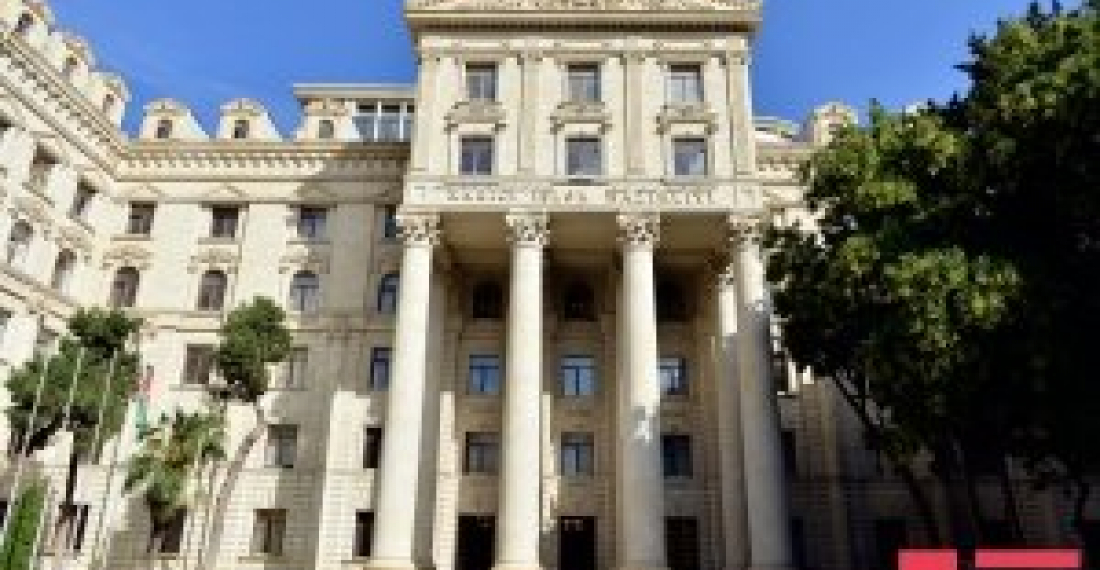
фото: Министерство иностранных дел Азербайджана (архив)
 

Related articles

Editor's choice
News
The British prime minister says Europe must "stand on its own two feet" when it comes to defence

The British prime minister says Europe must "stand on its own two feet" when it comes to defence

The UK will deploy a carrier strike group, led by the aircraft carrier HMS Prince of Wales to the Arctic and the High North as part of efforts to bolster security against Russian threats. British prime minister, Sir Keir Starmer announced the deployment in a speech on Saturday (14 February) at the Munich Security Conference. Europe must be ready to fight to protect its people, values, and way of life,  Sir Keir told the Conference. Starmer also called for deeper links and cooperation, including economic ties, between the UK and EU. The PM stressed the continent must "stand on its own two feet" when it comes to defence commitments. "We must build our hard power, because that is the currency of the age," he told the conference. (Click image to read the full story).

Popular

Editor's choice
Interview
Thursday Interview: Murad Muradov

Thursday Interview: Murad Muradov

Today, commonspace.eu starts a new regular weekly series. THURSDAY INTERVIEW, conducted by Lauri Nikulainen, will host  persons who are thinkers, opinion shapers, and implementors in their countries and spheres. We start the series with an interview with Murad Muradov, a leading person in Azerbaijan's think tank community. He is also the first co-chair of the Action Committee for a new Armenian-Azerbaijani Dialogue. Last September he made history by being the first Azerbaijani civil society activist to visit Armenia after the 44 day war, and the start of the peace process. Speaking about this visit Murad Muradov said: "My experience was largely positive. My negative expectations luckily didn’t play out. The discussions were respectful, the panel format bringing together experts from Armenia, Azerbaijan, and Turkey was particularly valuable during the NATO Rose-Roth Seminar in Yerevan, and media coverage, while varied in tone, remained largely constructive. Some media outlets though attempted to represent me as more of a government mouthpiece than an independent expert, which was totally misleading.  Overall, I see these initiatives as important steps in rebuilding trust and normalising professional engagement. The fact that soon a larger Azerbaijani civil society visits to Armenia followed, reinforces the sense that this process is moving in the right direction." (click the image to read the interview in full)


