


Комментарий: Политическое значение визита Папы Франциска в Грузию и Азербайджан

Политический редактор Commonspace.eu прокомментировал политическое значение визита Папы Франциска в Грузию и Азербайджан.

Кавказ, расположенный на перекрестке континентов, культур и цивилизаций, представляет собой сложный регион. Визит Папы Франциска затрагивает некоторые из многих этих вопросов.

Первой остановкой Папы станет Грузия, православная страна с долгой и выдающейся историей. Самой большой проблемой Грузии является ее отношения с большим соседом Россией. Россия таит в себе гегемонистские амбиции в отношении Грузии, наиболее ярко проявленные во время войны в 2008 года между двумя странами, и дальнейшего протектората со стороны России над Абхазией и Южной Осетией, которые хотят отделиться от Грузии. Отношения остаются напряженными, и между странами разорваны дипломатические отношения. Папа, скорее всего, сделает ссылку на десятки тысяч перемещенных грузин, жертв войн в Абхазии и Южной Осетии, в рамках более общей ссылки на кризис беженцев в Европе.

Франциск прибыл в Грузию за неделю до проведения в стране парламентских выборов. Немного озадачивает выбор дат поездки со стороны ватиканской дипломатии. Визит Папы Франциска не является политическим. Но в Грузии политика и религия часто пересекаются, а наличие элементов крайних православных священников и их последователей, которые сделали оскорбительные высказывания в адрес Папы повышает риск его запутывания в политических дебатах.

Но Грузия сегодня совсем другая страна нежели та, что была всего лишь десять лет назад. Наиболее целесообразным в этом визите то, что реформист Папа посещает страну, которая поглащена реформами и пытается реализовать их в рамках продолжающегося процесса в направлении европейской и евроатлантической интеграции. Визит Папы является еще одним подтверждением западной ориентации Грузии, а также готовности большинства в руководстве Грузинской Православной Церкви к диалогу.

Из Грузии Папа отправится в Азербайджан, в светское государство с мусульманским населением. Не так часто глава католической церкви посещает мусульман-шиитов. Азербайджан активно поддерживает диалог между культурами и цивилизациями, а также чувствителен к числу случаев исламофобии в Европе. Согласно информационному агентству Ватикана, Agenzia Fides, президент Азербайджана Ильхам Алиев, выступая накануне визита Папы осудил риск возрождения фашизма в самом сердце старого континента. Выступая на проходящем 5-м Международном гуманитарном форуме в Баку, президент Алиев сказал, что "некоторые политики и эксперты в мире строят негативный образ ислама, связывая его с террором и в то же время, забывая сказать, что терроризм затрагивает в основном исламские страны".

Азербайджан только что провел референдум по конституционным изменениям. Визит Папы состоится всего через несколько дней после референдума, что также вызывает некоторые опасения.

Учитывая сложную и специфическую ватиканскую дипломатию, нам остается думать, что решение посетить Грузию и Азербайджан в такой важный период для этих стран указывает на то, что Ватикан считает, что визит в эти страны является достаточно важным, чтобы оправдать риски. В июне Папа посещал Армению. Ватикан надеется, что папские визиты на Южный Кавказ подчеркнут важность региона и необходимость мира и диалога.

источник: Это комментарий был подготовленн политическим редактором commonspace.eu

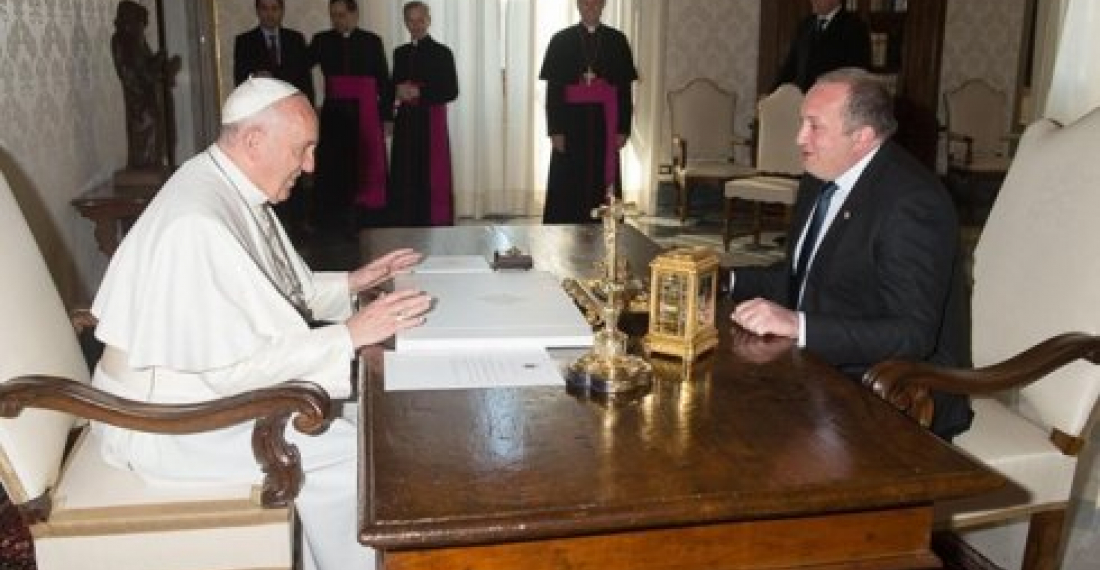
фото: Франциск и президент Грузии Георгий Маргвелашвили во время визита последнего в Ватикан в апреле 2016 года.


 

Related articles

Editor's choice
News
Germany accuses Russia of cyberattacks and disinformation campaign

Germany accuses Russia of cyberattacks and disinformation campaign

The German government holds Russia responsible for a cyberattack on German air traffic control, and for targeted disinformation campaigns before the last federal election. According to the German Foreign Office in Berlin, the incidents could be clearly attributed to the Russian military intelligence service, the GRU. In response, the Russian ambassador to Berlin was summoned to the Foreign Ministry. "We have been observing a massive increase in threatening hybrid activities by Russia for some time now," a spokesperson for the Foreign Ministry stated. These range from disinformation campaigns and espionage to cyberattacks and sabotage attempts. The aim is to divide society, sow distrust, and undermine confidence in democratic institutions. The spokesperson added that with these actions, Russia is "very concretely threatening our security, not only through its war of aggression against Ukraine, but also here in Germany."  The Foreign Ministry spokesperson explained that the cyberattack on air traffic control in August 2024 was clearly attributed to the hacker collective "APT28," known as "Fancy Bear," and to the responsibility of the Russian military intelligence service, the GRU. Furthermore, it could now be "conclusively stated" that Russia had attempted "to influence and destabilize both the last Federal election and the ongoing internal affairs of the Federal Republic of Germany." There was "absolutely irrefutable evidence" for this". The so-called "Storm 1516" campaign, which has been running since 2024, is allegedly backed by "reliable information" that the Moscow-based think tank "Center for Geopolitical Expertise" is behind it. The Center is also said to be supported by Russian military intelligence. Its primary aim is to influence democratic elections in the West. (Click the image to read more).
Editor's choice
News
NATO Chief says war is on Europe's doorstep, and warns against complacency

NATO Chief says war is on Europe's doorstep, and warns against complacency

Russia could attack a NATO country within the next five years, the Secretary General of NATO, Mark Rutte, said in a stark new warning. "NATO's own defences can hold for now," Rutte warned in Berlin, but conflict was "next door" to Europe, and he feared "too many are quietly complacent, and too many don't feel the urgency, too many believe that time is on our side. "Russia is already escalating its covert campaign against our societies," Rutte said in a speech in Germany. "We must be prepared for the scale of war our grandparents or great-grandparents endured." Earlier this month, Russia's President Vladimir Putin said his country was not planning to go to war with Europe, but it was ready "right now" if Europe wanted to - or started a war. But similar reassurances were given by Moscow in 2022, just before 200,000 Russian troops crossed the border and invaded Ukraine. Putin has accused European countries of hindering US efforts to bring peace in Ukraine - a reference to the role Ukraine's European allies have recently played in trying to change a US peace plan to end the war, whose initial draft was seen as favouring Russia. But Putin was not sincere, Nato's secretary-general said in the German capital, Berlin. Supporting Ukraine, he added, was a guarantee for European security. "Just imagine if Putin got his way; Ukraine under the boot of Russian occupation, his forces pressing against a longer border with Nato, and the significantly increased risk of an armed attack against us." Russia's economy has been on a war footing for more than three years now - its factories churn out ever more supplies of drones, missiles and artillery shells. According to a recent report by the Kiel Institute for the World Economy, Russia has been producing each month around 150 tanks, 550 infantry fighting vehicles, 120 Lancet drones and more than 50 artillery pieces. The UK, and most of its Western allies, are simply not anywhere near this point. Analysts say it would take years for Western Europe's factories to come close to matching Russia's mass-production of weapons. "Allied defence spending and production must rise rapidly, our armed forces must have what they need to keep us safe," the Nato chief said.

Popular

Editor's choice
News
Germany accuses Russia of cyberattacks and disinformation campaign

Germany accuses Russia of cyberattacks and disinformation campaign

The German government holds Russia responsible for a cyberattack on German air traffic control, and for targeted disinformation campaigns before the last federal election. According to the German Foreign Office in Berlin, the incidents could be clearly attributed to the Russian military intelligence service, the GRU. In response, the Russian ambassador to Berlin was summoned to the Foreign Ministry. "We have been observing a massive increase in threatening hybrid activities by Russia for some time now," a spokesperson for the Foreign Ministry stated. These range from disinformation campaigns and espionage to cyberattacks and sabotage attempts. The aim is to divide society, sow distrust, and undermine confidence in democratic institutions. The spokesperson added that with these actions, Russia is "very concretely threatening our security, not only through its war of aggression against Ukraine, but also here in Germany."  The Foreign Ministry spokesperson explained that the cyberattack on air traffic control in August 2024 was clearly attributed to the hacker collective "APT28," known as "Fancy Bear," and to the responsibility of the Russian military intelligence service, the GRU. Furthermore, it could now be "conclusively stated" that Russia had attempted "to influence and destabilize both the last Federal election and the ongoing internal affairs of the Federal Republic of Germany." There was "absolutely irrefutable evidence" for this". The so-called "Storm 1516" campaign, which has been running since 2024, is allegedly backed by "reliable information" that the Moscow-based think tank "Center for Geopolitical Expertise" is behind it. The Center is also said to be supported by Russian military intelligence. Its primary aim is to influence democratic elections in the West. (Click the image to read more).

