


Грузия и ЕС подпишут Соглашение об ассоциации 27 июня.

Грузия и Европейский Союз подпишут Соглашение об ассоциации 27 июня. Дата этой важной вехи в отношениях ЕС-Грузия была объявлена во время визита президента Европейского Совета Хермана Ван Ромпейя в Тбилиси.

Президент Ван Ромпей после коротких визитов в Украину и Молдову прибыл в столицу Грузии, где подтвердил решимость ЕС поддерживать те страны, которые желают близких отношений, несмотря на давление со стороны России.

Выступая в Тбилиси после переговоров с премьер-министром Грузии Ираклием Гарибашвили президент Европейского Совета заявил:

На повестке дня главный вопрос сегодня укрепление отношений между Грузией и Европейским Союзом. Мы обсудили подготовку к подписанию и реализацию Соглашения об ассоциации, включая Соглашение об углубленной и всеобъемлющей зоне свободной торговли. Мы подпишем соглашение в Брюсселе 27 июня вместе со всеми главами государств и правительств ЕС. Это важная веха ознаменует начало нового этапа в наших отношениях и в истории вашей страны.

Выбирая этот путь, Грузия заявляет о своей приверженности к сильным демократическим институтам, уважению прав своих граждан и верховенству закона. Я заверил Президента и премьер-министра о том, что, вступая на этот путь вместе, Европейский Союз будет твердо стоять на стороне Грузии. Грузия является свободной, демократической страной, которая должна сделать свой ​​собственный выбор. Никакое внешнее давление не помешает этому.

Ван Ромпей вновь заверил о поддержке ЕС независимости и территориальной целостности Грузии:

Мы также обсудили тревожную региональную ситуацию и последствия для безопасности Грузии. Я еще раз подтвердил поддержку Европейского Союза территориальной целостности Грузии в пределах ее международно признанных границ, и нашу приверженность к усилиям по урегулированию конфликтов в Грузии, в том числе посредствам сопредседательства ЕС в Женевских международных переговорах и через Миссию Наблюдателей ЕС в Грузии. ЕС по-прежнему очень обеспокоен теми препятствиями, которые возникли свободному перемещению граждан вдоль административных пограничных линий сепаратистских регионов Грузии. Это имеет прямое и негативное влияние на жизнь местного населения.

В Тбилиси, президент Европейского Совета также сослался на ситуацию в Украине:

Два дня назад я был в Киеве и встречался с премьер-министром Яценюком и президентом Турчиновым. В Киеве я еще раз подтвердил о приверженности Европейского Союза по единству, суверенитету, независимости и территориальной целостностьи Украины. После незаконной аннексии Крыма и Севастополя, Европейский Союз ввел санкции против ряда физических и юридических лиц. В случае дальнейшей дестабилизации, Европейский Союз поднимет цену, которую платит из-за этого Россия, если она предпримет дополнительные шаги по дестабилизации ситуации. Пока ближайшей целью является обеспечение свободных и справедливых президентских выборов 25 мая. Европейский Союз продолжит настаивать на и работать над переговорами, поскольку это единственный путь к стабильной, демократической, инклюзивной и современной Украине. И мы продолжим нашу поддержку политических, экономических и надежных реформ в Украине.

источник: commonspace.eu 

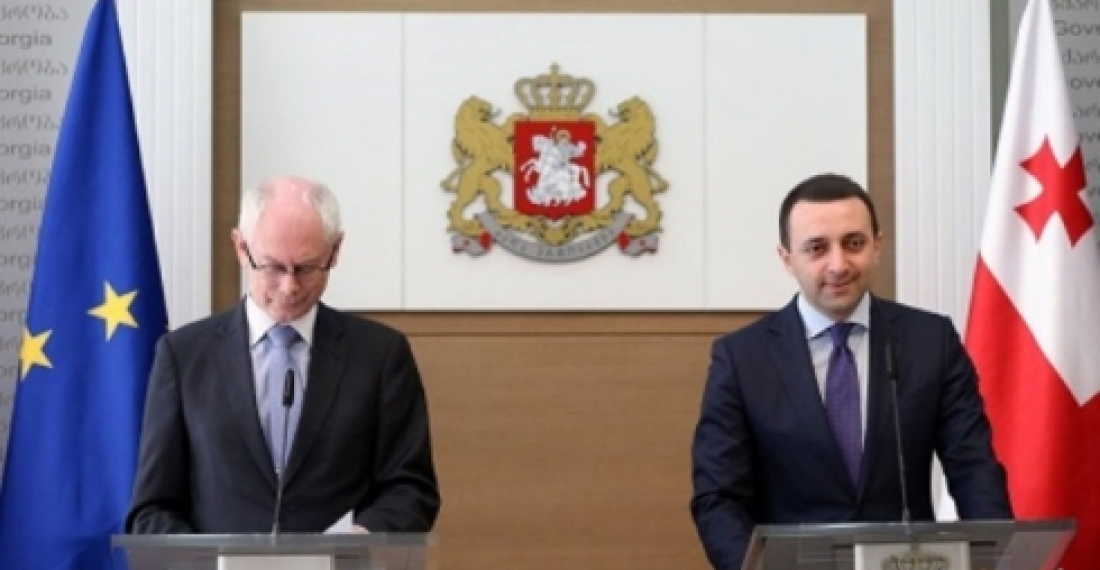
Фото: председатель Европейского Совета Херман Ван Ромпей с премьер-министром Грузии Ираклием Гарибашвили в Тбилиси, 14 мая 2014 года.


Related articles

Editor's choice
News
Germany accuses Russia of cyberattacks and disinformation campaign

Germany accuses Russia of cyberattacks and disinformation campaign

The German government holds Russia responsible for a cyberattack on German air traffic control, and for targeted disinformation campaigns before the last federal election. According to the German Foreign Office in Berlin, the incidents could be clearly attributed to the Russian military intelligence service, the GRU. In response, the Russian ambassador to Berlin was summoned to the Foreign Ministry. "We have been observing a massive increase in threatening hybrid activities by Russia for some time now," a spokesperson for the Foreign Ministry stated. These range from disinformation campaigns and espionage to cyberattacks and sabotage attempts. The aim is to divide society, sow distrust, and undermine confidence in democratic institutions. The spokesperson added that with these actions, Russia is "very concretely threatening our security, not only through its war of aggression against Ukraine, but also here in Germany."  The Foreign Ministry spokesperson explained that the cyberattack on air traffic control in August 2024 was clearly attributed to the hacker collective "APT28," known as "Fancy Bear," and to the responsibility of the Russian military intelligence service, the GRU. Furthermore, it could now be "conclusively stated" that Russia had attempted "to influence and destabilize both the last Federal election and the ongoing internal affairs of the Federal Republic of Germany." There was "absolutely irrefutable evidence" for this". The so-called "Storm 1516" campaign, which has been running since 2024, is allegedly backed by "reliable information" that the Moscow-based think tank "Center for Geopolitical Expertise" is behind it. The Center is also said to be supported by Russian military intelligence. Its primary aim is to influence democratic elections in the West. (Click the image to read more).
Editor's choice
News
NATO Chief says war is on Europe's doorstep, and warns against complacency

NATO Chief says war is on Europe's doorstep, and warns against complacency

Russia could attack a NATO country within the next five years, the Secretary General of NATO, Mark Rutte, said in a stark new warning. "NATO's own defences can hold for now," Rutte warned in Berlin, but conflict was "next door" to Europe, and he feared "too many are quietly complacent, and too many don't feel the urgency, too many believe that time is on our side. "Russia is already escalating its covert campaign against our societies," Rutte said in a speech in Germany. "We must be prepared for the scale of war our grandparents or great-grandparents endured." Earlier this month, Russia's President Vladimir Putin said his country was not planning to go to war with Europe, but it was ready "right now" if Europe wanted to - or started a war. But similar reassurances were given by Moscow in 2022, just before 200,000 Russian troops crossed the border and invaded Ukraine. Putin has accused European countries of hindering US efforts to bring peace in Ukraine - a reference to the role Ukraine's European allies have recently played in trying to change a US peace plan to end the war, whose initial draft was seen as favouring Russia. But Putin was not sincere, Nato's secretary-general said in the German capital, Berlin. Supporting Ukraine, he added, was a guarantee for European security. "Just imagine if Putin got his way; Ukraine under the boot of Russian occupation, his forces pressing against a longer border with Nato, and the significantly increased risk of an armed attack against us." Russia's economy has been on a war footing for more than three years now - its factories churn out ever more supplies of drones, missiles and artillery shells. According to a recent report by the Kiel Institute for the World Economy, Russia has been producing each month around 150 tanks, 550 infantry fighting vehicles, 120 Lancet drones and more than 50 artillery pieces. The UK, and most of its Western allies, are simply not anywhere near this point. Analysts say it would take years for Western Europe's factories to come close to matching Russia's mass-production of weapons. "Allied defence spending and production must rise rapidly, our armed forces must have what they need to keep us safe," the Nato chief said.

Popular

Editor's choice
News
Germany accuses Russia of cyberattacks and disinformation campaign

Germany accuses Russia of cyberattacks and disinformation campaign

The German government holds Russia responsible for a cyberattack on German air traffic control, and for targeted disinformation campaigns before the last federal election. According to the German Foreign Office in Berlin, the incidents could be clearly attributed to the Russian military intelligence service, the GRU. In response, the Russian ambassador to Berlin was summoned to the Foreign Ministry. "We have been observing a massive increase in threatening hybrid activities by Russia for some time now," a spokesperson for the Foreign Ministry stated. These range from disinformation campaigns and espionage to cyberattacks and sabotage attempts. The aim is to divide society, sow distrust, and undermine confidence in democratic institutions. The spokesperson added that with these actions, Russia is "very concretely threatening our security, not only through its war of aggression against Ukraine, but also here in Germany."  The Foreign Ministry spokesperson explained that the cyberattack on air traffic control in August 2024 was clearly attributed to the hacker collective "APT28," known as "Fancy Bear," and to the responsibility of the Russian military intelligence service, the GRU. Furthermore, it could now be "conclusively stated" that Russia had attempted "to influence and destabilize both the last Federal election and the ongoing internal affairs of the Federal Republic of Germany." There was "absolutely irrefutable evidence" for this". The so-called "Storm 1516" campaign, which has been running since 2024, is allegedly backed by "reliable information" that the Moscow-based think tank "Center for Geopolitical Expertise" is behind it. The Center is also said to be supported by Russian military intelligence. Its primary aim is to influence democratic elections in the West. (Click the image to read more).

