


Город призраков.

Вряд ли есть еще такое же место, которое вызывает столько же эмоций и разногласий, когда говорят о нагорно-карабахском конфликте и его последствиях, чем город Шуша, или Шуши, как его называют на армянском языке.

В то время как большинство населения в Нагорном Карабахе в конце 1980-х, в основном, были армяне, в Шуше в подавляющем большинстве проживали азербайджанцы. Когда начался конфликт Шуша, с его расположением на высотах над главным армянским городом Степанакерт стал центром очень тяжелых боевых действий. В конце концов Шуша пал под натиском армянских сил, и всё его азербайджанское население было вынуждено покинуть это место. Большая часть города оказалась в руинах. Во многом это место стало городом-призраком, но со временем благодаря прибывшим из других мест армянское население возросло в численности.

Для перемещенных азербайджанцев Шуша остается домом, в который они мечтают вернуться, старшее поколение часто вспоминает о былых днях с ностальгией. Для тех, кто живет в Шуше сегодня, он является домом, и они предпочитают называть его Шуши. Они стараются изо всех сил оставить прошлое позади и смотреть вперед, развивая нормальную жизнь в своем обществе.

На этой неделе они принимали международных гостей. Среди них был мэр города Бур-ле-Валанс, Франция, Марлен Мурье, который посетил город в рамках фестиваля "Дней Франции в Арцахе". Шуши и Бур-ле-Валанс в октябре прошлого года подписали декларацию о дружбе, цель которой заключается в содействии образовательным, культурным, спортивным и торговым проектам. Как заявил мэр, муниципалитет Бур-ле-Валанс в ближайшее время организует мероприятия, посвященные Карабаху.

Все это, конечно, расстраивает правительство Азербайджана, которое раскритиковало соглашение и теперь включила мэра в свой черный список из-за посещения Нагорного Карабаха. Но по словам мадам Мурье, её это не беспокоит. В субботу, мэр, вместе с другими VIP гостями из Франции, сопровождала президента самопровозглашенной Нагорно-Карабахской Республики (НКР), Бако Саакяна, на торжественной церемонии по случаю открытия профессиональной школы в городе. В своем выступлении г-н Саакян подчеркнул, что такие учреждения необходимы и помогут подготовить квалифицированных специалистов, используя европейский опыт в этой сфере.

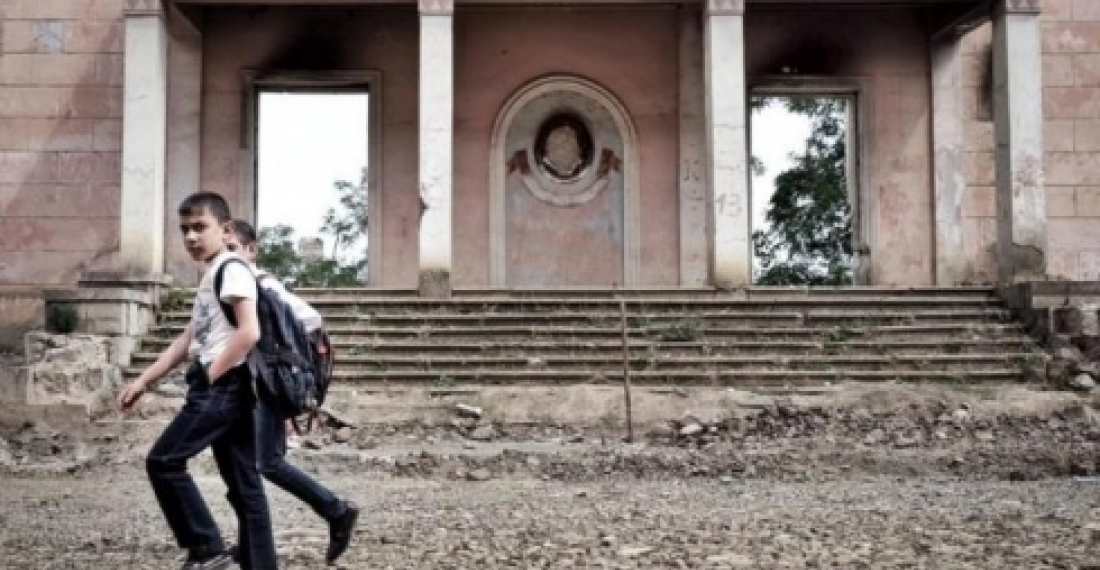
Согласно последней переписи населения, проведенной властями НКР, нынешнее население Шуши составляет 4,100 человек, хотя эта цифра может быть немного завышена. Но в дали от города тысячи азербайджанцев еще называют Шушу домом. Часто они задаются вопросом, вернутся ли они когда-нибудь. В каком-то смысле их призраки все еще обитают в Шуше. Большая часть города пустует и находится в разрушенном состоянии. Итальянский фото журналист Роберто Траван в своем фото-эссе для итальянской газеты "La Stampa" недавно заснял все эти разрушения и опустошенность.

Если нагорно-карабахский конфликт когда-нибудь будет урегулирован, то Шуша будет одним из самых сложных вопросов для разрешения. Его стратегическое положение по-прежнему будет очень чувствительным вопросом для обеих сторон.

Судьба Шуши, как и остальной части карабахского конфликта, не может быть основано только на политической целесообразности. Внимание должно быть уделено благосостоянию людей, оказавшихся жертвами этой трагедии, и решению, которое будет гарантировать, что прошлое больше не повторится.

Источник: Это комментарий был подготовлен редакцией commonspace.eu по материалам "La Stampa" (Италия), News.am

Фото: Театр в Шуше был разрушен во время боевых действий в начале 1990-х. По сей день он остается в руинах. Двое армянских детей проходят здание по дороге в школу. (Фото предоставлено Роберто Траван / La Stampa).


 

Related articles

Editor's choice
News
Germany accuses Russia of cyberattacks and disinformation campaign

Germany accuses Russia of cyberattacks and disinformation campaign

The German government holds Russia responsible for a cyberattack on German air traffic control, and for targeted disinformation campaigns before the last federal election. According to the German Foreign Office in Berlin, the incidents could be clearly attributed to the Russian military intelligence service, the GRU. In response, the Russian ambassador to Berlin was summoned to the Foreign Ministry. "We have been observing a massive increase in threatening hybrid activities by Russia for some time now," a spokesperson for the Foreign Ministry stated. These range from disinformation campaigns and espionage to cyberattacks and sabotage attempts. The aim is to divide society, sow distrust, and undermine confidence in democratic institutions. The spokesperson added that with these actions, Russia is "very concretely threatening our security, not only through its war of aggression against Ukraine, but also here in Germany."  The Foreign Ministry spokesperson explained that the cyberattack on air traffic control in August 2024 was clearly attributed to the hacker collective "APT28," known as "Fancy Bear," and to the responsibility of the Russian military intelligence service, the GRU. Furthermore, it could now be "conclusively stated" that Russia had attempted "to influence and destabilize both the last Federal election and the ongoing internal affairs of the Federal Republic of Germany." There was "absolutely irrefutable evidence" for this". The so-called "Storm 1516" campaign, which has been running since 2024, is allegedly backed by "reliable information" that the Moscow-based think tank "Center for Geopolitical Expertise" is behind it. The Center is also said to be supported by Russian military intelligence. Its primary aim is to influence democratic elections in the West. (Click the image to read more).
Editor's choice
News
NATO Chief says war is on Europe's doorstep, and warns against complacency

NATO Chief says war is on Europe's doorstep, and warns against complacency

Russia could attack a NATO country within the next five years, the Secretary General of NATO, Mark Rutte, said in a stark new warning. "NATO's own defences can hold for now," Rutte warned in Berlin, but conflict was "next door" to Europe, and he feared "too many are quietly complacent, and too many don't feel the urgency, too many believe that time is on our side. "Russia is already escalating its covert campaign against our societies," Rutte said in a speech in Germany. "We must be prepared for the scale of war our grandparents or great-grandparents endured." Earlier this month, Russia's President Vladimir Putin said his country was not planning to go to war with Europe, but it was ready "right now" if Europe wanted to - or started a war. But similar reassurances were given by Moscow in 2022, just before 200,000 Russian troops crossed the border and invaded Ukraine. Putin has accused European countries of hindering US efforts to bring peace in Ukraine - a reference to the role Ukraine's European allies have recently played in trying to change a US peace plan to end the war, whose initial draft was seen as favouring Russia. But Putin was not sincere, Nato's secretary-general said in the German capital, Berlin. Supporting Ukraine, he added, was a guarantee for European security. "Just imagine if Putin got his way; Ukraine under the boot of Russian occupation, his forces pressing against a longer border with Nato, and the significantly increased risk of an armed attack against us." Russia's economy has been on a war footing for more than three years now - its factories churn out ever more supplies of drones, missiles and artillery shells. According to a recent report by the Kiel Institute for the World Economy, Russia has been producing each month around 150 tanks, 550 infantry fighting vehicles, 120 Lancet drones and more than 50 artillery pieces. The UK, and most of its Western allies, are simply not anywhere near this point. Analysts say it would take years for Western Europe's factories to come close to matching Russia's mass-production of weapons. "Allied defence spending and production must rise rapidly, our armed forces must have what they need to keep us safe," the Nato chief said.

Popular

Editor's choice
News
Germany accuses Russia of cyberattacks and disinformation campaign

Germany accuses Russia of cyberattacks and disinformation campaign

The German government holds Russia responsible for a cyberattack on German air traffic control, and for targeted disinformation campaigns before the last federal election. According to the German Foreign Office in Berlin, the incidents could be clearly attributed to the Russian military intelligence service, the GRU. In response, the Russian ambassador to Berlin was summoned to the Foreign Ministry. "We have been observing a massive increase in threatening hybrid activities by Russia for some time now," a spokesperson for the Foreign Ministry stated. These range from disinformation campaigns and espionage to cyberattacks and sabotage attempts. The aim is to divide society, sow distrust, and undermine confidence in democratic institutions. The spokesperson added that with these actions, Russia is "very concretely threatening our security, not only through its war of aggression against Ukraine, but also here in Germany."  The Foreign Ministry spokesperson explained that the cyberattack on air traffic control in August 2024 was clearly attributed to the hacker collective "APT28," known as "Fancy Bear," and to the responsibility of the Russian military intelligence service, the GRU. Furthermore, it could now be "conclusively stated" that Russia had attempted "to influence and destabilize both the last Federal election and the ongoing internal affairs of the Federal Republic of Germany." There was "absolutely irrefutable evidence" for this". The so-called "Storm 1516" campaign, which has been running since 2024, is allegedly backed by "reliable information" that the Moscow-based think tank "Center for Geopolitical Expertise" is behind it. The Center is also said to be supported by Russian military intelligence. Its primary aim is to influence democratic elections in the West. (Click the image to read more).

