


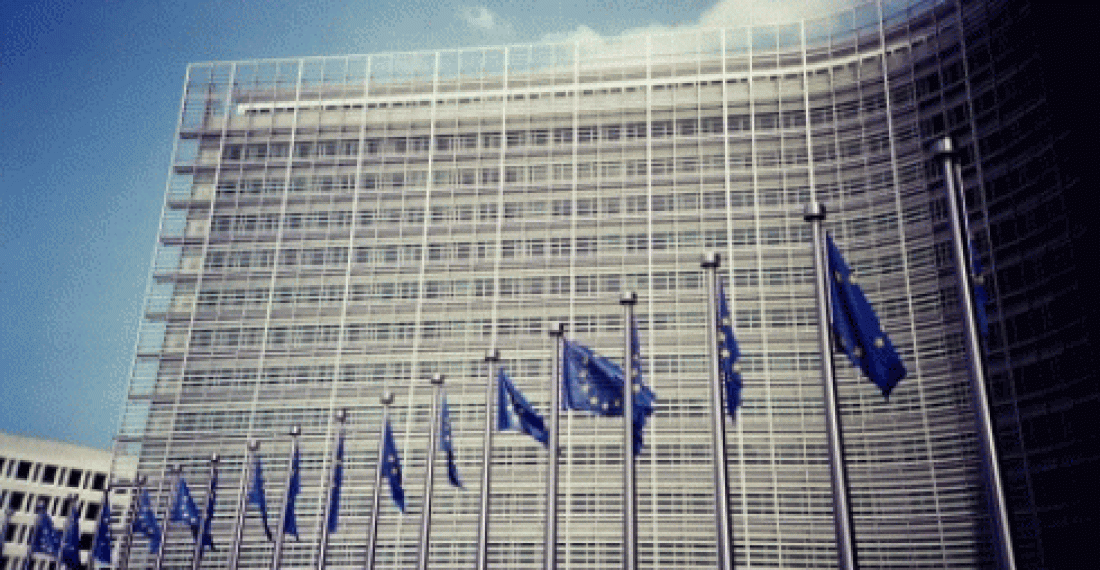
Европейская политика соседства с меньшим энтузиазмом оценила прогресс Армении в 2011 году

Европейская комиссия и Европейская служба внешних действий (EAS) оценивает прогресс в 12 странах-партнерах, включая Армению, с меньшим энтузиазмом. Об этом говорится в принятом 15 мая ежегодном пакете Европейской политики соседства, в котором оценивается прогресс, достигнутый в 2011 этими странами. В докладе рассматривается успехи реализации нового подхода Европейской политики соседства "больше взамен большего",  который был принят в прошлом году.

Как пишет издание Europolitics, в пакете содержатся рекомендации по дальнейшим действиям. В докладе, разработанном совместно Высоким представителем ЕС Кэтрин Эштон и комиссаром по расширению Штефаном Фюле, отмечается, что ЕС с "решимостью реагирует в быстро меняющейся ситуации в соседних странах". "Мы обсудим нашу работу с нашими непосредственными соседями, и я уверена, что мы продвинемся в правильном направлении", - заявила Эштон.

В докладе сообщается, что оценка Комиссии о прогрессе в 12 странах - Армении, Азербайджане, Беларуси, Египте, Грузии, Иордании, Ливане, Молдове, Марокко, Сирии, Тунисе, Украине, Алжире, Израиле, Ливии и на оккупированной палестинской территории - содержит мало энтузиазма.

Есть ряд вопросов, по которым страны-партнеры должны активизировать свои усилия с тем, чтобы провести реформы и разработать некоторые аспекты, где ЕС может оперативно посодействовать. В нем добавляется, что "невзирая на то, что прогресс не был универсальным. В прошлом году, многие партнеры предприняли решительные шаги, чтобы ускорить демократизацию и осуществление реформ. "В регионе были более или менее свободные и справедливые выборы и улучшены механизмы по защите основных свобод и прав человека", - отмечается в документе.

В двенадцати докладах были оценена ситуация по шести основным направлениям: политический диалог и реформы, экономические и социальные реформы, вопросы торговли, рыночные и регулирующие реформы, сотрудничество по вопросам правосудия, свободы и

безопасности, транспорта, энергетики, окружающей среды, информационного общества, научных исследований и развития, а также контакты между народами, образование и здравоохранение.

Отметим, что Европейская комиссия 25 мая 2011 года представила свой новый подход, который, как и прежний, ставит перед собой задачу укрепить двустороннее и региональное партнерство между ЕС и соседними государствами, но на этот раз исходя из принципа "больше финансовой помощи за проведение как можно больше реформ". Новый подход требует большего уровня дифференциации, который дает возможность каждому государству развивать свои отношения с ЕС настолько, насколько позволяют ему его чаяния, потребности и возможности.


 

Related articles

Editor's choice
News
Nikol Pashinyan re-appointed as Armenian prime minister after decisive June election victory

Nikol Pashinyan re-appointed as Armenian prime minister after decisive June election victory

Armenia president, Vahagn Khachaturyan has re-appointed Nikol Pashinyan as Armenian prime minister, after the decisive victory of his Civil Contract party in parliamentary elections in June. During a ceremony at the Presidential Palace in Yerevan, President Khachaturyan signed a decree on the appointment of Nikol Pashinyan as Prime Minister of the Republic. President Vahagn Khachaturyan said in short remarks: It is a great honor for me to sign a decree on appointing you to the post of Prime Minister of the Republic of Armenia, for which I received a proposal from the political majority in the National Assembly, under Article 149 of the Constitution of the Republic of Armenia. I sincerely congratulate you, I wish you great patience, endurance, and determination to lead us in these difficult times, to lead the country to the future, a prosperous future. Nikol Pashinyan thanked the president and added,  I must say honestly that in 2018, when I assumed the post of Prime Minister of the Republic of Armenia as a result of the People's, non-violent, velvet revolution, it would have been difficult to predict that we would go down such a path and I think it would have been difficult to predict that we would be able to overcome this path. But we are where we are, and I think that the key role and significance in all this is unequivocally and undoubtedly the people of the Republic of Armenia, who, after all, have demonstrated special expressions of state consciousness and state-centeredness throughout this period. And of course, this is a great obligation and commitment. Of course, the Government will be formed in the near future and all members of the Government, including me, will already enshrine our obligations to our people in the text of the oath.  In the meantime Ruben Rubinyan has been elected Speaker of the National Assembly of Armenia, following a secret vote of MPs. He is a 36-year-old MP from the ruling Civil Contract party, who was one of the deputy speakers in the previous parliament and, until recently, was the special representative in the negotiations on the normalization of relations with Turkey.

Popular

Editor's choice
Interview
Thursday Interview: Murad Muradov

Thursday Interview: Murad Muradov

Today, commonspace.eu starts a new regular weekly series. THURSDAY INTERVIEW, conducted by Lauri Nikulainen, will host  persons who are thinkers, opinion shapers, and implementors in their countries and spheres. We start the series with an interview with Murad Muradov, a leading person in Azerbaijan's think tank community. He is also the first co-chair of the Action Committee for a new Armenian-Azerbaijani Dialogue. Last September he made history by being the first Azerbaijani civil society activist to visit Armenia after the 44 day war, and the start of the peace process. Speaking about this visit Murad Muradov said: "My experience was largely positive. My negative expectations luckily didn’t play out. The discussions were respectful, the panel format bringing together experts from Armenia, Azerbaijan, and Turkey was particularly valuable during the NATO Rose-Roth Seminar in Yerevan, and media coverage, while varied in tone, remained largely constructive. Some media outlets though attempted to represent me as more of a government mouthpiece than an independent expert, which was totally misleading.  Overall, I see these initiatives as important steps in rebuilding trust and normalising professional engagement. The fact that soon a larger Azerbaijani civil society visits to Armenia followed, reinforces the sense that this process is moving in the right direction." (click the image to read the interview in full)

