


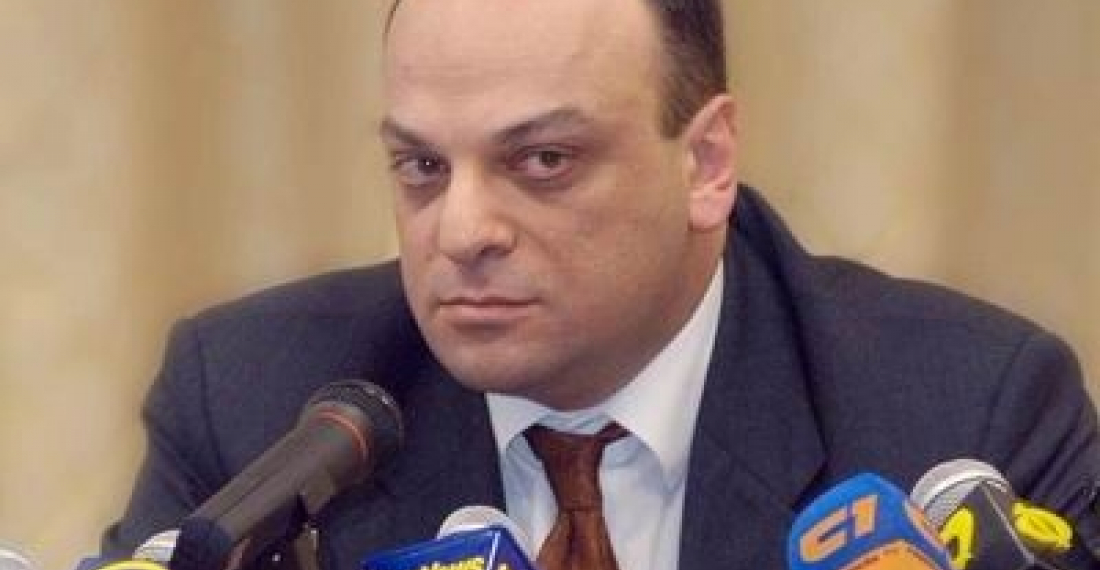
Экс-министр ИД НКР:

Россия в настоящее время серьезно думает над идеей разрешения карабахского конфликта в интересах Азербайджана, с тем, чтобы восстановить свои утраченные позиции в этой стране, но данный сценарий опасен для Москвы тем, что она рискует навсегда потерять Армению. Такое мнение сегодня на пресс- конференции выразил экс-министр иностранных дел Нагорно-Карабахской Республики Арман Меликян. По его словам, Россия сегодня сталкивается с угрозой потери своих позиций в странах, традиционно считавшихся зоной ее привилегированных интересов, в том числе и в ряде арабских стран - Ливии, Сирии.

Меликян считает, что стратегические интересы Москвы на всем Евразийском пространстве поставлены под угрозой, с учетом относительной напряженности в отношениях Москвы и Запада в целом. И последние думские выборы и последующие за ними критические высказывания со стороны европейских и американских лидеров в адрес Москвы свидетельствуют о том, что Запад не намерен признавать в лице России своего равноправного партнера. "С учетом этих реалий, Москва ставит перед собой задачу "самоутверждения" на всех возможных направлениях, в том числе и на Южном Кавказе.  Ее посредническая активность в карабахском урегулировании - наглядное тому подтверждение. Судя по высказываниям отдельных российских экспертов и политиков, которые вовсе не исключают присоединения Азербайджана к будущему Евразийскому союзу, при этом, видя Нагорный Карабах в составе Азербайджана, становится ясным, что Москва хочет добиться от армянской стороны сдачи ряда территорий Азербайджану. Но в данном случае русские навсегда потеряют своего единственного союзника на Южном Кавказе", - отметил Меликян. В то же время он подчеркнул, что Азербайджан пока на эту сделку не соглашается. "Однако если же в какой-то момент русским удастся убедить Баку, то получив территории, Азербайджан непременно "кинет" русских. Следовательно, Москва должна проявить максимально взвешенный и здравый подход в своей политике на Южном Кавказе", - резюмировал он


 

Related articles

Editor's choice
News
The British prime minister says Europe must "stand on its own two feet" when it comes to defence

The British prime minister says Europe must "stand on its own two feet" when it comes to defence

The UK will deploy a carrier strike group, led by the aircraft carrier HMS Prince of Wales to the Arctic and the High North as part of efforts to bolster security against Russian threats. British prime minister, Sir Keir Starmer announced the deployment in a speech on Saturday (14 February) at the Munich Security Conference. Europe must be ready to fight to protect its people, values, and way of life,  Sir Keir told the Conference. Starmer also called for deeper links and cooperation, including economic ties, between the UK and EU. The PM stressed the continent must "stand on its own two feet" when it comes to defence commitments. "We must build our hard power, because that is the currency of the age," he told the conference. (Click image to read the full story).

Popular

Editor's choice
Interview
Thursday Interview: Murad Muradov

Thursday Interview: Murad Muradov

Today, commonspace.eu starts a new regular weekly series. THURSDAY INTERVIEW, conducted by Lauri Nikulainen, will host  persons who are thinkers, opinion shapers, and implementors in their countries and spheres. We start the series with an interview with Murad Muradov, a leading person in Azerbaijan's think tank community. He is also the first co-chair of the Action Committee for a new Armenian-Azerbaijani Dialogue. Last September he made history by being the first Azerbaijani civil society activist to visit Armenia after the 44 day war, and the start of the peace process. Speaking about this visit Murad Muradov said: "My experience was largely positive. My negative expectations luckily didn’t play out. The discussions were respectful, the panel format bringing together experts from Armenia, Azerbaijan, and Turkey was particularly valuable during the NATO Rose-Roth Seminar in Yerevan, and media coverage, while varied in tone, remained largely constructive. Some media outlets though attempted to represent me as more of a government mouthpiece than an independent expert, which was totally misleading.  Overall, I see these initiatives as important steps in rebuilding trust and normalising professional engagement. The fact that soon a larger Azerbaijani civil society visits to Armenia followed, reinforces the sense that this process is moving in the right direction." (click the image to read the interview in full)

