


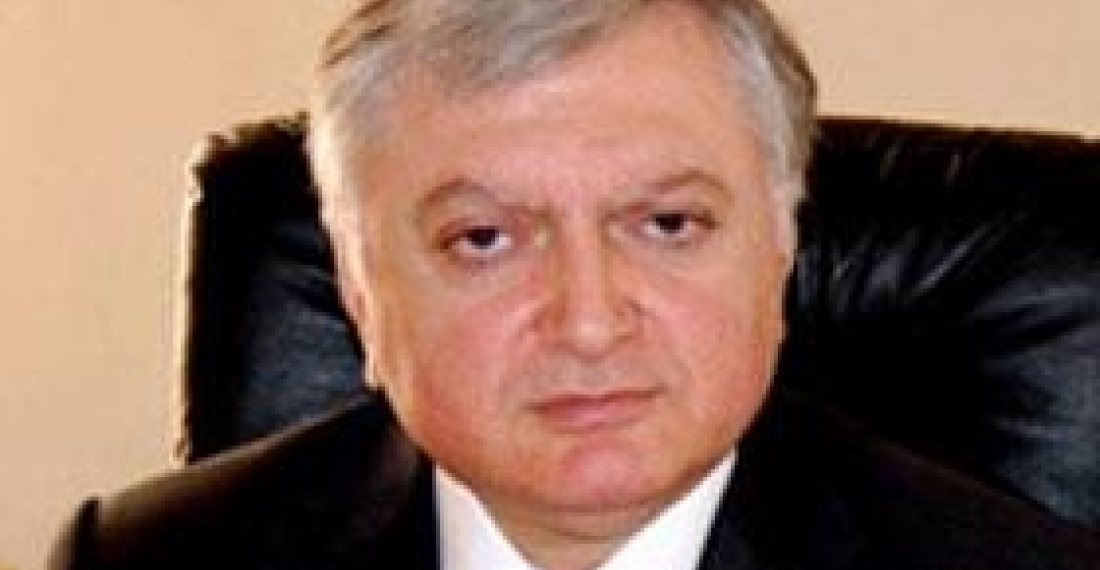
Эдвард Налбандян:

«Мы считаем, что пора договариваться. Но нужно, чтобы и Азербайджан так считал, и не только на словах, а на деле», - заявил министр иностранных дел Армении Эдвард Налбандян в интервью "Интерфакс".

По его словам, азербайджанцы после визита Лаврова в регион неоднократно заявляли, в последний раз это было сделано позавчера в Баку. «Что они говорят? Нам принципы не нужны, давайте переходить к выработке текста основного соглашения. А что это значит? Просто-напросто азербайджанцы не готовы принять предложения сопредседателей и на этой основе идти на урегулирование. Тут велосипеда не придумаешь. Принципы, которые были выработаны, это плод очень долгих лет совместных усилий. Они отшлифовывались в течение многих встреч на уровне и президентов, и министров. Когда ты приходишь с десятью изменениями уже к практически согласованному тексту, то это, я бы сказал, не просто неуважение к другим сторонам конфликта, но и к посредникам, сопредседателям Минской группы», - отметил Налбандян.

Говоря о том, как Ереван отреагировал на послание Медведева, которое привез Лавров, глава внешнеполитического ведомства Армении отметил: «Мы говорили и говорим, что готовы принять предложения, представленные в Казани, и идти вперед на этой основе, если Азербайджан снимет свои десять новых возражений, которые, практически, возвращают к формулировкам трех-четырехлетней давности. Ты не можешь участвовать на десятках встреч на уровне президентов, министров иностранных дел, а потом сказать, вы знаете, вообще-то все то, что мы делали - это коту под хвост и нужно вернуться к каким-то старым формулировкам. Мы тоже можем вернуться к старым формулировкам, и даже к некоторым более старым. Я не думаю, что это серьезный подход. Есть известный принцип, один из самых основных принципов международных отношений - pacta sund servanta. Если ты договариваешься о чем-то, то нужно уважать эти договоренности. Когда один раз происходит, думаешь, ладно, может, ошиблись люди, не просчитали чего-то, потом второй раз, третий, четвертый, пятый… Теряется доверие, и не только со стороны Армении и Карабаха, но и со стороны посредников, международного сообщества».


 

Related articles

Editor's choice
News
The British prime minister says Europe must "stand on its own two feet" when it comes to defence

The British prime minister says Europe must "stand on its own two feet" when it comes to defence

The UK will deploy a carrier strike group, led by the aircraft carrier HMS Prince of Wales to the Arctic and the High North as part of efforts to bolster security against Russian threats. British prime minister, Sir Keir Starmer announced the deployment in a speech on Saturday (14 February) at the Munich Security Conference. Europe must be ready to fight to protect its people, values, and way of life,  Sir Keir told the Conference. Starmer also called for deeper links and cooperation, including economic ties, between the UK and EU. The PM stressed the continent must "stand on its own two feet" when it comes to defence commitments. "We must build our hard power, because that is the currency of the age," he told the conference. (Click image to read the full story).

Popular

Editor's choice
Interview
Thursday Interview: Murad Muradov

Thursday Interview: Murad Muradov

Today, commonspace.eu starts a new regular weekly series. THURSDAY INTERVIEW, conducted by Lauri Nikulainen, will host  persons who are thinkers, opinion shapers, and implementors in their countries and spheres. We start the series with an interview with Murad Muradov, a leading person in Azerbaijan's think tank community. He is also the first co-chair of the Action Committee for a new Armenian-Azerbaijani Dialogue. Last September he made history by being the first Azerbaijani civil society activist to visit Armenia after the 44 day war, and the start of the peace process. Speaking about this visit Murad Muradov said: "My experience was largely positive. My negative expectations luckily didn’t play out. The discussions were respectful, the panel format bringing together experts from Armenia, Azerbaijan, and Turkey was particularly valuable during the NATO Rose-Roth Seminar in Yerevan, and media coverage, while varied in tone, remained largely constructive. Some media outlets though attempted to represent me as more of a government mouthpiece than an independent expert, which was totally misleading.  Overall, I see these initiatives as important steps in rebuilding trust and normalising professional engagement. The fact that soon a larger Azerbaijani civil society visits to Armenia followed, reinforces the sense that this process is moving in the right direction." (click the image to read the interview in full)

