


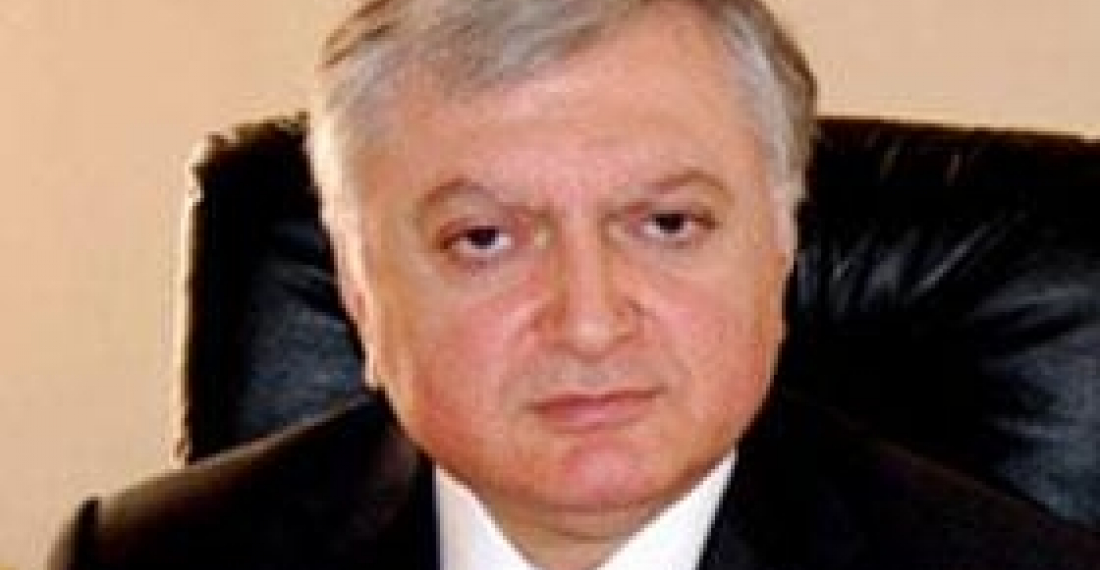
Эдвард Налбандян:

В отличие от Азербайджана, где очень много звучит критики в адрес посредников-сопредседателей Минской группы ОБСЕ, мы никогда впустую их не критикуем, потому что, если призвали посредничать трех постоянных членов Совета безопасности ООН, то должны ценить усилия, которые они прилагают в поисках путей мирного урегулирования нагорно-карабахского конфликта. Об этом заявил министр иностранных дел Армении Эдвард Налбандян в интервью "Интерфакс".

«По-моему, не в посредниках дело. Дело в том, как сами стороны относятся к предложениям, которые представляют им посредники для урегулирования. Что мы имеем сегодня? Звучащие из Азербайджана идеи о том, что, не договорившись по принципам можно переходить к выработке основного соглашения, не соответствуют ни логике переговорного процесса, ни позиции сопредседателей, которую они неоднократно озвучивали. Если мы не можем договориться даже по принципам, то на какой основе можно готовить текст основного соглашения? Создается впечатление, что азербайджанцы просто не хотят достичь соглашения на той основе, которая предлагается странами-сопредседателями Минской группы ОБСЕ», - отметил глава МИД.

Он поблагодарил за усилия, которые прилагает Российская Федерация, совместно с другими сопредседателями Минской группы ОБСЕ - Соединенными Штатами и Францией. «Мы особенно признательны за усилия, которые прилагал и прилагает президент Медведев. Вы знаете, и казанская встреча, а до этого сочинская, и астраханская, а перед Сочи был Санкт-Петербург… По инициативе и при участии российского президента было организовано много саммитов. А перед каждой из них были подготовительные встречи, проведенные на уровне министров иностранных дел. И здесь очень большую работу провел министр иностранных дел России Сергей Викторович Лавров», - отметил Налбандян. Он констатировал, что Казань не стала прорывной встречей.

«Хотя, были надежды, был определенный оптимизм, потому что, собственно говоря, до встречи мы пришли к определенным договоренностям. Но, к сожалению, Азербайджан в последний момент сделал шаг назад. Азербайджанцы выдвинули десять изменений по тексту, который был ранее, практически, согласован. И это было не впервой, это было повторение сценария, который происходил и на предыдущих встречах», - отметил Налбандян. Он отметил: «Говорить, что после Казани ничего не происходит, я бы все-таки не стал. В Ереване сегодня находятся сопредседатели, затем они поедут в Карабах, потом в Азербайджан. С сопредседателями президенты Армении и Азербайджана провели отдельные встречи в конце сентября в Варшаве на полях саммита Восточного партнерства. До этого я встречался с сопредседателями в Нью-Йорке, с ними встретился и глава МИД Азербайджана. Процесс продолжается. Переговорному процессу нет альтернативы. После Казани президент Дмитрий Медведев передал президентам Армении и Азербайджана новые предложения. Ереван и Баку на них ответили. Но в принципе до сих пор неясно, какими были эти ответы».  

 

Related articles

Editor's choice
News
Nikol Pashinyan re-appointed as Armenian prime minister after decisive June election victory

Nikol Pashinyan re-appointed as Armenian prime minister after decisive June election victory

Armenia president, Vahagn Khachaturyan has re-appointed Nikol Pashinyan as Armenian prime minister, after the decisive victory of his Civil Contract party in parliamentary elections in June. During a ceremony at the Presidential Palace in Yerevan, President Khachaturyan signed a decree on the appointment of Nikol Pashinyan as Prime Minister of the Republic. President Vahagn Khachaturyan said in short remarks: It is a great honor for me to sign a decree on appointing you to the post of Prime Minister of the Republic of Armenia, for which I received a proposal from the political majority in the National Assembly, under Article 149 of the Constitution of the Republic of Armenia. I sincerely congratulate you, I wish you great patience, endurance, and determination to lead us in these difficult times, to lead the country to the future, a prosperous future. Nikol Pashinyan thanked the president and added,  I must say honestly that in 2018, when I assumed the post of Prime Minister of the Republic of Armenia as a result of the People's, non-violent, velvet revolution, it would have been difficult to predict that we would go down such a path and I think it would have been difficult to predict that we would be able to overcome this path. But we are where we are, and I think that the key role and significance in all this is unequivocally and undoubtedly the people of the Republic of Armenia, who, after all, have demonstrated special expressions of state consciousness and state-centeredness throughout this period. And of course, this is a great obligation and commitment. Of course, the Government will be formed in the near future and all members of the Government, including me, will already enshrine our obligations to our people in the text of the oath.  In the meantime Ruben Rubinyan has been elected Speaker of the National Assembly of Armenia, following a secret vote of MPs. He is a 36-year-old MP from the ruling Civil Contract party, who was one of the deputy speakers in the previous parliament and, until recently, was the special representative in the negotiations on the normalization of relations with Turkey.

Popular

Editor's choice
Interview
Thursday Interview: Murad Muradov

Thursday Interview: Murad Muradov

Today, commonspace.eu starts a new regular weekly series. THURSDAY INTERVIEW, conducted by Lauri Nikulainen, will host  persons who are thinkers, opinion shapers, and implementors in their countries and spheres. We start the series with an interview with Murad Muradov, a leading person in Azerbaijan's think tank community. He is also the first co-chair of the Action Committee for a new Armenian-Azerbaijani Dialogue. Last September he made history by being the first Azerbaijani civil society activist to visit Armenia after the 44 day war, and the start of the peace process. Speaking about this visit Murad Muradov said: "My experience was largely positive. My negative expectations luckily didn’t play out. The discussions were respectful, the panel format bringing together experts from Armenia, Azerbaijan, and Turkey was particularly valuable during the NATO Rose-Roth Seminar in Yerevan, and media coverage, while varied in tone, remained largely constructive. Some media outlets though attempted to represent me as more of a government mouthpiece than an independent expert, which was totally misleading.  Overall, I see these initiatives as important steps in rebuilding trust and normalising professional engagement. The fact that soon a larger Azerbaijani civil society visits to Armenia followed, reinforces the sense that this process is moving in the right direction." (click the image to read the interview in full)


