This article was prepared by the editors commonspace.eu
The Caucasus plunged into war again. Since yesterday morning, on the line of contact in the zone of the Nagorno-Karabakh conflict, fighting has been going on between the Armenian and Azerbaijani troops.
The last twenty-four hours have already shown us that this is not just a local skirmish, and that what is happening has all the signs of war. The number of casualties, both among the civilian population and among the military, is likely to already be in three figures and will inevitably increase. All kinds of weapons have already been used. And the rhetoric on both sides is very bellicose.
Related article: Fierce fighting broke out in Karabakh
The outbreak of violence in the long-standing dispute between Armenians and Azerbaijanis over Nagorno-Karabakh is not unexpected. Only a blind man would not notice it. The summer was tense, especially after the conflict escalated on 12 July. Ceasefire violations took place daily, and the propaganda war reached new heights. With the peace process at a standstill and the region awash with modern, lethal weapons, there was only one direction left.
It is now imperative to end all hostilities and return to the negotiating table for comprehensive and constructive negotiations, urgently needed. For different reasons, both sides may still believe that war is the right decision. They are wrong. War is never a solution. She brings death and destruction and often sows the seeds for the next conflict. Until there is a solution to the Karabakh conflict, war will always be a tempting alternative.
Карабахский конфликт наносит большой вред всему кавказскому региону, препятствуя его развитию. За последние три десятилетия в регионе было немало конфликтов: сепаратистские войны в Абхазии, Южной Осетии и Нагорном Карабахе в 1990-х годах, чеченские войны на Северном Кавказе, война между Грузией и Россией в 2008 году - и это не говоря уже о многих инцидентах и эскалациях, поскольку неразрешенные споры разгораются и развивают свою собственную динамику. Конфликты, подобные этому, между армянами и азербайджанцами, истощают энергию, ресурсы и потенциал региона. Несмотря на то, что кавказский регион богат сельским хозяйством и природными ресурсами, стратегически расположен для обеспечения связи между континентами, наделен красотой, соответствующей любому туристическому месту, и изобилует молодыми, талантливыми и творческими людьми, кавказский регион отстает и, похоже, не может нормально развиваться. Боевые действия в Карабахе еще раз отбросят регион назад, с последствиями за пределами нынешней зоны боевых действий для остальной части Армении и Азербайджана, а также для Грузии и за ее пределами.
В течение десяти лет commonspace.eu призывал к альтернативе войне в Нагорном Карабахе и во всем регионе, и мы настоятельно призывали лидеров и граждан искренне и всесторонне стремиться к мирному разрешению споров. Мы делаем это сегодня снова.
Международное сообщество должно сыграть свою роль, но сначала оно должно действовать сообща. Несмотря на мантру поддержки Минского процесса ОБСЕ, повторяющуюся до тошноты в заявлениях канцелярий мира за последние двадцать четыре часа, теперь всем должно быть очевидно, что требуется кое-что еще - как для прекращения текущего кризиса, так и для того, чтобы избежать повторения через несколько месяцев. Несмотря на то, что в настоящее время глобальная и европейская системы безопасности едва ли функционируют должным образом, дипломатический потенциал для конструктивного участия в разрешении этого конфликта существует. Пришло время проявить творческий подход и решимость. В противном случае эта война может затянуться на какое-то время и вовлечь внешние элементы, которые сделают этот конфликт еще более трудным для разрешения.
source: This article was prepared by the editorial staff of commonspace.eu.
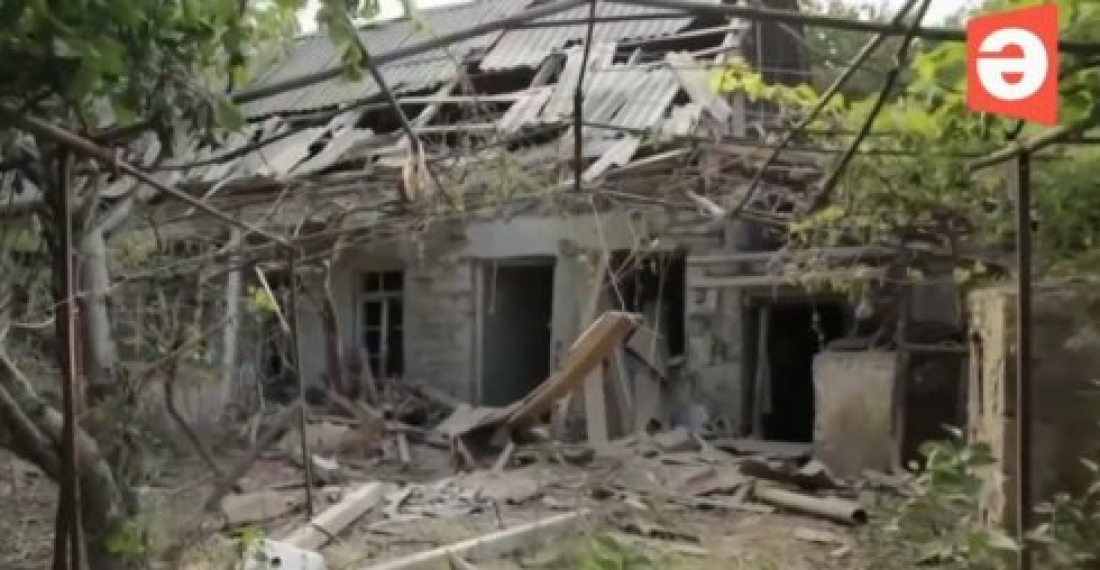
photo: Houses of civilians destroyed during the hostilities in the zone of the Nagorno-Karabakh conflict on Sunday, September 27, 2020 (still from the frame of Maestro TV, Tbilisi)