


В Астане открылся саммит тюркских народов

В пятницу, 11 сентября, в столице Казахстана, Астане, открылся Пятый Саммит Совета сотрудничества тюркоязычных государств (СССТ). Саммит начался с выступления президента Казахстана Нурсултана Назарбаева, который заявил, что саммит является важным этапом в интеграции тюркского мира. Назарбаев добавил, что, с момента создания СССТ сотрудничество между государствами-членами стали систематическими. "В 21-м веке тюркоязычные страны должны активизировать сотрудничество", заявил Назарбаев главам государств и другим представителям тюркских народов, принимающих участие в саммите.

Участники саммита также приняли участие в церемонии, посвященной 550-летию установления Казахского ханства "народы независимых тюркских государств - Турции, Казахстана, Узбекистана, Азербайджана, Туркменистана, Кыргызстана и еще более 200 миллионов представителей тюркских народов, разбросанных по всему миру, происходят от одного великого предка - тюрка-воина", сказал президент Назарбаев в своем выступлении во время церемонии открытия. Казахстанский лидер подчеркнул, что тюркоязычные народы созданы, чтобы всегда быть вместе и сохранить свое единство. "Единство - источник всех побед, оно придает силы для защиты Родины. Об этом нужно помнить всегда. В XXI веке тюркские народы, разделенные судьбой, но имеющие общий язык, традиции, веру и происхождение, должны сотрудничать друг с другом.", сказал Нурсултан Назарбаев.

Один из вопросов, который обсуждается на саммите - создание пан тюркской телевизионной компании. Идею приветствовал президент Азербайджана Ильхам Алиев, который также принимает участие в Саммите, и который назвал эту идею прекрасным проектом, который будет способствовать укреплению дружбы между тюркоязычными народами.

источник: commonspace.eu по материалам информагентсва Казинформ

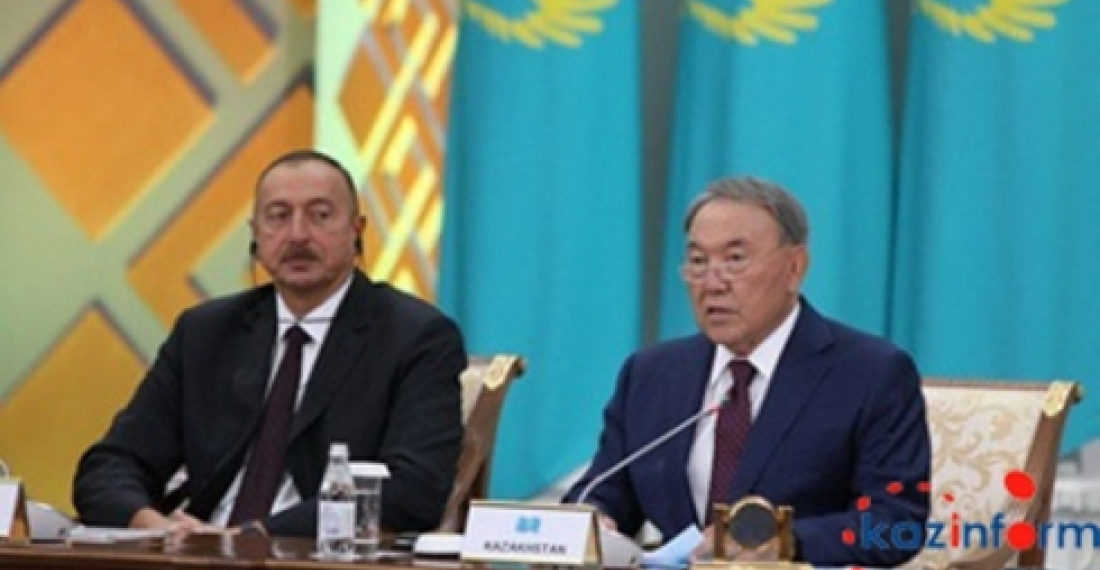
Фото: Президент Азербайджана Алиев и президент Назарбаев в Астане, 11 сентября 2015 года (фото любезно предоставлено Казинформа).


 

Related articles

Editor's choice
News
Georgian Patriarch buried amid scenes of nation-wide grief

Georgian Patriarch buried amid scenes of nation-wide grief

Catholicos-Patriarch of All Georgia, Ilia II, was was buried in Tbilisi on Sunday (22 March) amid expressions and scenes of nation-wide grief. Crowds filled the Holy Trinity Cathedral, and the route to the Sioni Cathedral where he will be buried, many shouting "We love you, Patriarch".  The service was led by Ecumenical Patriarch, His Holiness Bartholomew I, together with Metropolitan Shio and members of the Holy Synod of the Georgian Church. Soldiers lined the route from Trinity Cathedral to Sion Cathedral, but tens of thousands of people were also present Ilia II died on March 17. Since March 18, his body has been laying in state in the Trinity Cathedral where thousands of citizens paid tribute. During these days, the flow of people who wanted to say goodbye to the Patriarch flowed to the cathedral continuously, 24 hours a day. Citizens often had to stand in a queue for several hours to enter the cathedral.   Read the Obituary of Ilia II,  written by Dennis Sammut at  Read the Obituary of Ilia II,  written by Dennis Sammut here  Read the Obituary of Ilia II,  written by Dennis Sammut here   https://www.commonspace.eu/node/13740

Popular

Editor's choice
Interview
Thursday Interview: Murad Muradov

Thursday Interview: Murad Muradov

Today, commonspace.eu starts a new regular weekly series. THURSDAY INTERVIEW, conducted by Lauri Nikulainen, will host  persons who are thinkers, opinion shapers, and implementors in their countries and spheres. We start the series with an interview with Murad Muradov, a leading person in Azerbaijan's think tank community. He is also the first co-chair of the Action Committee for a new Armenian-Azerbaijani Dialogue. Last September he made history by being the first Azerbaijani civil society activist to visit Armenia after the 44 day war, and the start of the peace process. Speaking about this visit Murad Muradov said: "My experience was largely positive. My negative expectations luckily didn’t play out. The discussions were respectful, the panel format bringing together experts from Armenia, Azerbaijan, and Turkey was particularly valuable during the NATO Rose-Roth Seminar in Yerevan, and media coverage, while varied in tone, remained largely constructive. Some media outlets though attempted to represent me as more of a government mouthpiece than an independent expert, which was totally misleading.  Overall, I see these initiatives as important steps in rebuilding trust and normalising professional engagement. The fact that soon a larger Azerbaijani civil society visits to Armenia followed, reinforces the sense that this process is moving in the right direction." (click the image to read the interview in full)

