


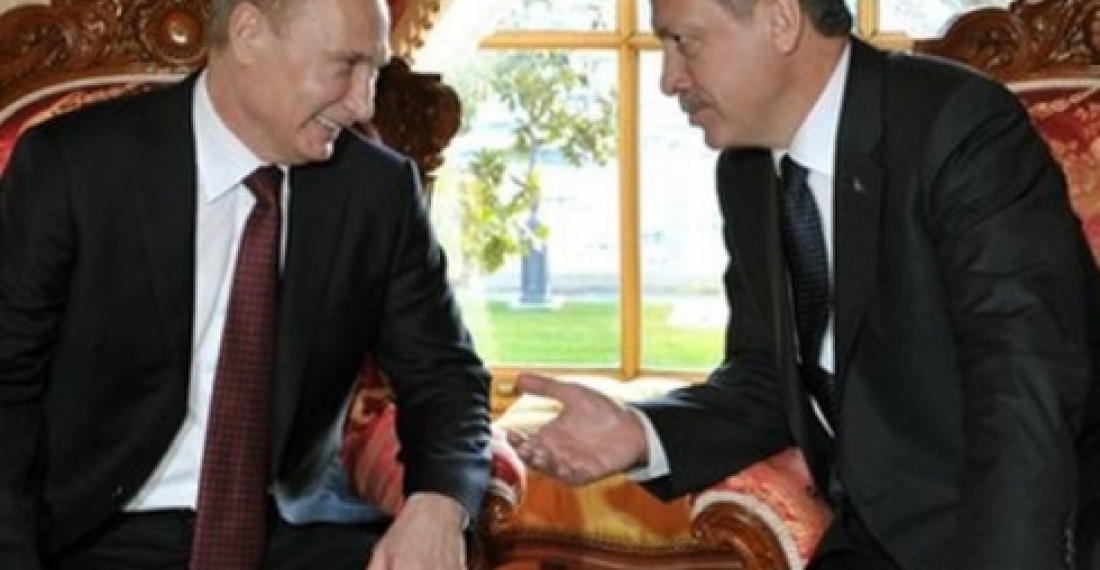
Россия и Турция ищут общий язык

Президент России Владимир Путин в понедельник (1 декабря) прибыл с визитом в Турцию, где он примет участие в пятой сессии Верховного Совета Российско-турецкого сотрудничества. Визит считается важным для обеих стран. Несмотря на то, что между двумя правительствами существует достаточно разногласий, стороны надеятся, что области, представляющие взаимный интерес  позволят двум странам и их лидерам найти общий язык.

Одной из таких областей является торговля, где обе стороны видят взаимовыгодные возможности. Путин на прошлой неделе в интеревью  турецкому государственному агентству Анадолу заявил:

"Рассчитываем, что вместе нам удастся нарастить объём взаимной торговли, вывести на качественно новый уровень инвестиционное сотрудничество на благо народов России и Турции. Мы уже говорили с Реджепом Тайипом Эрдоганом о том, что в перспективе нам под силу довести товарооборот до отметки в 100 миллиардов долларов США. Путин добавил "Турция была и остаётся значимым внешнеторговым партнёром России. В 2013 году товарооборот между нашими странами составил 32,7 миллиарда долларов США. Общий объём накопленных российских прямых инвестиций в Турции превышает 1,7 миллиарда долларов США, а турецких в России – приближается к миллиарду, и в наших общих интересах закрепить эту положительную тенденцию."

Путин заявил, что Россия может увеличить объём торговли продуктами питания со страной. Он также предложил новые возможности по совместной работе в промышленности, в частности, в аэрокосмической отрасли.

"Турция – второй по объёмам (после Германии) покупатель российского природного газа, который направляется по «Западному коридору» – транзитом через территорию Украины, Молдавии, Румынии и Болгарии, а также по трубопроводу «Голубой поток». В прошлом году Россия поставила в Турцию 26,6 миллиарда кубических метров, а по итогам текущего – скорее всего, превзойдём прежний показатель." - заявил Путин.

Он отметил, что "хорошо понимаем, как важны российские энергоресурсы для развития экономики и социальной сферы Турции."

"Поэтому всегда положительно реагируем на обращения по вопросам, касающимся экспорта газа. В октябре достигнута принципиальная договорённость об увеличении с 16 до 19 миллиардов кубических метров в год поставок по газопроводу «Голубой поток» и проведении необходимых для этого работ. Наши эксперты держат этот вопрос под постоянным контролем." - заявил Путин.

Несмотря на это, между Турцией и Россией есть существенные различия по вопросам внешней политики, в том числе их отношение к правительству президента Асада в Сирии, где Турция желает увидеть смены власти. Между двумя странами имеются  также нерешенные вопросы, связанные с турецким меньшинством в Крыму, чьи права стали ущемляться, после того как  территория была аннексирована Россией в начале этого года.

Как ожидается, в ходе встречи Путин и Эрдоган также обсудят ситуацию на Южном Кавказе и, в частности нагорно-карабахский конфликт. Турция является активным сторонником Азербайджана в то время как России покровительствует Армении как в военной сфере, так и в экономической. Однако, ни Россия, ни Турция, не хотят эскалации нынешнего конфликта и призывают их союзников проявлять сдержанность.

И Россия, и Турция стали более уверенно проводить свою политику на Ближнем и Среднем Востоке, в Евразии в последние годы и месяцы. И часто это происходило за счет жертвования одного перед другим. Визит Путина в Турцию даст возможность оценить, в какой степени стороны готовы идти на компромисс.

источник: commonspace.eu по материалам агентства Анадолу, Hurriyet Daily News и других средств массовой информации.

Фото: Президент России Путин и президент Эрдоган (фото из архива).

Related articles

Editor's choice
News
''Coalition of the Willing'' meets in Kyiv to restate its support for Ukraine

''Coalition of the Willing'' meets in Kyiv to restate its support for Ukraine

The ''Coalition of the  Willing''  of thirty five countries, has renewed its support of Ukriane, at a meeting in Kyiv, held on Ukraine's national day on 24 August, under the chairmanship of British Prime Minister,A ndy Burnham. Burnham has promised to keep up the pressure on Russia despite Moscow's "outrageous threats", on his first official visit to Ukraine as UK prime minister. Burnham met Ukrainian President Volodymyr Zelensky and chaired his first meeting of the "coalition of the willing", set up by the UK and France under his predecessor Sir Keir Starmer. He said the coalition was "doing everything we can" while urging the US Congress to "ratchet up" economic pressure on Russia. The government has agreed to hand over blueprints for British-made components for the Scalp missile, a French version of the UK's Storm Shadow cruise missile - allowing Ukraine to produce the long-range weapon domestically. During the meeting with France and Ukraine, Burnham said allies were doing "everything we can" to "dig into our own stocks and help others dig into their stocks" of air defences to protect Ukraine. "This is the moment to keep up the pressure on Russia, the moment to squeeze their ability to fund this illegal war," Burnham said, praising the "strength" of the Ukrainian people. "Ukraine has been Europe's protector, not a drain on our security but the front line in keeping Europe safe." It comes after Kremlin spokesman Dmitry Peskov criticised the UK's decision to share the missile blueprints. Peskov said it prevented "even the slightest progress" towards achieving peace. He told reporters on Monday that the Russian military was already gathering data to locate any missile production sites to destroy them. "Britain is involved in this war on the side of the Kyiv regime. Britain methodically and regularly adds fuel to the fire," he added. In response, Burnham said: "Who started the fire? That's the question, isn't it?" He added the issue of missile interceptors would be the main topic at the coalition of the willing meeting. Burnham chaired his first meeting of the "coalition of the willing" in Kyiv Burnham has been reaffirming the UK's backing for Kyiv in the wake of escalating Russian strikes on Ukraine in recent weeks - including one on a shopping centre on Friday that killed at least 16 people. In a joint statement after the meeting, Burnham and co-chairs French President Emmanuel Macron and German Chancellor Friedrich Merz said the group would aim to strength Kyiv's air defences "as a matter or urgent priority". They also condemned Moscow's "systemic and escalating strikes against Ukraine's cities, critical infrastructure and civilians" and pledged to "constrain Russia's war chest through sanctions and actions against the "shadow fleet". (click image to read more).

Popular

Editor's choice
Interview
Thursday Interview: Murad Muradov

Thursday Interview: Murad Muradov

Today, commonspace.eu starts a new regular weekly series. THURSDAY INTERVIEW, conducted by Lauri Nikulainen, will host  persons who are thinkers, opinion shapers, and implementors in their countries and spheres. We start the series with an interview with Murad Muradov, a leading person in Azerbaijan's think tank community. He is also the first co-chair of the Action Committee for a new Armenian-Azerbaijani Dialogue. Last September he made history by being the first Azerbaijani civil society activist to visit Armenia after the 44 day war, and the start of the peace process. Speaking about this visit Murad Muradov said: "My experience was largely positive. My negative expectations luckily didn’t play out. The discussions were respectful, the panel format bringing together experts from Armenia, Azerbaijan, and Turkey was particularly valuable during the NATO Rose-Roth Seminar in Yerevan, and media coverage, while varied in tone, remained largely constructive. Some media outlets though attempted to represent me as more of a government mouthpiece than an independent expert, which was totally misleading.  Overall, I see these initiatives as important steps in rebuilding trust and normalising professional engagement. The fact that soon a larger Azerbaijani civil society visits to Armenia followed, reinforces the sense that this process is moving in the right direction." (click the image to read the interview in full)


